 Save
Save There's something about a salad that asks nothing of you except a sharp knife and honest ingredients. I discovered this white bean and kale combination on a Tuesday when my fridge felt too empty for anything ambitious, yet too full of good things to waste. The kale was getting that papery feel at the edges, there were beans I'd opened days ago, and suddenly I was massaging leaves with lemon and garlic like I'd invented something profound. What started as resourcefulness turned into my go-to lunch, the kind you make without thinking because your hands already know the rhythm.
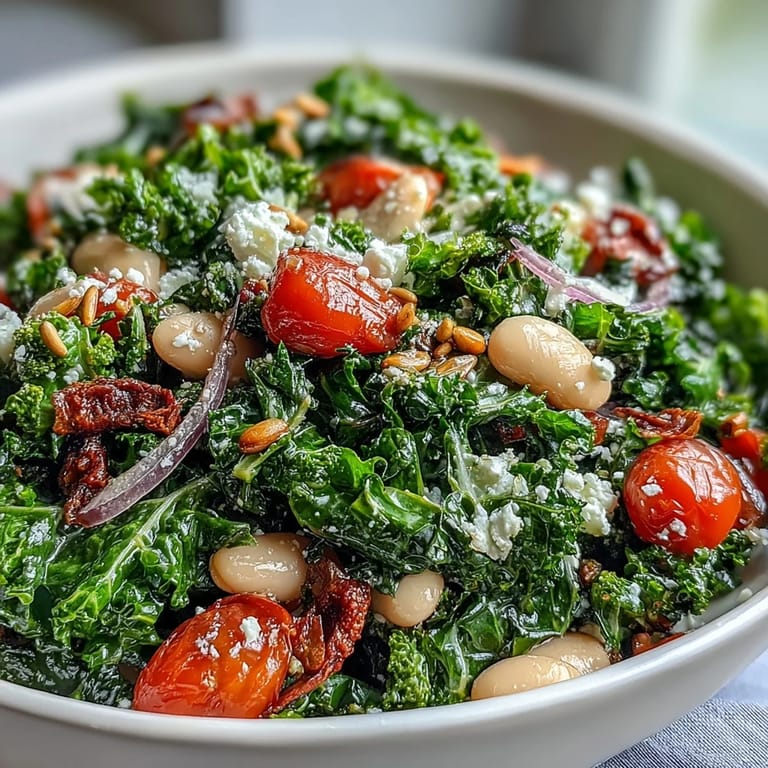
I made this for my sister one afternoon when she stopped by saying she needed something healthy but not boring, and I watched her go back for thirds while barely talking. The way the sunflower seeds caught the light in the bowl, how the red onion stayed crisp against the creamy beans—it became the salad she now texts me asking for. That single afternoon taught me that simple food cooked with attention lands differently than anything flashy.
Ingredients
- White beans (1 can, drained and rinsed): Cannellini or Great Northern beans are your best friends here; they're creamy without falling apart, and rinsing them removes the starchy liquid that would make your salad taste metallic.
- Kale (1 large bunch, about 6 cups chopped): Look for the darker, frilly varieties rather than the smooth ones—they'll soften faster and taste less bitter once massaged.
- Cherry tomatoes (1 cup, halved): Their sweetness balances the earthy beans and bitter greens, and halving them prevents those frustrating moments when they roll off your plate.
- Red onion (1 small, thinly sliced): The acid in the dressing softens their sharp bite slightly while keeping them crisp and colorful.
- Toasted sunflower or pumpkin seeds (1/4 cup): These add texture and a subtle nuttiness, but make sure they're toasted or your salad will taste flat and raw.
- Feta cheese (1/4 cup crumbled, optional): A small amount goes a long way; the salt amplifies all the other flavors without overwhelming the vegetables.
- Extra virgin olive oil (3 tbsp): This is where quality matters—a peppery or grassy oil makes a noticeable difference in the final taste.
- Fresh lemon juice (2 tbsp): Fresh is non-negotiable; bottled juice tastes thin and one-dimensional by comparison.
- Dijon mustard (1 tsp): An unexpected ingredient that emulsifies the dressing and adds a subtle depth that nobody will identify but everyone will feel.
- Garlic (1 small clove, minced): Raw garlic can be sharp, so mince it fine and let it sit in the lemon juice for a minute—the acid mellows it naturally.
- Sea salt and black pepper (1/2 tsp and 1/4 tsp): Taste as you go; you may need slightly more salt depending on your olive oil and feta.
Tired of Takeout? 🥡
Get 10 meals you can make faster than delivery arrives. Seriously.
One email. No spam. Unsubscribe anytime.
Instructions
- Build your dressing first:
- In a small bowl or jar, whisk together the olive oil, lemon juice, Dijon mustard, minced garlic, salt, and pepper until everything emulsifies slightly and tastes bright and balanced. If you're using a jar, you can skip the whisk and just shake it hard for a minute.
- Massage the kale like you mean it:
- Place your chopped kale in a large bowl and pour about half the dressing over it, then use your hands to rub and squeeze the leaves for 1 to 2 minutes until they darken and soften considerably. This step is not optional—it's what transforms raw kale from something that resists chewing into something silky.
- Bring everything together gently:
- Add the rinsed white beans, halved cherry tomatoes, sliced red onion, and toasted seeds to the massaged kale, then drizzle with the remaining dressing. Toss carefully with your hands or a large spoon so the beans don't break apart.
- Finish with cheese if you're using it:
- Sprinkle feta over the top just before serving so it stays crumbly and distinct rather than melting into the salad.
 Save
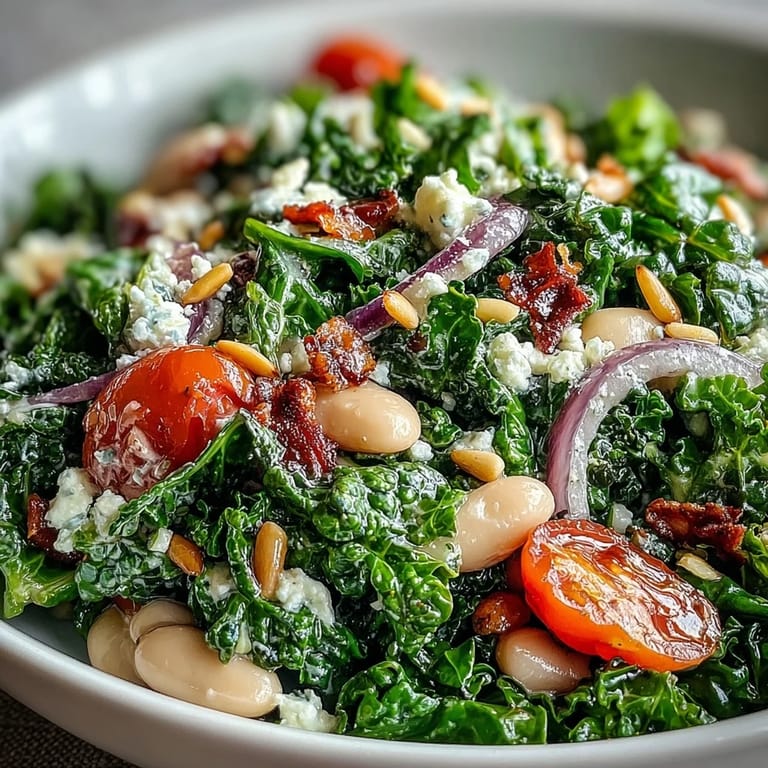
Save This salad became something more than lunch the day a friend with dietary restrictions arrived feeling left out of everything, and I realized I could make her a plate that was hearty, satisfying, and didn't require any explanation or apology. She ate slowly and deliberately, like she was tasting something she'd been missing, and I learned that feeding people well sometimes means the smallest gesture feels the most generous.
Why This Salad Keeps Improving
The longer this sits, the more the flavors settle into each other—not in the sad, wilted way of most salads, but in a deepening way where the beans absorb the dressing, the kale becomes tender, and the raw onion mellows slightly. If you make it in the morning for lunch, by the time you eat it, it'll taste richer than when you first tossed it together. This is why it's so beloved for meal prep; unlike delicate greens, kale actually welcomes time and develops character.
The Small Adjustments That Matter
I've learned that thinly sliced red onion matters more than you'd think—thick chunks stay aggressively sharp and make eating uncomfortable, but thin slivers integrate into the salad and become almost sweet. The same principle applies to garlic; one medium clove feels like too much until you realize it's for four servings, at which point it's just a whisper that amplifies everything around it. Temperature matters too; a cold salad is refreshing, but one that's been sitting at room temperature for 20 minutes tastes more complex and developed.
Making It Your Own
This salad is forgiving enough to work with whatever's in your kitchen, and I've made variations so many times I barely remember the original anymore. Chickpeas work just as well as white beans if that's what you have, parsley or dill can stand in for the seeds if you're out of them, and a pinch of red pepper flakes at the end wakes everything up if the salad feels flat. The foundation is solid enough that you can trust your instincts and adjust without worrying you'll ruin it.
- Add fresh herbs like parsley, mint, or basil: torn in at the end so they stay bright and aromatic.
- A squeeze of fresh orange juice: mixed into the dressing adds unexpected warmth and complexity alongside the lemon.
- Serve with crusty bread: to wipe down your bowl when nobody's watching and you realize you've eaten more than you intended.
 Save
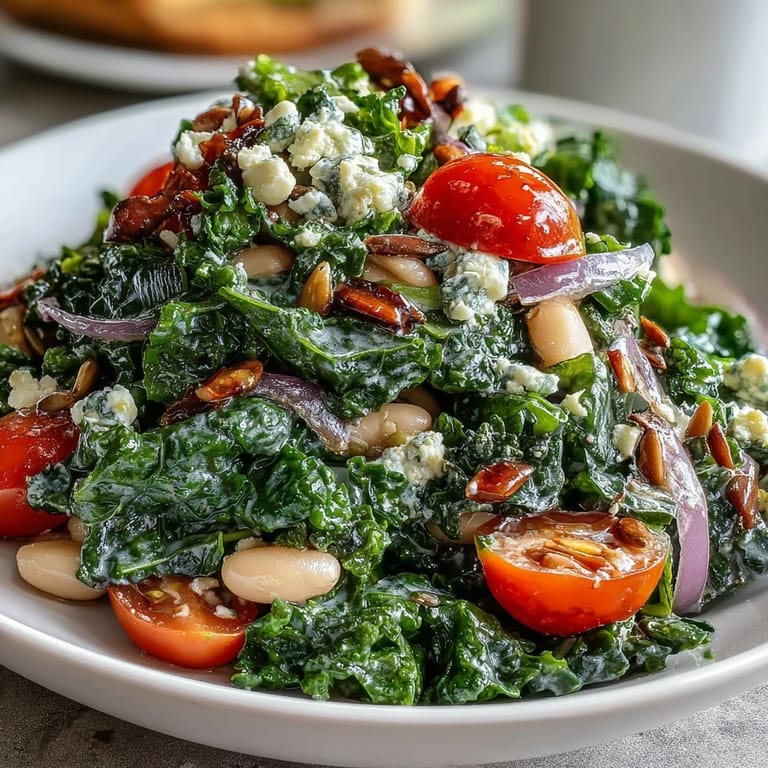
Save This is the kind of salad that teaches you that good food doesn't need to be complicated or time-consuming to feel nourishing. Keep making it, and someday someone will ask for the recipe like it's a secret you've been holding onto.
Recipe Q&A
- → How do I prepare the kale for this salad?
Remove tough stems from the kale leaves and chop into bite-sized pieces. Massage the kale with half the dressing for 1-2 minutes until leaves darken and become tender. This step breaks down tough fibers and improves texture.
- → Can I make this salad ahead of time?
Yes, this salad holds up well for 1-2 days when refrigerated. Store the dressing separately and toss just before serving to maintain freshness. The kale actually becomes more tender after marinating.
- → What other beans work in this recipe?
Chickpeas, navy beans, or butter beans make excellent substitutes for white beans. Each provides slightly different texture but all work beautifully with the lemon-garlic dressing.
- → Is this salad protein-rich enough for a full meal?
The white beans provide 9g of protein per serving. For a more substantial meal, add grilled chicken, hard-boiled eggs, or serve with crusty bread. Quinoa would also boost protein content.
- → How can I make this vegan?
Simply omit the feta cheese or replace it with vegan alternatives. The salad remains satisfying and flavorful with the creamy beans, crunchy seeds, and zesty dressing.
- → Can I use a different green instead of kale?
Spinach, arugula, or mixed greens work well. However, skip the massaging step with delicate greens as they don't require tenderizing like kale does.