 Save
Save My cousin Maria taught me this salad during a lazy August afternoon at her kitchen table in Athens, though she'd never written down the recipe—it was just something her hands knew how to do. She'd pull vegetables from her market bag with the kind of certainty that comes from making the same dish a hundred times, never measuring, never rushing. The moment she drizzled that vinaigrette over the greens and the smell of oregano and red wine vinegar rose up, I understood why Greeks don't fuss over salads; they trust them.
I made this for my book club last spring and watched people go quiet when they took their first bite—not because it's complicated, but because there's something honest about it. No cream, no pretense, just vegetables that taste like themselves and a dressing that lets them shine. One friend asked if I'd added sugar, and I had to laugh; that brightness she was tasting was just good vinegar and real garlic doing their job.
Ingredients
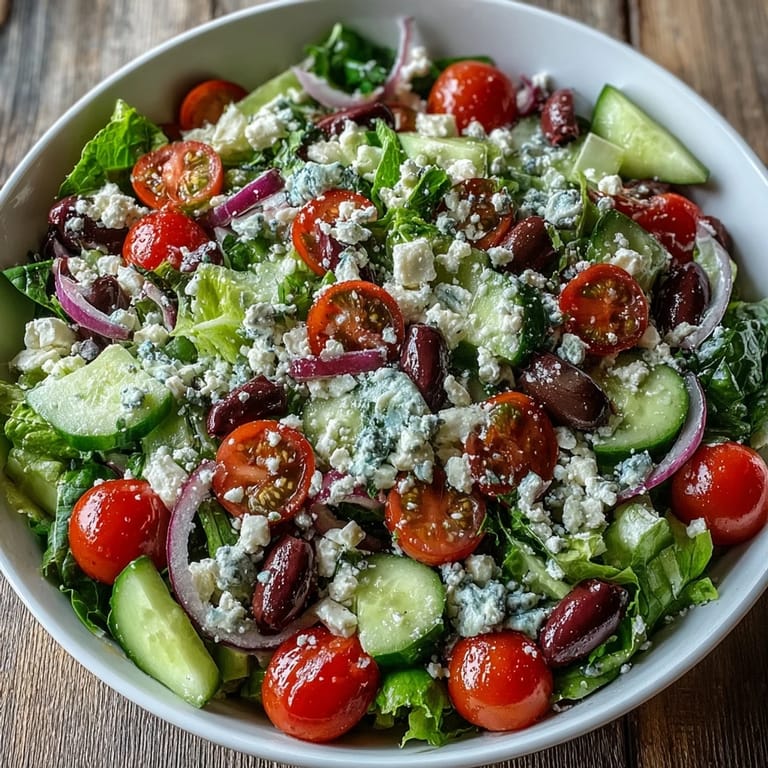
- Romaine lettuce: Choose heads that feel crisp and heavy; the pale inner leaves are the most tender, though the darker outer ones have more flavor if you don't mind a slight bitterness.
- Cherry tomatoes: Halve them right before you serve so they don't leak into the salad and make everything soggy.
- Cucumber: English cucumbers have fewer seeds and thinner skin, but any fresh cucumber works; just slice on the bias for a more elegant look.
- Red onion: Slice it thin and let it sit for a few minutes; it softens slightly and loses some of its harsh bite.
- Feta cheese: Buy it in blocks if you can and crumble it yourself—the pre-crumbled stuff gets dense and loses its creamy texture.
- Kalamata olives: These are briny and rich; pit them yourself if you have time, but honestly, good pitted ones save your teeth and your patience.
- Extra-virgin olive oil: This is not the place to use the cheap bottle; the oil is half the dressing, and you'll taste every penny you spend.
- Red wine vinegar: It's sharp but balanced, not as aggressive as white vinegar, which is why Maria always reached for it without thinking.
- Dried oregano: Greek oregano is more aromatic than the Italian kind; if you have access to fresh, use triple the amount.
- Garlic: One clove is enough; mince it fine so it distributes evenly through the oil and doesn't leave sharp chunks.
- Dijon mustard: A small spoon helps emulsify the dressing so the oil and vinegar actually stay together instead of separating by the time you serve.
Tired of Takeout? 🥡
Get 10 meals you can make faster than delivery arrives. Seriously.
One email. No spam. Unsubscribe anytime.
Instructions
- Gather and chop everything:
- Chop your lettuce into bite-sized pieces, halve the tomatoes, slice the cucumber, and get your onion thin enough to see light through it. There's no cooking here, so the quality of your knife work is everything.
- Build the bowl:
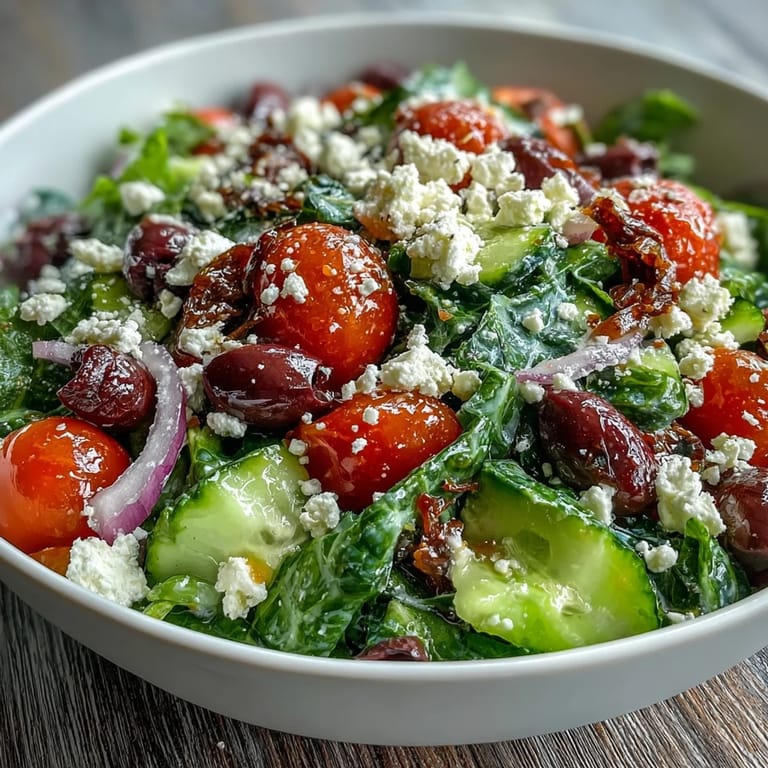
- Spread the lettuce across a large bowl like you're making a bed for the other vegetables, then scatter the tomatoes, cucumber, and red onion over top. Don't toss yet; let each ingredient show itself.
- Add the cheese and olives:
- Sprinkle the feta and olives across the bowl with a casual hand, breaking up any chunks of cheese so it distributes evenly. This is where it starts to look like something.
- Make the vinaigrette:
- In a small jar or bowl, combine the oil, vinegar, oregano, minced garlic, mustard, salt, and pepper, then whisk or shake hard for about thirty seconds until it looks slightly emulsified and thickens just a touch. Taste it before you dress the salad; if it's too sharp, add a tiny drizzle more oil.
- Dress and serve immediately:
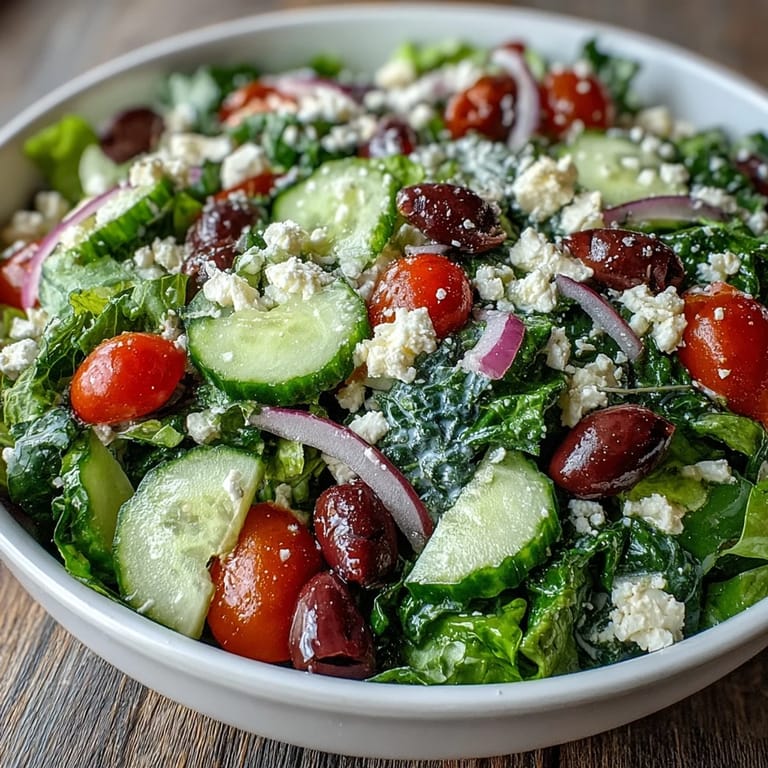
- Drizzle the vinaigrette over the salad and toss gently with your hands or two forks, making sure every leaf gets coated but not so much that the lettuce breaks down. Serve right away while everything is still crisp.
 Save
Save There was a moment, eating this salad on a Tuesday evening with my partner, when he asked where I'd learned to cook like this—not fancy, not complicated, just right. I realized then that Greek cooking isn't about technique or precision; it's about respecting simple ingredients enough to let them be themselves. That's when food stops being about the recipe and starts being about understanding.
The Mediterranean Way
This salad isn't trying to be a main course unless you want it to be, and that flexibility is part of its charm. In Maria's kitchen, it appeared on the table alongside grilled fish and warm pita, each element knowing its place. The longer I cook, the more I appreciate this approach—a salad that doesn't apologize for being simple and doesn't need anything else to justify itself.
Variations That Still Feel True
Once you understand this salad, you can dance with it a little. Some people add a handful of fresh dill or mint; others toss in sliced bell peppers for sweetness and crunch. I've seen it served over grilled chicken for a heartier meal, and I've made a vegan version with cashew-based feta that honestly surprised me with how good it was. The bones of the salad are strong enough to handle these changes without losing itself.
Timing and Serving
The magic of this salad is that you can prep everything ahead—chop your vegetables that morning, make your dressing in a jar you leave in the fridge—and then assemble it five minutes before people eat. It's the kind of dish that makes you look organized even when you're winging it, which is honestly most of cooking. There's something deeply satisfying about serving something this fresh and honest.
- If you're feeding a crowd, double the dressing and keep it separate so people can add as much or as little as they like.
- Warm pita bread on the side turns this into something more substantial without making it heavy.
- Taste the vinaigrette before you dress the salad, and adjust the salt or vinegar to your preference.
 Save
Save This salad taught me that some of the best food doesn't need to prove anything; it just needs to be honest. Make this when you want to remember why fresh vegetables matter and why sometimes the simplest path is the right one.
Recipe Q&A
- → Can I make Greek salad ahead of time?
You can prep the vegetables and dressing separately up to a day in advance. Store chopped vegetables in an airtight container and keep the vinaigrette in a jar. Toss everything together just before serving to maintain the crisp texture.
- → What type of olives work best?
Kalamata olives are traditional and provide the most authentic Greek flavor with their deep purple color and rich, briny taste. If unavailable, you can substitute with other Mediterranean varieties like black olives or Gaeta olives.
- → How do I store leftovers?
Store leftover salad without dressing in an airtight container in the refrigerator for up to 2 days. Keep the vinaigrette separately in a sealed jar. The lettuce may wilt slightly, but the flavors will continue to develop.
- → Can I add protein to make it more filling?
Grilled chicken, shrimp, or chickpeas make excellent protein additions. For a vegetarian protein boost, consider adding white beans or quinoa. These additions transform the bowl into a complete, satisfying meal.
- → What's the best way to cut vegetables for salad?
Cut vegetables into bite-sized pieces for easy eating. Slice cucumbers into rounds or half-moons, halve cherry tomatoes, and thinly slice red onion for even distribution. Chop romaine into manageable pieces that fit comfortably on a fork.
- → How long does homemade vinaigrette last?
The Greek vinaigrette will keep in a sealed jar in the refrigerator for up to a week. The olive oil may solidify when cold—simply let it sit at room temperature for a few minutes and shake well before using.