 Save
Save My coworker Sarah brought this Korean beef bowl to lunch one Tuesday, and I watched everyone at the table abandon their own meals mid-bite. The smell of gochujang and sesame oil drifting across the break room was impossible to ignore. I pestered her for the recipe that same afternoon, and when I finally made it at home, I understood why she'd kept it so close—this bowl is the kind of dish that makes you feel like you're eating something special, even on a regular weeknight.
I made this for my roommate on a rainy evening when she came home looking defeated by her day. Watching her face light up after that first spoonful, seeing her slow down and actually taste what was in front of her instead of rushing through dinner—that's when I realized this recipe had become more than just something tasty to me.
Ingredients
- Lean ground beef (1 lb): Use 85/15 or 90/10 if you can find it; the leaner the beef, the less fat you'll need to drain, and the sauce coats everything better.
- Vegetable oil (2 tbsp): This is your cooking medium for getting that beef nicely browned, so don't skip it even if the meat looks fatty.
- Garlic and ginger (3 cloves and 1 tbsp): Fresh is non-negotiable here—they build the aromatic base that makes people ask what smells so good.
- Gochujang (3 tbsp): This Korean chili paste is the soul of the dish; it brings heat, depth, and umami that regular chili powder can't replicate.
- Soy sauce (2 tbsp): It adds saltiness and savory notes that tie everything together beautifully.
- Brown sugar (1 tbsp): A touch of sweetness balances the heat and saltiness, creating complexity rather than just spice.
- Rice vinegar (1 tbsp): This brightens the sauce and prevents it from tasting too heavy or one-dimensional.
- Toasted sesame oil (1 tsp): Use just this amount—it's potent and aromatic, adding a nutty finish that defines the flavor profile.
- Green onions (2, thinly sliced): Split between cooking and garnish; they add freshness and a mild onion bite.
- Carrot and daikon radish (1/2 cup each, julienned): These pickle quickly and provide a crisp, tangy contrast to the rich beef.
- Rice vinegar for pickling (1/2 cup): This creates the brine that pulls moisture from the vegetables while infusing them with flavor.
- Cooked white or brown rice (4 cups): The foundation that absorbs all the delicious sauce and makes the bowl feel complete.
- Cucumber and radish (fresh, thinly sliced): Raw vegetables add texture and coolness that balance the warm, spiced beef.
- Kimchi (1 cup, chopped): The fermented funk here is essential—it's tangy, spicy, and adds complexity that ties the whole bowl together.
- Toasted sesame seeds (1 tbsp): Sprinkle these at the very end for nuttiness and a slight textural pop.
Tired of Takeout? 🥡
Get 10 meals you can make faster than delivery arrives. Seriously.
One email. No spam. Unsubscribe anytime.
Instructions
- Set up your pickled vegetables:
- Whisk rice vinegar, sugar, and salt in a small bowl until the sugar dissolves completely. Add your julienned carrot and daikon, stir, and let them sit—they'll soften and absorb flavor while you handle the beef. This is smart timing because they're ready exactly when you need them.
- Get the beef started:
- Heat oil in a large skillet over medium-high heat until it shimmers, then add minced garlic and ginger. Listen for that immediate sizzle and breathe in for a second—you'll know when it's right. Add ground beef and use a wooden spoon to break it apart constantly, cooking until it's no longer pink (about 5 to 6 minutes).
- Build the sauce:
- Stir gochujang, soy sauce, brown sugar, rice vinegar, and sesame oil into the browned beef. Lower the heat slightly and let it simmer for 2 to 3 minutes until the sauce thickens enough to coat each piece of beef instead of pooling at the bottom. Toss in half your green onions and taste—this is your moment to adjust heat or saltiness if needed.
- Assemble with intention:
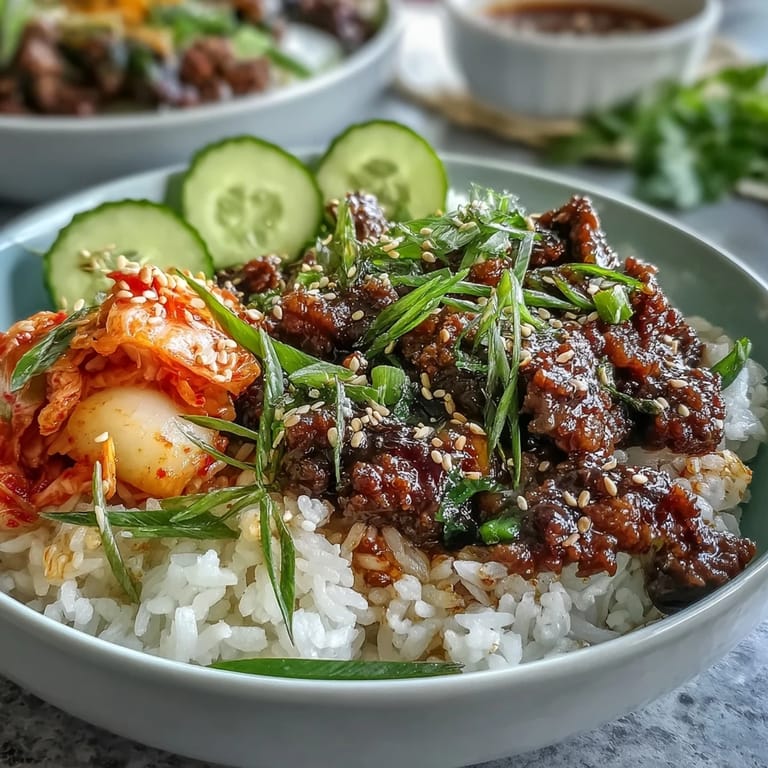
- Divide rice among four bowls, creating a small well in the center with the back of your spoon. Spoon the beef and its sauce into that well, then arrange pickled vegetables, fresh cucumber, radish slices, and kimchi around it like you're creating something beautiful. The visual contrast matters—it makes people want to eat it.
- Finish and serve:
- Scatter remaining green onions and toasted sesame seeds over the top. Serve immediately while the rice is still warm and the raw vegetables are still crisp.
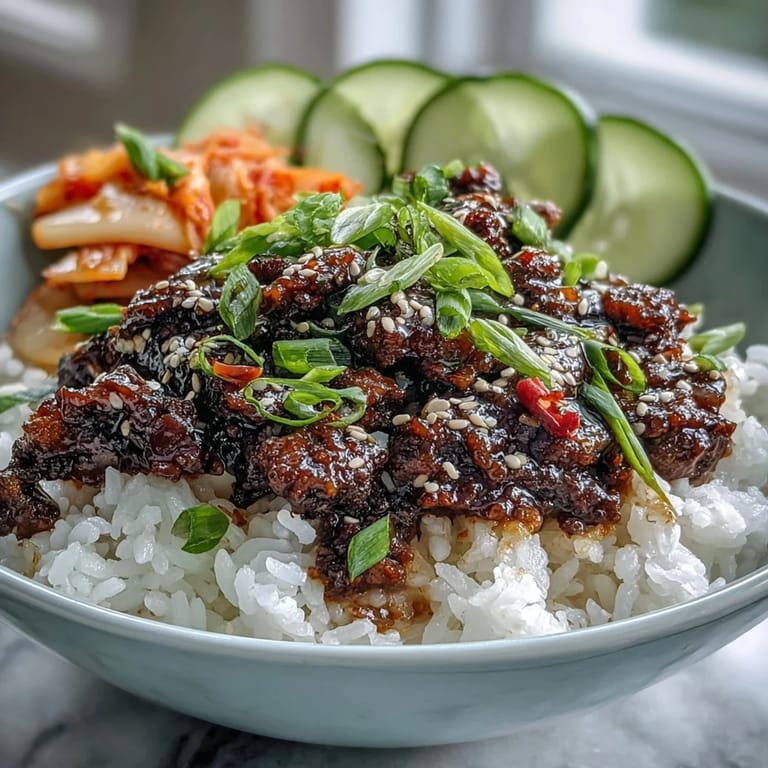 Save
Save There's something grounding about a bowl this straightforward and honest. No pretense, no unnecessary complexity—just excellent ingredients working together to make you feel nourished and satisfied.
Why This Bowl Works So Well
The genius of this dish is how it balances temperature, texture, and flavor all in one place. Warm spiced beef meets cool crisp vegetables, tangy pickled elements play against savory umami, and heat is always tempered by something bright or fresh. You're not getting tired of it halfway through because every bite has something different to offer. It's the kind of bowl that makes you understand why Korean food has become so beloved—everything serves a purpose.
Making This Your Own
While the recipe is perfect as written, this is also a dish that welcomes your adjustments. If you prefer less heat, reduce the gochujang or skip the extra sriracha. Prefer more umami? A splash of fish sauce in the sauce makes it incredible. Vegetarian? Crumbled tofu or mushrooms work beautifully when seasoned the same way. The structure is flexible enough to handle substitutions while still tasting authentically Korean and delicious.
Timing and Prep Tips
The beauty of this bowl is that most of the work happens while the beef cooks, so you're not standing around waiting. Prep your vegetables before you start cooking—julienne the carrot and daikon, slice the cucumber and radish, chop the kimchi. Have your rice already cooked. When everything is prepped and ready, the actual cooking becomes a smooth five-minute process that feels easy rather than stressful. The more organized your prep, the more you'll enjoy actually cooking it.
- If you're cooking for one instead of four, the recipe halves beautifully without losing flavor or texture.
- Leftover seasoned beef keeps well in the fridge for three days and tastes just as good served over rice the next day.
- Toast your sesame seeds in a dry skillet for 30 seconds right before serving—it wakes up their flavor and makes them taste more alive.
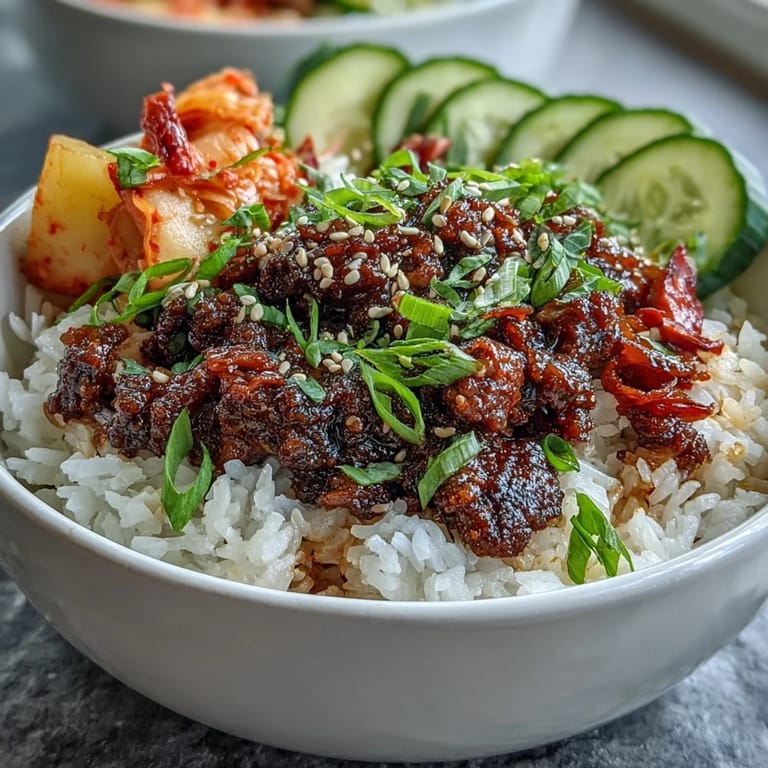 Save
Save This Korean beef bowl has become my answer to weeknight dinners when I want to feel like I've actually cooked something meaningful. It's fast enough for a Tuesday and impressive enough for when you want to feed people you care about.
Recipe Q&A
- → What does gochujang taste like?
Gochujang is a Korean fermented chili paste with a complex flavor profile combining sweet, savory, and spicy notes. It has a deep umami richness from fermented soybeans, a natural sweetness, and a moderate heat level that builds gradually. The paste adds a distinctive red color and thick texture to sauces.
- → Can I make this dish less spicy?
Yes, reduce the amount of gochujang to 1-2 tablespoons for a milder version. You can also add a tablespoon of brown sugar or honey to balance the heat. Serving with extra rice and more pickled vegetables helps temper the spice level naturally.
- → How long do the pickled vegetables last?
The quick-pickled carrots and daikon will keep in an airtight container in the refrigerator for up to one week. Their flavor develops over time, becoming more tangy. Store them in the pickling liquid for best results and drain before serving.
- → Can I use other proteins besides beef?
Ground chicken, turkey, or pork work well as substitutes. Cooking times may vary slightly—poultry should be cooked until completely white throughout with no pink remaining. The sauce proportions remain the same regardless of protein choice.
- → Is this dish gluten-free?
Traditional gochujang and soy sauce contain gluten. To make this gluten-free, use tamari instead of soy sauce and seek out certified gluten-free gochujang. Many brands now offer gluten-free versions of the chili paste. Always check labels carefully if avoiding gluten.
- → What can I serve with Korean beef bowls?
These bowls are complete meals on their own, but you can serve them with simple steamed or roasted vegetables like bok choy, spinach, or broccoli. A light cucumber salad or seaweed salad adds fresh contrast. Crisp lager or chilled green tea pairs perfectly.