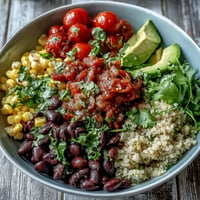
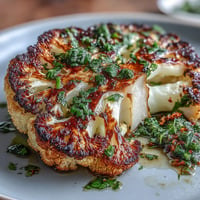
 Save
Save There's something about assembling a Buddha bowl that feels like meditation in the kitchen—no rush, just thoughtful layers of color and purpose. I discovered this particular combination on a sun-soaked afternoon when my fridge was overflowing with vegetables I'd bought with good intentions but hadn't quite used yet. Instead of letting them wilt, I roasted them until their edges caramelized, then built this bowl almost by accident, and somehow it became the meal I crave on days when I need to feel grounded and nourished.
I made this for a friend who'd just started eating plant-based, and I'll never forget how she paused mid-bite and said, 'This doesn't feel like I'm missing anything.' That moment shifted something for me—I stopped thinking of vegan food as a compromise and started seeing it as its own complete language.
Ingredients
- Zucchini, red bell pepper, red onion, and eggplant: The roasted vegetable base is where the soul lives; medium dice means they'll caramelize at the edges without falling apart, and the red onion adds a sweetness that only develops in the oven.
- Olive oil, oregano, and smoked paprika: These three create the Mediterranean backbone—don't skimp on quality olive oil, and toast the oregano between your palms before tossing to release its essential oils.
- Mixed salad greens: Use whatever feels fresh that day; arugula brings peppery bite, spinach adds earthiness, and romaine provides satisfying crunch.
- Chickpeas: Canned is fine (just rinse them thoroughly), but if you have time, dried chickpeas roasted with the vegetables turn into something almost crispy and revelatory.
- Avocado: Add this at the very last second before eating; slicing it in advance turns it gray and sad, no matter what anyone tells you about lemon juice.
- Kalamata olives: The brininess cuts through all the richness and keeps every bite from becoming one-note; halving them means they distribute better.
- Hummus: A generous dollop (don't be shy) acts as both protein and creamy contrast to everything crunchy.
- Tahini, lemon juice, garlic, and cumin: This dressing is the equalizer that brings everything into conversation; the tahini becomes silky and pourable when you whisk it slowly with lemon, and the garlic should be minced fine so it dissolves into the background rather than biting.
Tired of Takeout? 🥡
Get 10 meals you can make faster than delivery arrives. Seriously.
One email. No spam. Unsubscribe anytime.
Instructions
- Heat your oven and prep your vegetables:
- Get the oven to 425°F before you do anything else so it's properly hot when the vegetables go in. While it preheats, dice your vegetables into pieces roughly the same size—this ensures even cooking and those beautiful caramelized edges.
- Dress and spread:
- Toss your vegetables with olive oil, oregano, smoked paprika, salt, and pepper in a big bowl, making sure every piece gets coated. Spread them on a baking sheet in a single layer (crowding the pan steams them instead of roasting them, which is the enemy of flavor).
- Roast until golden:
- Pop them in the oven for 25 to 30 minutes, stirring halfway through so they caramelize evenly. You'll know they're done when the edges are deep golden and a fork slides through easily.
- Build your dressing while waiting:
- In a small bowl, whisk together tahini and lemon juice first—this prevents clumping—then add water a splash at a time until you reach a pourable consistency. Add the minced garlic, cumin, and salt, whisking until smooth and tasting as you go.
- Assemble with intention:
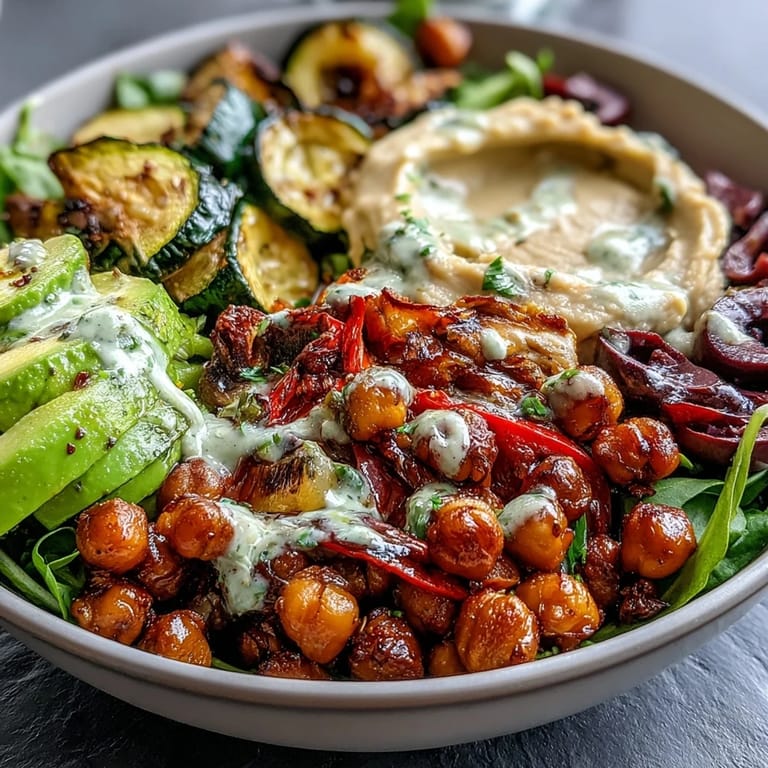
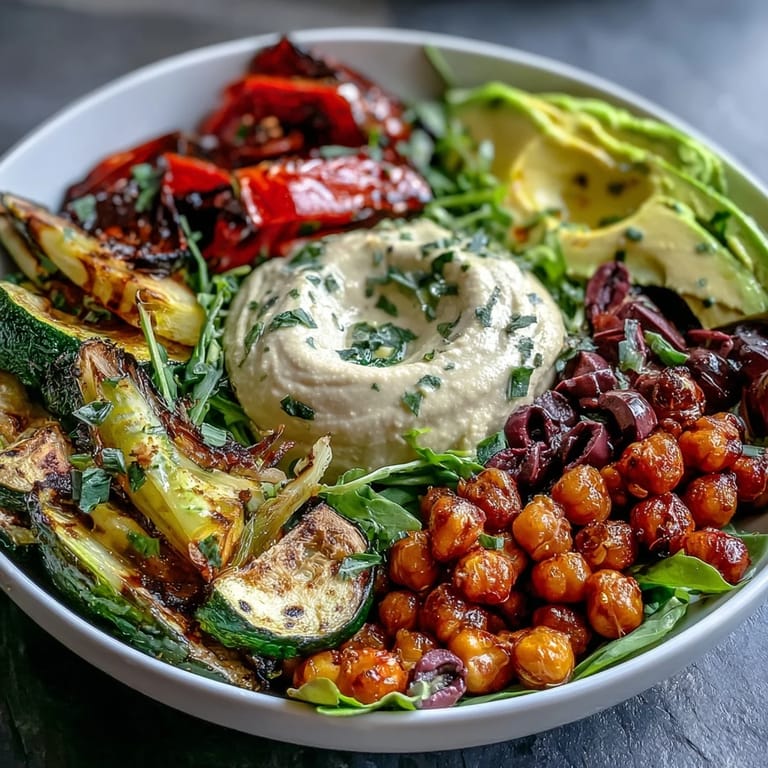
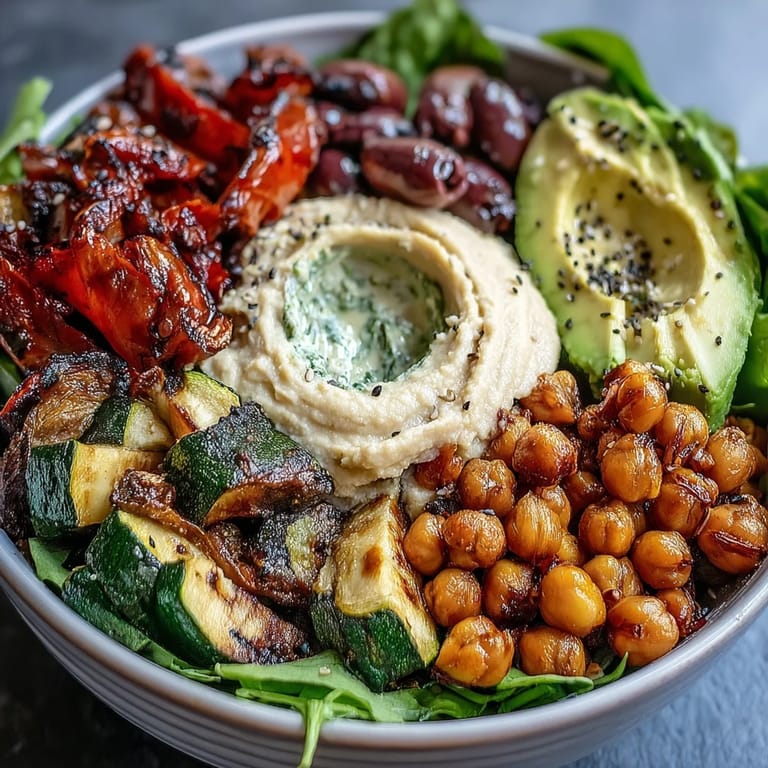
- Divide greens among four bowls as your base, then arrange chickpeas, roasted vegetables, avocado slices, and olives on top like you're plating something beautiful (because you are). Add a generous dollop of hummus to each bowl.
- Finish with dressing:
- Drizzle the tahini dressing over everything just before serving so it stays creamy rather than soaking into the greens. Taste and adjust salt or lemon juice in the dressing if needed.
 Save
Save There's a particular quiet satisfaction that comes from eating something this colorful and whole-feeling, especially when you know every component nourishes rather than just fills. This bowl taught me that vegan eating isn't about absence—it's about presence.
Building Your Bowl Like a Recipe
The order of assembly matters more than you'd think, even though it's technically just vegetables in a bowl. Greens go down first so they stay crisp and don't get swamped, then the roasted vegetables while they're still warm enough to slightly soften the greens. The chickpeas come next because their dense texture anchors everything, then the bright fresh elements—avocado, olives, hummus—go on top where they can be admired before being stirred together.
Why This Works as a Meal
Every component serves a purpose beyond taste: the greens provide lightness and fiber, the chickpeas offer substantial plant protein that actually sticks with you, the roasted vegetables bring caramelized sweetness and cooked nutrition your body absorbs easily, and the avocado plus tahini dressing create a richness that makes you feel satisfied rather than deprived. This is the kind of meal that works for meal prep, for lunch with a friend, for feeding yourself well on a Tuesday night when cooking feels important, or for impressing someone new to plant-based eating with the quiet confidence that comes from knowing what you're doing.
Making It Your Own
The beautiful thing about a Buddha bowl is how it welcomes improvisation without losing its soul. Roasted vegetables are interchangeable—try sweet potato, cauliflower, or Brussels sprouts depending on what's in season or what's calling to you. The base can shift from greens to quinoa or brown rice if you need extra heartiness, and the protein is flexible too. I've made this with white beans when chickpeas ran out, with lentils when I wanted earthiness, even with roasted chickpeas that became almost crispy if I left them in the oven an extra few minutes.
- Toast pine nuts or pumpkin seeds separately and scatter them on top for unexpected crunch that changes everything.
- A squeeze of fresh lemon juice right before eating wakes up flavors that have settled into coziness.
- Keep your tahini dressing in a jar in the fridge—it stays good for days and transforms salads, roasted vegetables, or grain bowls without warning.
 Save
Save This bowl has become my answer to the question of what nourishing food actually looks like when you stop trying to compensate and start celebrating what you're building instead. It's the kind of meal that reminds you why you cook.
Recipe Q&A
- → Can I prepare the vegetables ahead of time?
Yes, roast the vegetables up to 3 days in advance and store them in an airtight container in the refrigerator. Reheat gently before assembling your bowls.
- → What can I use instead of tahini?
You can substitute tahini with cashew butter, almond butter, or Greek yogurt for a creamy dressing alternative. Adjust the lemon juice and water accordingly to achieve the right consistency.
- → How do I store leftover assembled bowls?
Store components separately in airtight containers for up to 4 days. Keep the dressing on the side and add fresh greens when ready to eat to maintain texture and prevent sogginess.
- → Can I add grains to make it more filling?
Absolutely! Quinoa, brown rice, farro, or couscous make excellent additions. Cook about 1 cup dry grains to yield enough for all four servings.
- → Is this bowl freezer-friendly?
The roasted vegetables and chickpeas freeze well for up to 3 months. However, fresh greens, avocado, and dressing are best enjoyed fresh. Freeze components separately for optimal results.
- → What protein alternatives work well?
Try white beans, lentils, or roasted tofu cubes instead of chickpeas. For non-vegan options, grilled chicken or feta cheese make excellent additions while maintaining Mediterranean flavors.