 Save
Save My kitchen counter was a disaster of flour, egg shells, and sticky dough scraps when I finally rolled out my first decent pasta sheet. I'd watched my neighbor Maria do it a hundred times through her kitchen window, her hands moving so confidently while mine fumbled with the dough like it was wet cement. She eventually came over with her own rolling pin, laughed at my mess, and showed me the trick: rest the dough, don't fight it. That afternoon, we made enough ravioli to fill her freezer and mine, and I understood why she always said homemade pasta isn't hard, it just needs patience.
I made these for my sister's birthday one year because she'd been talking about a trip to Tuscany she couldn't afford. She walked into my apartment, saw the ravioli lined up on the floured cutting board, and actually teared up a little. We ate them by candlelight with cheap wine, and she said it tasted like the trip she'd been dreaming about. Sometimes food doesn't need to be perfect, it just needs to show up at the right moment.
Ingredients
- All-purpose flour: The backbone of your dough, and using regular all-purpose works perfectly as long as you knead it enough to develop the gluten and give it that silky stretch.
- Large eggs: They bind everything and add richness, but make sure they're room temperature so they mix into the flour more easily without clumping.
- Ricotta cheese: The creamy base of the filling, and I always buy whole milk ricotta because the low-fat stuff can taste chalky and ruin the texture.
- Fresh spinach: Adds color and a slight earthiness, but you must squeeze out every drop of water or your filling will be soupy and leak through the pasta.
- Parmesan cheese: Grate it fresh from a block for the best flavor, the pre-grated stuff doesn't melt or blend the same way.
- Nutmeg: Just a whisper of it makes the filling taste warm and complex, but too much turns it into a holiday candle.
- Marinara sauce: Homemade is lovely, but a good jar of sauce works beautifully when you're already making pasta from scratch.
- Garlic: Freshly minced and sautéed until golden, not burnt, because burnt garlic tastes bitter and ruins everything.
- Fresh basil: Torn at the last second and scattered on top, it brings a pop of freshness that balances the richness of the cheese.
Tired of Takeout? 🥡
Get 10 meals you can make faster than delivery arrives. Seriously.
One email. No spam. Unsubscribe anytime.
Instructions
- Make the Pasta Dough:
- Mound your flour on a clean counter and create a well in the center like a little volcano, then crack the eggs into it and add the salt. Use a fork to beat the eggs gently, pulling in flour bit by bit until a shaggy dough forms, then knead it with your hands for 8 to 10 minutes until it's smooth, elastic, and no longer sticky.
- Prepare the Filling:
- Steam or sauté the spinach until it wilts down, then let it cool before squeezing out every bit of moisture with your hands or a clean towel. Mix the spinach with ricotta, Parmesan, egg yolk, nutmeg, salt, and pepper until it's creamy and well combined, tasting it to adjust seasoning if needed.
- Roll the Pasta:
- Divide your rested dough in half and work with one piece at a time, keeping the other covered so it doesn't dry out. Roll each piece through a pasta machine or with a rolling pin until it's thin enough to see your hand through, about 1/16 inch thick.
- Shape the Ravioli:
- Lay one sheet of pasta on a floured surface and place teaspoons of filling about 2 inches apart, then brush around each mound with a little water. Drape the second sheet over the top and press gently around each pocket of filling to seal, then cut into squares with a knife or ravioli cutter and crimp the edges with a fork.
- Cook the Ravioli:
- Bring a large pot of well-salted water to a gentle boil and add the ravioli in batches, being careful not to crowd them. They'll float to the top in 3 to 4 minutes, and that's when you know they're ready to scoop out with a slotted spoon.
- Make the Marinara Sauce:
- Heat olive oil in a saucepan over medium heat, add the minced garlic, and sauté until it smells amazing but hasn't turned brown. Pour in the marinara, season with salt and pepper, and let it simmer gently for about 5 minutes to bring the flavors together.
- Serve:
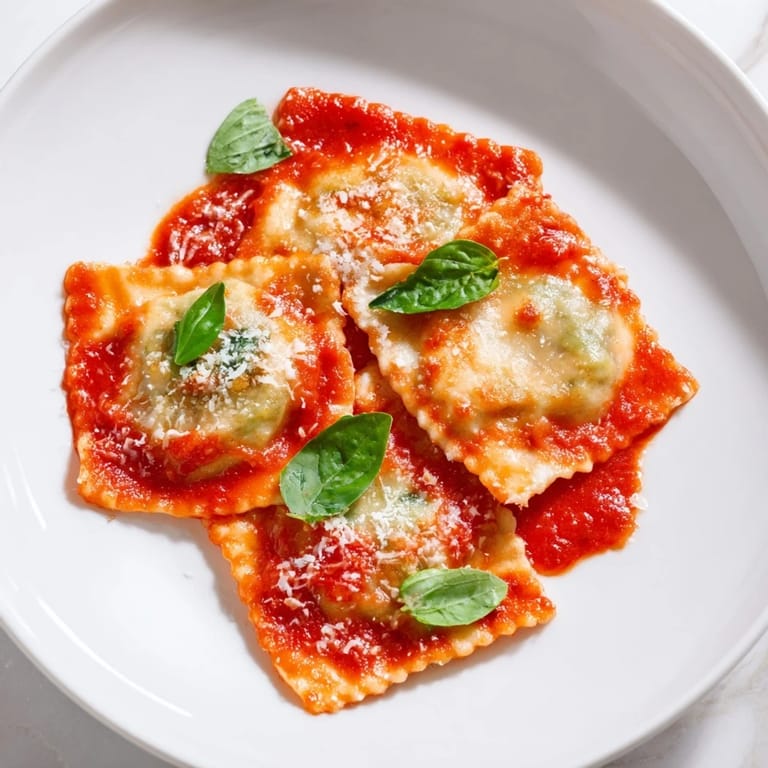
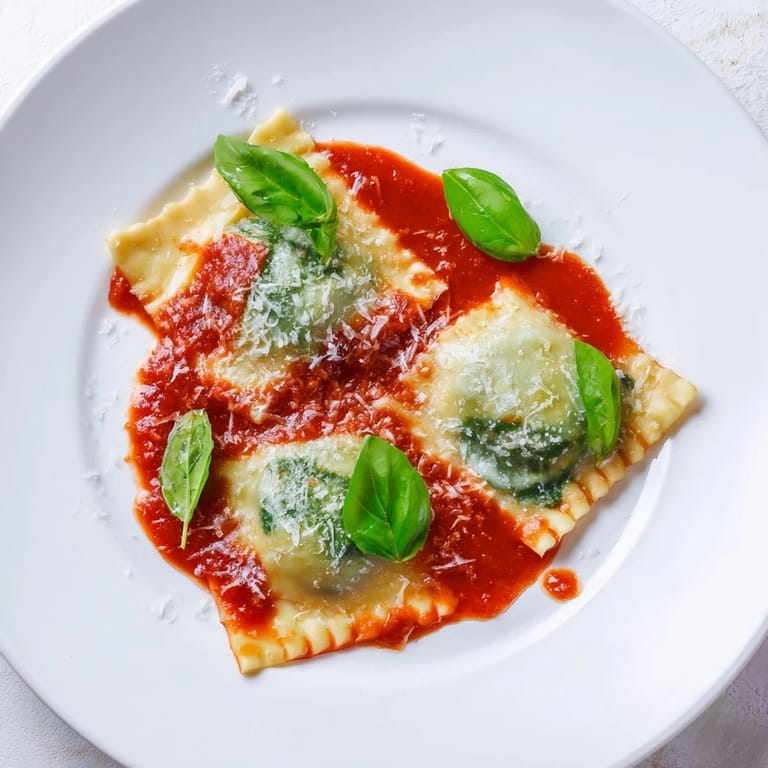
- Spoon a little sauce onto each plate, arrange the hot ravioli on top, and finish with more sauce, torn basil, and a generous sprinkle of Parmesan. Serve immediately while everything is steaming and the cheese is melting.
 Save
Save The first time I served these to my book club, everyone went quiet for a few minutes, just eating and making those little happy sounds people make when food surprises them. One friend asked if I'd taken a cooking class in Italy, and I admitted I'd just learned from a neighbor and a lot of trial and error. That night, the ravioli weren't just dinner, they were proof that you don't need fancy training to make something that feels special and tastes like love.
How to Store and Reheat
If you're making these ahead, lay the uncooked ravioli on a floured baking sheet in a single layer and freeze them until solid, then transfer them to a freezer bag where they'll keep for up to three months. Cook them straight from frozen, adding just a minute or two to the boiling time. Leftover cooked ravioli can be stored in the fridge in an airtight container with a little sauce for up to two days, and they reheat beautifully in a skillet with butter, sage, and a splash of pasta water.
What to Serve Alongside
These ravioli are rich enough to be the star, but a simple arugula salad with lemon and olive oil cuts through the creaminess perfectly. I also love serving crusty garlic bread for soaking up every last bit of sauce, and a crisp white wine like Pinot Grigio or Vermentino feels just right. If you want to make it a full Italian feast, start with a light minestrone or a platter of roasted vegetables drizzled with balsamic.
Little Things That Make a Difference
A pinch of lemon zest in the filling brightens everything and makes the ricotta taste fresher, and using freshly grated nutmeg instead of the pre-ground stuff is a small change that makes a big impact. If your pasta sheets are drying out while you work, cover them with a barely damp towel to keep them pliable. Don't skip salting the pasta water generously, it should taste like the sea, because this is your only chance to season the dough itself.
- Always save a cup of pasta cooking water before you drain, it's liquid gold for loosening sauce or reheating leftovers.
- If you don't have a pasta machine, a wine bottle works surprisingly well as a rolling pin in a pinch.
- Torn basil tastes fresher than chopped because cutting it with a knife can bruise the leaves and make them taste slightly bitter.
 Save
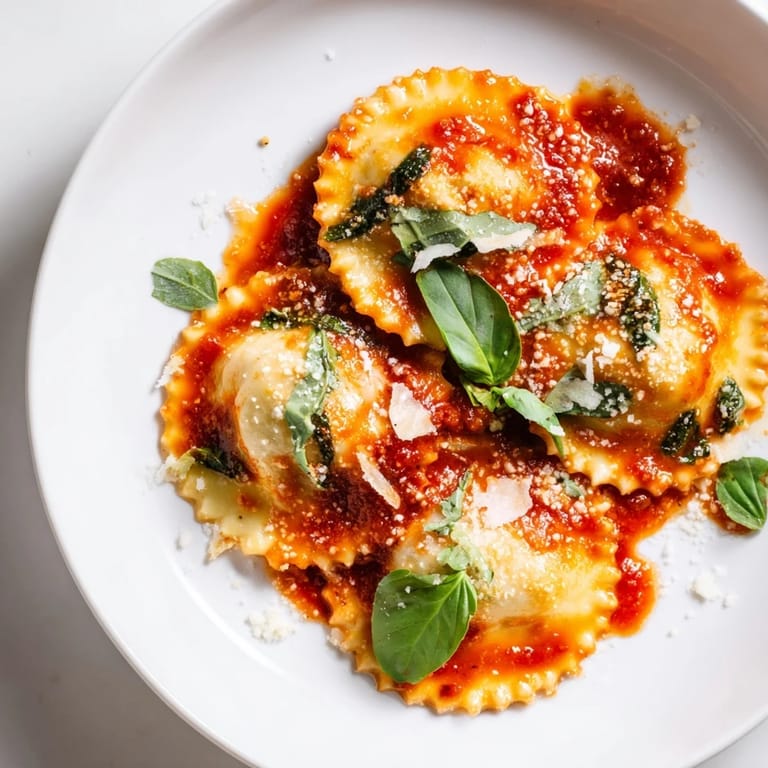
Save There's something about making pasta by hand that slows the whole day down in the best way, and when you set a plate of these ravioli in front of someone, the reaction is always worth the flour on your shoes. Keep practicing, keep rolling, and don't worry if the first batch looks a little rustic, they'll still taste like a small miracle.
Recipe Q&A
- → Can I make the ravioli ahead of time?
Yes, you can prepare ravioli several hours in advance and refrigerate on a floured tray covered with plastic wrap. For longer storage, freeze on a baking sheet for 2 hours, then transfer to freezer bags for up to 3 months. Cook from frozen, adding an extra 1-2 minutes to the cooking time.
- → What's the best way to seal ravioli?
Brush the pasta edges lightly with water before pressing the top sheet down. Use your fingers or a fork to press firmly around the filling, ensuring a tight seal that prevents the filling from leaking during cooking. A ravioli cutter or knife helps create clean edges.
- → How do I know when ravioli is properly cooked?
Ravioli is done when it floats to the surface of the boiling water, which typically takes 3-4 minutes. Fresh ravioli cooks quickly, so watch carefully to avoid overcooking. Remove with a slotted spoon to prevent tearing.
- → Can I use store-bought pasta sheets?
Absolutely. Fresh or frozen pasta sheets save significant time and work well for this dish. Follow package instructions for thickness and adjust cooking time if needed. Ensure they're pliable enough to seal properly around the filling.
- → What can I substitute for fresh spinach?
Frozen spinach works perfectly when thawed and thoroughly drained to remove excess moisture. Use approximately the same amount as fresh. Alternatively, try kale, chard, or a combination of greens for variation in flavor and nutrition.
- → How should I store leftover ravioli?
Refrigerate cooked ravioli in an airtight container for up to 3 days. Reheat gently in a saucepan with a bit of sauce or butter over low heat, or warm in the oven at 350°F. Avoid microwaving as it can make the pasta rubbery.