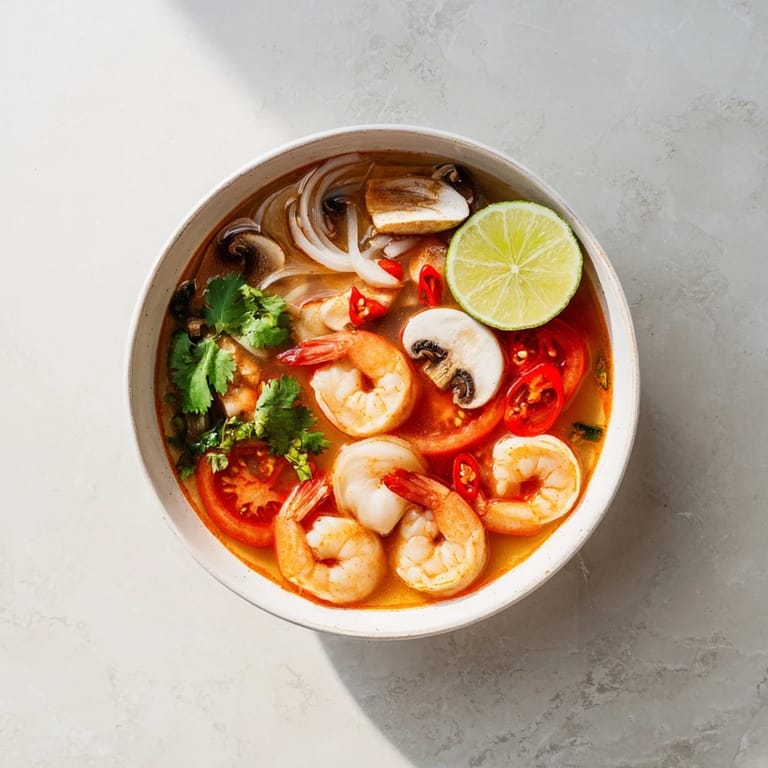
 Save
Save The first time I tasted tom yum was at a cramped Bangkok night market stall where the cook worked with one hand while gesturing wildly with the other, explaining that the trick was knowing when to stop and when to add more lime. I've made this soup countless times since, chasing that perfect balance of heat and brightness that makes you simultaneously sweat and smile. There's something about the combination of lemongrass and lime that feels like it's waking up your entire mouth, and somehow that clarity is exactly what you need on certain days.
I made this soup for my sister on a rainy afternoon when she was stressed about work, and she ate three bowls without saying much of anything. By the end, she was laughing and telling stories again, and I realized it wasn't about the soup itself but about how heat and acidity and fragrance can shift something inside you. Now whenever she visits, she asks if I'll make tom yum, and I always know it's what she actually needs.
Ingredients
- Chicken or vegetable stock (4 cups): This is your foundation, so use something you actually like drinking on its own, not just the tinny stuff from a box.
- Fresh lemongrass stalks (2): The white part at the bottom is where the magic lives; trim the dry tops and smash everything to release the oils.
- Kaffir lime leaves (4): If you can't find them, don't skip them entirely, but do track some down at an Asian market because they're worth the trip.
- Fresh galangal (3 slices): It's like ginger's more elegant cousin; if you genuinely cannot find it, ginger works but galangal has a subtle pine-like warmth that ginger doesn't.
- Thai bird's eye chilies (2): These little things pack serious heat, so taste as you go unless you love the kind of spice that lingers.
- Large shrimp, peeled and deveined (250g): Fresh is better than frozen, but frozen works beautifully if you thaw it properly under cold water.
- White mushrooms, sliced (150g): They soften quickly and absorb the broth flavor; cremini mushrooms work too and taste slightly earthier.
- Tomatoes in wedges (2 medium): Ripe tomatoes matter here because they break down into the broth and add natural sweetness and body.
- Small onion, sliced (1): It becomes translucent and sweet, balancing the heat in a way that's hard to describe until you taste it.
- Fish sauce (2 tablespoons): Yes, it smells deeply strange on its own, but trust the process; it's the backbone that ties everything together.
- Lime juice (1 tablespoon plus more): Fresh lime is non-negotiable; bottled versions taste flat and one-dimensional.
- Sugar (1 teaspoon): Just a touch to round out the sourness and heat without making it sweet.
- Chili paste, nam prik pao (1 teaspoon, optional): It adds a deeper, roasted chili flavor that makes the soup feel more complex.
Tired of Takeout? 🥡
Get 10 meals you can make faster than delivery arrives. Seriously.
One email. No spam. Unsubscribe anytime.
Instructions
- Build your aromatic base:
- Pour stock into a pot and let it come to a gentle simmer, then add the smashed lemongrass, torn lime leaves, galangal slices, and sliced chilies. You'll notice the kitchen filling with this incredible citrusy, herbal smell within seconds. Let this bubble quietly for 5–7 minutes; you're infusing the broth with flavor, not rushing.
- Add texture and substance:
- Scatter in the mushrooms, tomato wedges, and onion slices and let them soften for about 3–4 minutes until they've started to break down and surrender to the heat. The tomatoes will begin dissolving into the broth, enriching it.
- Cook the shrimp gently:
- Once the vegetables are tender, add the shrimp and watch them carefully; they go from gray to pink and opaque in just 2–3 minutes, and overcooked shrimp becomes rubbery and loses its delicate texture. This is the moment you need to stay present.
- Season to your taste:
- Stir in the fish sauce, lime juice, sugar, and chili paste if you're using it, then taste a spoonful and adjust. This is your personal moment; maybe you want more lime bite, maybe more heat, maybe more savory depth. Trust your instincts.
- Remove solids if desired:
- Some people like fishing out the lemongrass and galangal pieces before serving; others leave them in as flavor mines. Choose whatever feels right.
- Serve with garnish:
- Ladle the soup into bowls and finish each one with a scatter of cilantro, sliced green onions, and a lime wedge on the side. Let people squeeze lime directly into their bowl; that final addition of brightness is their own choice.
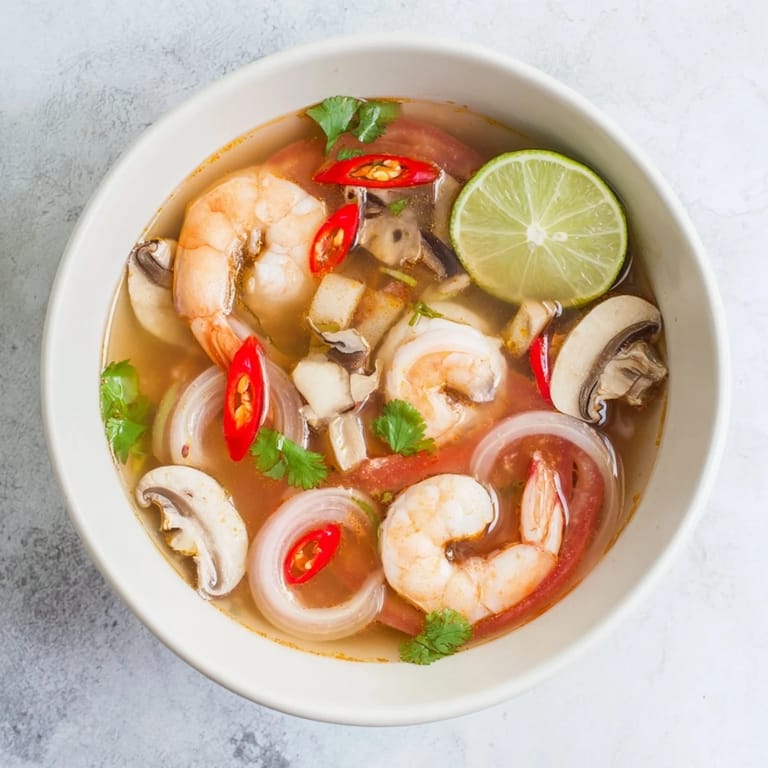 Save
Save My neighbor, who grew up in Thailand, ate a bowl of this soup in my kitchen and nodded quietly, then asked for the recipe without much fanfare. That small gesture meant everything because it meant I'd gotten close to something real, something that mattered. Food doesn't need applause; sometimes the quiet nod of recognition from someone who knows the original is enough.
The Balance You're Really Chasing
Tom yum is honestly a lesson in balance, and once you understand it, you can apply the principle to almost any soup or sauce you make. You need heat from the chilies, brightness from the lime, fragrance from the lemongrass and lime leaves, umami depth from the fish sauce, and a touch of sweetness from the sugar to make everything else sing. None of those elements should dominate, but if you're missing one, the whole thing feels incomplete. It's like a conversation where everyone gets a turn to speak.
What to Serve Alongside
This soup becomes a full meal when you serve it with steamed jasmine rice, which you can pile into the bowl to soak up all that incredible broth. Some people also like having extra lime wedges, fresh Thai basil if you can find it, and crusty bread for something to hold onto. The soup is bright and intense enough that it doesn't need anything heavy with it; in fact, too many sides will only distract from what makes it special.
Making It Your Own
The beauty of tom yum is that it's flexible enough to adapt to what you have on hand while staying recognizably itself. You can swap in other vegetables like baby corn or snap peas, use squid or fish instead of shrimp, or even go vegetarian with extra mushrooms and tofu. The core flavor comes from that aromatic base of lemongrass, lime leaves, and galangal, so as long as those are there, you're in the territory of tom yum. This is also a soup that rewards experimenting with the ratio of heat to acid, so pay attention to what you prefer and make notes for next time.
- Some people add a splash of coconut cream at the end for richness, which softens the edges slightly.
- Storing it in the fridge actually improves the flavor as the aromatics continue to mingle overnight.
- Reheating should be gentle; just bring it back to a simmer and taste to see if it needs any balance adjustment.
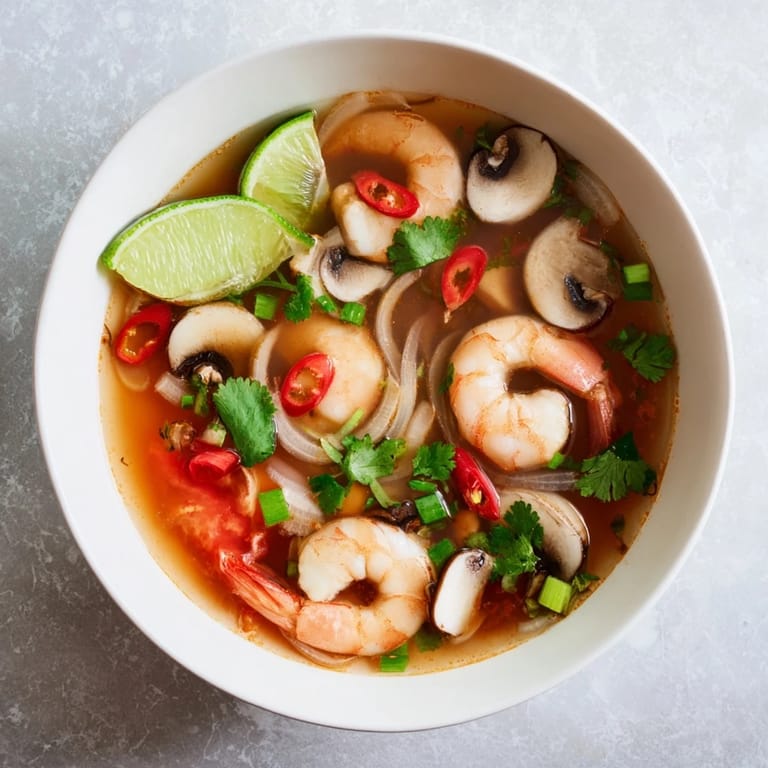 Save
Save This soup has become my answer to so many different moods and moments, from quiet weeknight dinners to feeding friends who need comfort in the form of heat and brightness. Every time I make it, I think of that Bangkok night market stall and the cook's casual wisdom, and I'm grateful to keep learning from that memory.
Recipe Q&A
- → What can I use instead of shrimp?
For a vegetarian option, tofu works well in place of shrimp and swapping fish sauce with soy sauce maintains flavor depth.
- → How spicy is this soup?
The heat comes from Thai bird’s eye chilies, which can be adjusted to suit your preferred spice level.
- → Can I prepare this in advance?
Prepare the broth base ahead but add shrimp and fresh ingredients just before serving for best texture.
- → What side dishes complement this broth?
Steamed jasmine rice or a crisp drink like Riesling or lager pairs beautifully with this vibrant soup.
- → Are there common allergens to consider?
This dish contains shellfish and fish products; substituting ingredients may introduce soy allergens.