 Save
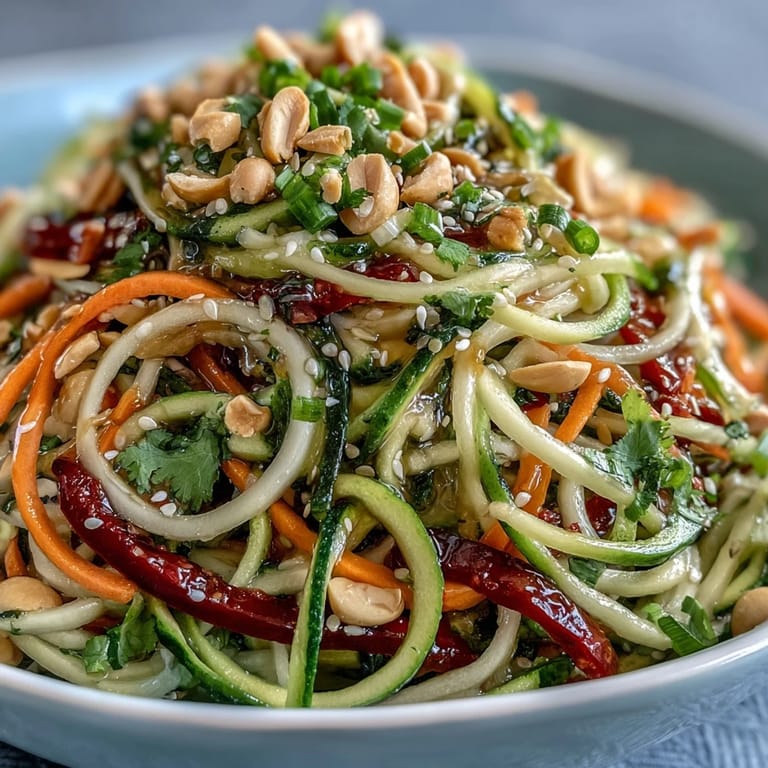
Save My spiralizer sat in a drawer for months until a sweltering afternoon when I couldn't face turning on the stove. I pulled it out almost by accident, then started feeding vegetables through it like I was making confetti, and something clicked—this wasn't just another salad, it was playful, colorful, and somehow made eating vegetables feel like an adventure rather than a chore.
I made this for a potluck on a humid summer evening, nervous it would wilt by the time people actually ate, but something unexpected happened—the longer it sat, the better it got. One guest asked for the recipe right there at the table, fork still in hand, and suddenly I wasn't just sharing food, I was sharing something that made people pause and actually taste what they were eating.
Ingredients
- Zucchini, spiralized: This becomes impossibly light and delicate when spiralized; buy the firmest one you can find so it doesn't fall apart in the dressing.
- Carrot, spiralized: The sweetness here balances the dressing perfectly, and spiralizing makes it tender enough to enjoy without cooking.
- Red bell pepper, thinly sliced: Leave it raw for that crisp snap; it's the textural contrast that makes this salad sing.
- Red cabbage, thinly shredded: This holds up beautifully and gives you that deep purple color that makes the whole bowl look intentional and alive.
- Cucumber, spiralized: Choose English cucumbers with fewer seeds so you get pure green noodles without a watery center.
- Green onions, thinly sliced: These add a sharp, oniony bite at the last moment—slice them just before serving so they stay bright and punchy.
- Fresh cilantro, chopped: If you're the type who finds cilantro tastes like soap, mint works beautifully instead; don't force it.
- Toasted sesame oil: This is the soul of the dressing—buy the good stuff and smell it before you leave the store; quality matters here.
- Rice vinegar: Its gentle sweetness won't overpower delicate spiralized vegetables like harsher vinegars would.
- Low-sodium soy sauce or tamari: Tamari keeps it gluten-free; use whichever you trust, but taste as you go because salt levels vary wildly between brands.
- Freshly grated ginger: Never skip this or use powdered ginger; fresh ginger gives you a living, warming heat that powdered can't replicate.
- Maple syrup or honey: This rounds out the dressing and prevents it from being all sharp edges; a tiny bit goes a long way.
- Garlic, minced: One clove is enough unless you're cooking for garlic lovers; you're not trying to make mouths burn.
- Lime juice: A squeeze of brightness that ties everything together at the end.
- Chili flakes, optional: Add these if you want heat, but taste the salad first—some prefer the cool freshness without any fire.
- Toasted sesame seeds: These add nutty depth and visual texture; buy them already toasted to save yourself a step.
- Roasted peanuts or cashews, optional: Either one adds protein and richness; leave them out if you have allergies or simply prefer the lighter version.
Tired of Takeout? 🥡
Get 10 meals you can make faster than delivery arrives. Seriously.
One email. No spam. Unsubscribe anytime.
Instructions
- Spiralize and Slice Your Vegetables:
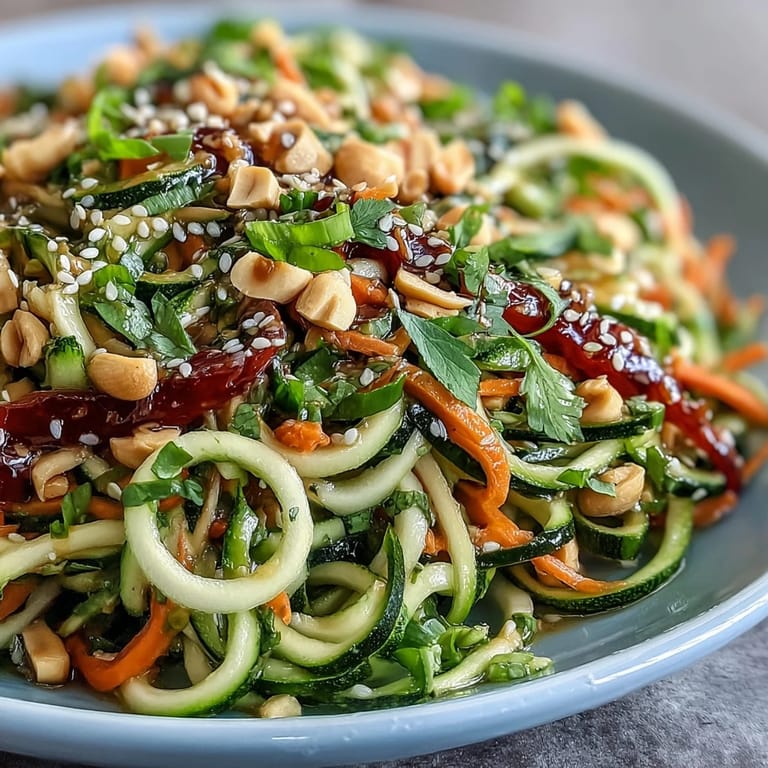
- Feed your zucchini, carrot, and cucumber through the spiralizer with confidence—you'll hear it clicking and whirring as it transforms them into delicate noodles. Slice your bell pepper and cabbage with a sharp knife on a clean cutting board, moving quickly so you don't second-guess yourself.
- Create Your Dressing Bowl:
- Grab a separate mixing bowl and pour in the sesame oil, rice vinegar, soy sauce, and ginger all at once. Whisk it all together vigorously until the maple syrup dissolves and everything becomes one glossy, fragrant mixture that smells like a really good Asian restaurant.
- Combine Everything:
- Dump all your prepared vegetables into your large mixing bowl and pour that golden dressing over top. Toss gently with your hands or two forks—you want to coat everything without bruising the delicate zucchini noodles.
- Let the Flavors Meet:
- Walk away for 5 to 10 minutes and let the salad sit on the counter; this is when the magic happens and the vegetables start to soften ever so slightly while drinking in all that sesame-ginger goodness. Resist the urge to pick at it.
- Finish and Serve:
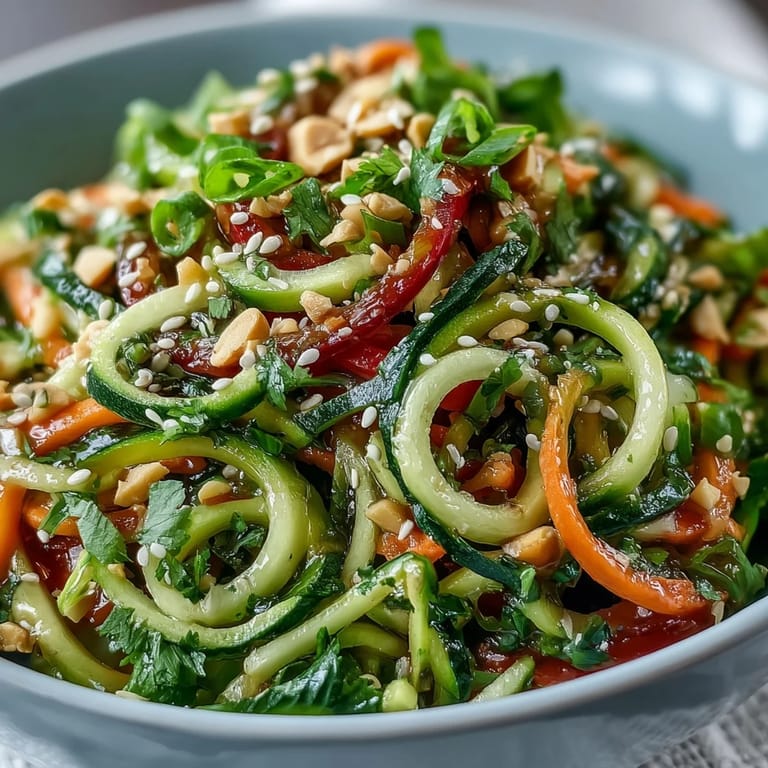
- Transfer everything to your serving platter or individual bowls, scatter sesame seeds and nuts across the top like you mean it, and add a final handful of fresh cilantro. Serve right away so you catch that moment when it's still crisp but already flavorful.
 Save
Save There was a moment when my neighbor tasted this and suddenly started talking about her childhood in Thailand, how her grandmother used to make something similar but with fish sauce and lime. It made me realize that food doesn't have to be fancy or complicated to transport people somewhere; sometimes it just has to taste alive and honest.
Choosing the Right Vegetables
The spiralizer changed everything for me once I understood that not all vegetables are created equal for this technique. Firm vegetables like zucchini, carrots, and daikon root become silky and tender without any cooking, while softer vegetables like tomatoes will fall apart the moment you look at them wrong. I learned this the hard way by trying to spiralize an overripe zucchini and ending up with vegetable soup where I wanted noodles, but now I always squeeze my vegetables gently before buying them and choose the ones that feel almost waxy and resistant to pressure.
The Sesame-Ginger Dressing Secret
This dressing is deceptively simple, but it's where all the personality lives, and I've learned that whisking it properly makes a real difference. When you whisk, you're not just mixing ingredients; you're emulsifying the oil and vinegar slightly, which changes how it coats the vegetables and how it tastes on your tongue. The first time I rushed this step and just dumped everything together, the salad tasted separated and confused, like the ingredients hadn't decided whether they liked each other or not.
Storage and Variations That Work
This salad lives best eaten fresh, but you can prep all the individual components the night before and assemble it when you're ready to eat, which feels like a small victory on busy mornings. I've substituted yellow squash for zucchini when that's what the farmers market had, swapped in shredded beets for a completely different flavor profile, and even added thinly sliced raw mushrooms when I wanted more earthiness. For protein without cooking, I've scattered edamame across the top, crumbled some baked tofu into the mix, or tossed in chickpeas when I wanted something more substantial.
- Prep everything the night before and toss together just before serving to preserve maximum crispness and freshness.
- Try adding apple slices, shredded radish, or shredded beets for variations that feel completely new but use the same reliable dressing.
- Taste your dressing before adding it to the vegetables and adjust the lime juice, ginger, or chili flakes based on what you're craving that day.
 Save
Save There's something deeply satisfying about a salad that requires no cooking, no waiting, just your hands and a spiralizer and about 25 minutes of your attention. It's the kind of dish that quietly becomes part of your regular rotation without any fanfare, showing up at picnics and potlucks and summer dinners until people start asking you to bring it every time.
Recipe Q&A
- → Do I need a spiralizer to make this?
While a spiralizer creates the perfect noodle shape, you can use a julienne peeler or simply slice vegetables into thin strips. The texture will vary slightly but remain delicious.
- → Can I prepare this ahead of time?
You can spiralize vegetables and whisk the dressing up to 24 hours in advance. Store them separately in the refrigerator and toss just before serving to maintain optimal crunch.
- → What vegetables work best for spiralizing?
Zucchini, carrots, cucumbers, yellow squash, and daikon create excellent noodles. Softer vegetables like bell peppers and cabbage work better when thinly sliced or shredded.
- → Is this suitable for meal prep?
This dish works well for meal prep when stored properly. Keep the dressing separate and combine before eating. The vegetables stay fresh for 2-3 days when refrigerated in airtight containers.
- → How can I add more protein?
Baked tofu, edamame, grilled chicken, or cooked shrimp pair wonderfully with these flavors. Simply add your chosen protein on top or mix it in when tossing with dressing.
- → Can I make the dressing spicier?
Absolutely! Increase the chili flakes to suit your taste, or add fresh minced chili peppers, sriracha, or a dash of hot sauce to the dressing mixture.