 Save
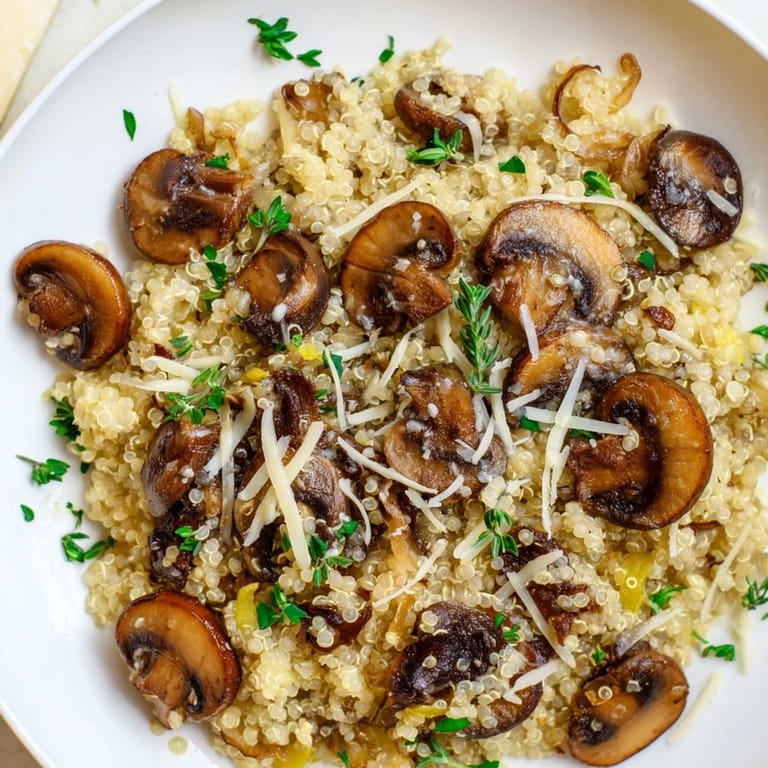
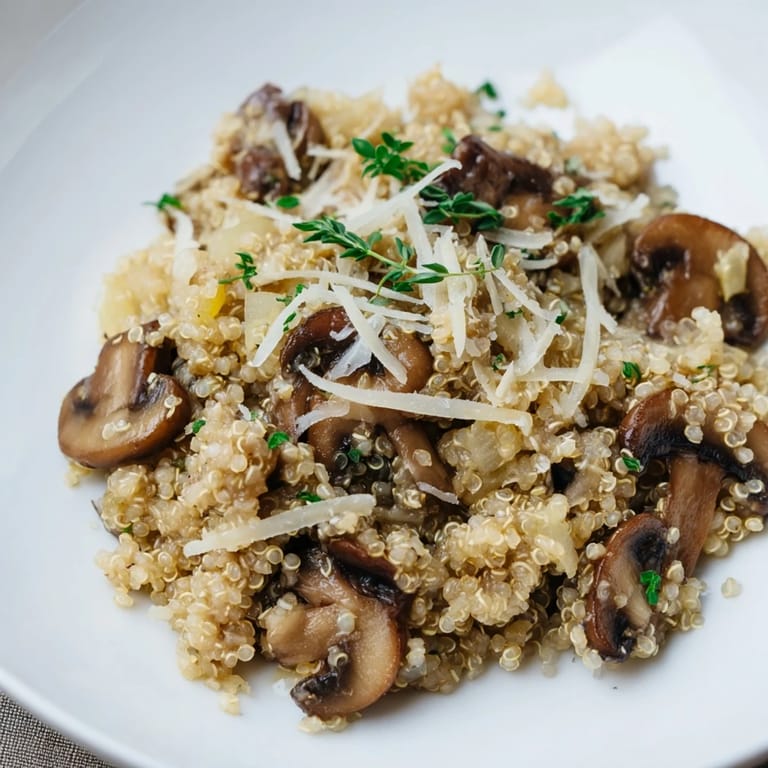
Save I discovered quinoa risotto completely by accident on a Tuesday evening when I'd promised to cook something special but found myself without arborio rice. Standing in my kitchen, staring at a container of quinoa and a pile of mushrooms I'd picked up from the market, something clicked—why not try it? Twenty minutes later, my roommate walked in to the smell of caramelized mushrooms and asked what restaurant I'd ordered from. That was the moment I realized this dish had potential beyond desperation cooking.
I made this for my partner's family dinner last spring, and I remember feeling genuinely nervous about serving something unconventional at their table. But watching everyone go quiet after that first bite, then reach for seconds, made me realize that the best recipes are the ones that surprise people in the best way. His mom asked for the recipe before dessert was even served.
Ingredients
- Cremini or mixed mushrooms (400 g): These are your flavor anchors—cremini are earthier than button mushrooms, but honestly, use whatever looks good at your market. The key is slicing them evenly so they brown at the same rate.
- Quinoa (200 g, rinsed): Rinsing it removes the bitter coating and keeps the grains separate, which matters more here than in a salad. This is where the protein comes from, and it creates that creamy texture as it breaks down.
- Yellow onion (1 medium, finely chopped): Fine chopping means it disappears into the dish and releases its sweetness without overpowering anything.
- Garlic (2 cloves, minced): Fresh is non-negotiable—it rounds out the earthiness of the mushrooms in a way nothing else can.
- Vegetable broth (1 L, kept warm): Warm broth is crucial; cold broth will cool down your risotto and mess with the cooking time. I keep mine in a separate pot on low heat.
- Dry white wine (120 ml): This adds acidity and depth that you can't get any other way. Pinot Grigio or Sauvignon Blanc both work beautifully.
- Unsalted butter (40 g): Split between the beginning and end—the first bit helps build flavor, the second finishes it with richness.
- Parmesan cheese (60 g, freshly grated): Pre-grated loses flavor fast; fresh-grated makes an actual difference in how this tastes.
- Heavy cream (2 tbsp, optional): I skip it sometimes, but on nights when I want the dish to feel extra luxurious, it's there waiting.
- Olive oil (2 tbsp): Good quality matters because it's one of the few raw fats in this dish.
- Sea salt and freshly ground black pepper: Taste as you go—the broth is already seasoned, so you're adjusting, not starting from scratch.
- Fresh thyme (1 tbsp, or 1 tsp dried): Thyme and mushrooms are a combination that feels inevitable once you've tried it together.
- Fresh parsley (2 tbsp, chopped): This is your brightness at the end—it cuts through the richness and makes the whole dish feel fresh.
Tired of Takeout? 🥡
Get 10 meals you can make faster than delivery arrives. Seriously.
One email. No spam. Unsubscribe anytime.
Instructions
- Build your base with aromatics:
- Heat the olive oil and 1 tbsp butter over medium heat, then add your onion. Let it soften for 2–3 minutes until it's translucent and smells sweet. Add the garlic and stir for about a minute—you'll know it's ready when you smell it clearly.
- Brown the mushrooms until they release their magic:
- Add your sliced mushrooms and thyme, then let them sit undisturbed for a couple minutes before stirring. This is where the color develops. Keep stirring occasionally for 6–8 minutes total until the moisture has evaporated and they're deeply golden. This step is worth the time.
- Toast the quinoa briefly:
- Stir in your rinsed quinoa and cook for 1–2 minutes until the grains are coated and smell slightly nutty. This small step unlocks flavor in a way that skipping it won't.
- Add wine and let it disappear:
- Pour in the white wine and stir constantly until it's mostly absorbed, maybe 2–3 minutes. The alcohol cooks off and leaves behind brightness.
- Start the slow broth addition:
- Ladle in your warm broth—just enough to barely cover the quinoa. Stir frequently and wait until the liquid is mostly absorbed before adding the next ladleful. This is the patient part, and it's what makes risotto taste like risotto.
- Continue stirring and tasting:
- Keep going for 20–25 minutes total, adding broth steadily. The quinoa will go from firm to creamy, and you might not need every last drop of broth. Stop when it tastes done to you, not when the broth runs out.
- Finish with butter and Parmesan:
- Off the heat, stir in the remaining butter, Parmesan, and cream if you're using it. This is where the dish becomes silky.
- Rest and serve:
- Cover the pan and let it sit for 2 minutes. This sounds unnecessary, but it lets everything come together. Serve hot, topped with fresh parsley and extra Parmesan.
 Save
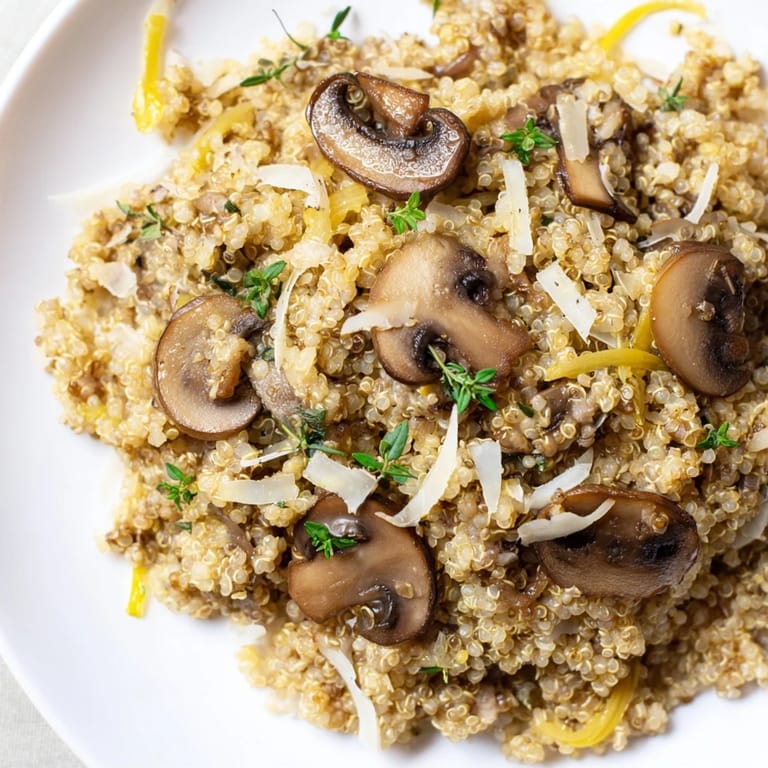
Save There's a moment when you're halfway through stirring and the risotto transforms from looking like broken grains in broth into something that actually clings to the spoon—that's when you know it's working. I've learned to wait for that moment instead of watching the clock, because it's the actual signal that everything is coming together.
Why Quinoa Changes Everything
Switching from arborio to quinoa isn't just about being different—it's about adding protein in a way that actually matters if you're cooking vegetarian. One serving has 13 grams of protein, which means this can be your main dish without feeling incomplete. The texture is also inherently lighter, so even though it's creamy, it never feels heavy or overstuffing. It's the kind of dish that tastes indulgent but lets you breathe afterward.
Mushroom Selection and Prep
Cremini mushrooms are my go-to because they brown deeply and have real flavor, but I've made this with oyster mushrooms, shiitake, and mixed wild varieties. The one rule is to slice them evenly—if some pieces are thin and others are thick, the thin ones will be dust while the thick ones are still firm. I learned this the hard way one night when I was rushing. Equally sized pieces mean they caramelize together and finish at the same time.
Variations That Actually Work
Once you understand the basic technique, this risotto invites improvisation. I've added fresh peas in the last 5 minutes of cooking, wilted spinach at the finish, roasted asparagus on top, and even a handful of sun-dried tomatoes stirred in before the broth. The framework stays the same, but the dish changes completely based on what's in your kitchen. The one thing I'd avoid is adding too many vegetables at once—let the mushrooms be the star and treat additions as supporting players.
- Peas and fresh dill create a spring version that feels bright and complete.
- Spinach added at the end keeps its texture better than cooking it from the start.
- A squeeze of lemon juice at the table adds acidity that cuts through the richness beautifully.
 Save
Save This dish taught me that sometimes the best cooking happens when your first choice isn't available. What started as improvisation has become one of my favorite things to make, and I've stopped apologizing for it not being traditional risotto—it's better than that.
Recipe Q&A
- → Can I use any type of mushrooms?
Cremini or mixed mushrooms are preferred for their earthy flavor, but button or shiitake mushrooms can be used as alternatives.
- → How do I cook quinoa for this dish?
Quinoa is toasted briefly with aromatics, then cooked by gradually adding warm vegetable broth until tender and creamy.
- → Is white wine necessary?
White wine imparts subtle acidity and depth. You can omit it and add extra broth for a non-alcoholic version.
- → What can I substitute for Parmesan?
For a dairy-free option, replace Parmesan with plant-based cheese or nutritional yeast for a similar umami note.
- → How can I add more vegetables?
Try stirring in peas, spinach, or asparagus toward the end of cooking for extra freshness and nutrients.