 Save
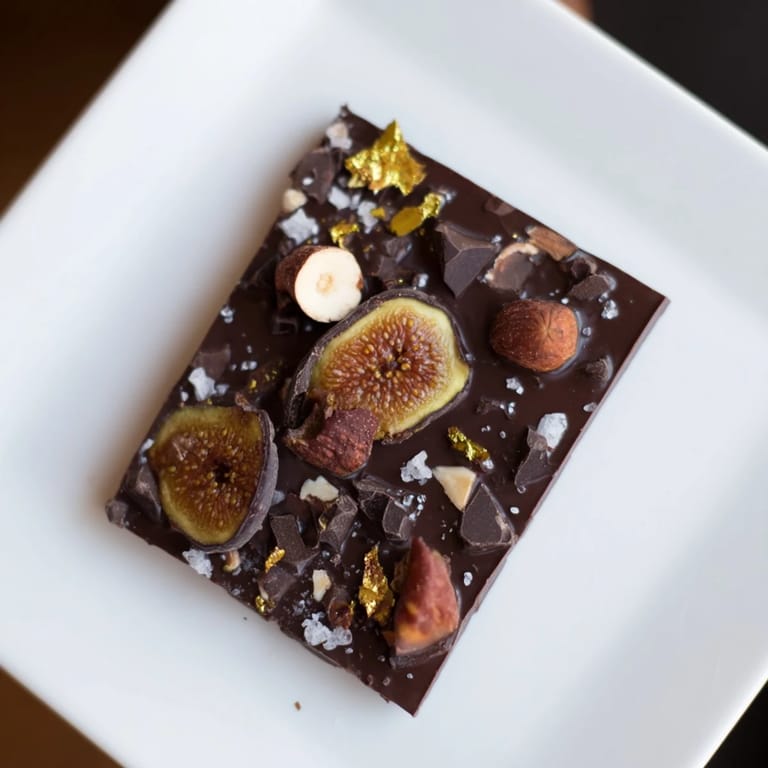
Save I discovered this dessert quite by accident one evening, standing in my kitchen surrounded by half-empty jars and odd ingredients. There was a block of excellent dark chocolate, a handful of dried figs I'd been meaning to use, and a tin of briny black olives left over from a charcuterie board that afternoon. The idea struck me suddenly: what if I layered them all together into something bold and unexpected? What emerged was this striking mosaic of flavors that shouldn't work but absolutely does.
I served this to a group of friends who pride themselves on being sophisticated eaters, and I watched their faces shift from curiosity to genuine delight. One of them actually paused mid-bite, trying to identify each flavor, and that moment—that exact moment of discovery—felt like the whole point of cooking something unconventional.
Ingredients
- Dark chocolate (70% cocoa), 200 g chopped: The higher cocoa percentage is non-negotiable here; it cuts through the sweetness of the figs and stands up to the olive brine without getting drowned out.
- Unsalted butter, 60 g cubed: This tempers the chocolate's intensity and creates a silky base that holds everything together as it sets.
- Honey, 1 tbsp: A subtle sweetener that doesn't overpower; it enhances rather than masks the chocolate's depth.
- Sea salt, pinch: This tiny amount awakens everything, especially the chocolate's complexity.
- Dried figs, 120 g finely sliced: They bring natural sweetness and a subtle earthiness that bridges the chocolate and olive notes beautifully.
- Pitted black olives (oil-cured), 80 g thinly sliced: The briny funk is your secret weapon; it sounds odd until you taste how it amplifies the chocolate's richness.
- Roasted hazelnuts, 50 g chopped: They add textural contrast and a toasted warmth that grounds the bolder flavors.
- Cocoa nibs, 30 g: These add a subtle crunch and reinforce the chocolate note without adding sweetness.
- Flaky sea salt, for garnish: A finishing touch that keeps everything from becoming cloying and looks stunning on top.
- Edible gold leaf or dried rose petals, optional: If you're in the mood to make it feel celebratory, these add visual drama without affecting flavor.
Tired of Takeout? 🥡
Get 10 meals you can make faster than delivery arrives. Seriously.
One email. No spam. Unsubscribe anytime.
Instructions
- Prepare your canvas:
- Line your square tin with parchment paper, leaving enough overhang on two sides so you can lift the whole thing out later. This step feels small but saves you from the heartbreak of chiseling chocolate off metal.
- Melt with intention:
- Set your heatproof bowl over barely simmering water—if the water boils, it's too hot and the chocolate can seize. Stir the chocolate and butter until they're completely smooth and glossy, then remove from heat and fold in the honey and sea salt.
- Spread and smooth:
- Pour the chocolate into your tin and spread it into an even layer with a spatula. You're aiming for something that looks almost flat but not too thin; it needs enough body to hold everything.
- Build your mosaic:
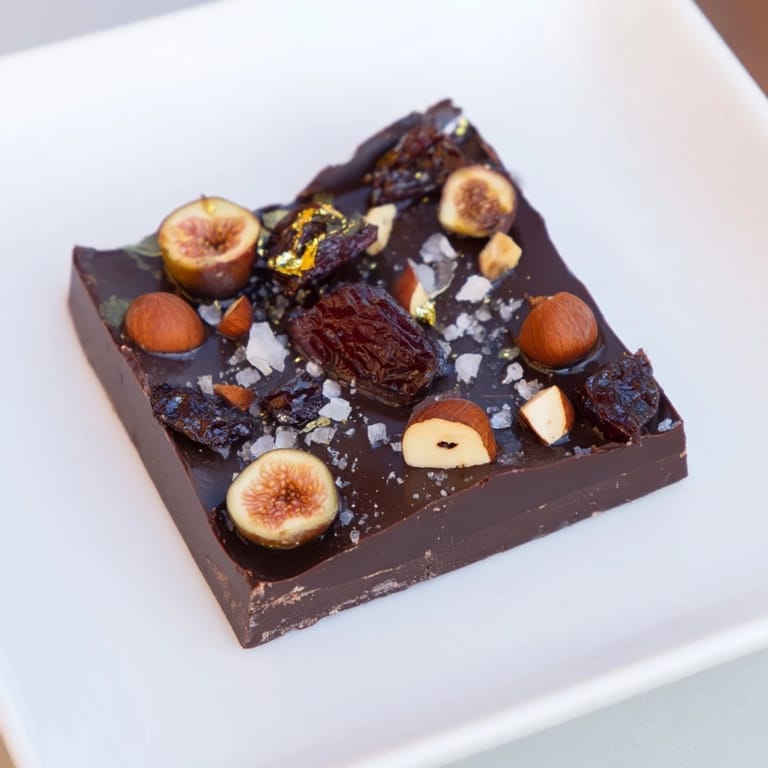
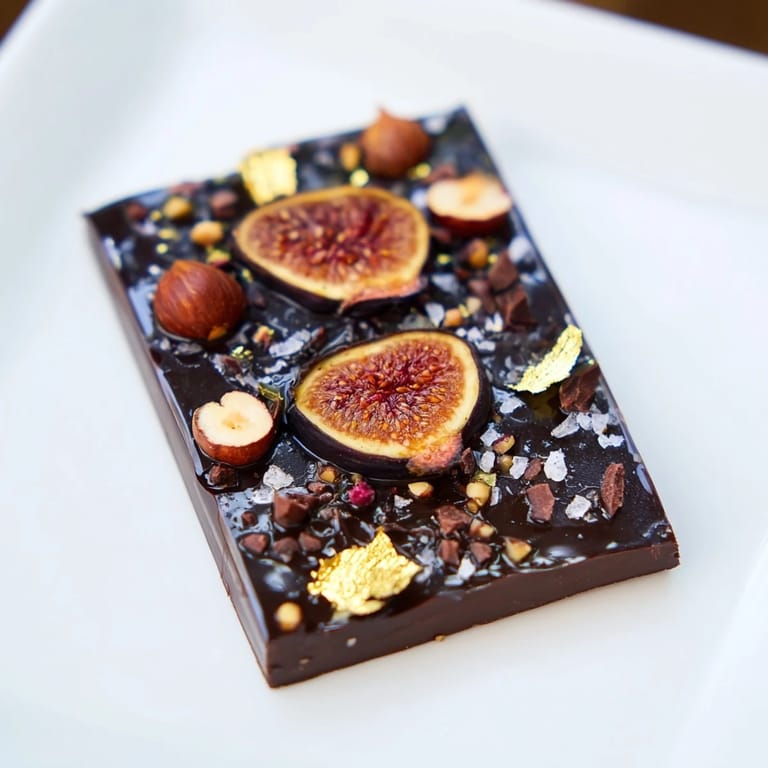
- Scatter the figs, olives, hazelnuts, and cocoa nibs across the chocolate surface in whatever pattern feels right to you. Then press them down gently but firmly so they nestle into the chocolate and create that dense, intentional look—this is where the dessert earns its name.
- Final flourish:
- Sprinkle with flaky sea salt and gold leaf or rose petals if you're using them. The salt especially matters; it's not just decoration, it's flavor.
- Let it set:
- Chill for at least 2 hours until completely firm. You can test readiness by pressing gently on the surface; there should be no give.
- Cut and serve:
- Use the parchment handles to lift the slab out, then cut into small squares with a sharp knife. Wipe your knife clean between cuts for neat edges, and serve chilled or at room temperature depending on your mood.
 Save
Save There's something quiet about assembling this dessert, almost meditative. You're not whisking or folding or watching something bubble on the stove; you're arranging. And in that arranging, in trying to create something visually coherent from such contrasting ingredients, the whole premise suddenly makes sense.
Why This Combination Works
On paper, dark chocolate and black olives shouldn't be friends. But flavor works like this sometimes—opposite tastes don't cancel each other out, they amplify. The chocolate provides richness and warmth, the olive brings salt and a faint minerality that makes the chocolate taste even more chocolatey. The figs smooth the edges between them, translating from one taste to the next. It's a conversation where everyone gets heard.
Serving Suggestions
This dessert is small and intense, so portions should be modest—these pieces are meant to be savored rather than devoured. Serve them straight from the cold, or let them sit at room temperature for 10 minutes if you prefer a slightly softer texture. The coldness emphasizes the chocolate's snap, while warmth makes everything taste more luxurious and melting.
Variations and Flexibility
The beauty of this recipe is that it invites tweaking once you understand its logic. Swap hazelnuts for almonds if that's what you have, or try pistachios for a brighter note. For a vegan version, use plant-based butter and maple syrup—it works seamlessly. You could even experiment with different dried fruits if figs don't speak to you, though the figs' subtle sweetness is particularly good at bridging the gap between chocolate and olive.
- If you can't find oil-cured olives, use the highest quality brined olives you can find and pat them very dry so they don't water down your chocolate.
- For a more dramatic presentation, arrange your toppings in concentric circles or geometric patterns instead of scattering them randomly.
- This dessert actually improves slightly after a day or two in the fridge as the flavors meld and the texture becomes even more cohesive.
 Save
Save This dessert has become my answer to the question of what to make when someone says they want something that surprises them. It's proof that the best cooking sometimes comes from curiosity rather than recipes.
Recipe Q&A
- → Can I substitute the black olives in the topping?
Yes, for a different flavor dimension, you can use oil-cured olives or mild green olives, but stay mindful of their saltiness to balance the dish.
- → What alternatives exist for chopped hazelnuts?
Roasted almonds or pistachios work well as substitutes, providing a complementary crunch and nutty depth.
- → How long should the chocolate slab chill before serving?
Chilling for at least 2 hours ensures the chocolate sets firmly and allows the flavors to meld beautifully.
- → Is it possible to make a vegan version?
Yes, swap unsalted butter for plant-based butter and replace honey with maple syrup to suit vegan preferences.
- → What beverages pair best with this dessert?
Pair with a glass of vintage port or a dark-roast espresso to complement the intense, bittersweet layers.