 Save
Save I discovered this bowl on a Tuesday afternoon when my fridge looked like a Mediterranean farmers market had exploded inside it—roasted eggplant, a bunch of kale that needed rescuing, chickpeas I'd been meaning to use. Instead of panic, I grabbed bulgur, tahini, and lemon, and something clicked. The tahini dressing brought everything together like a conversation between old friends, each ingredient speaking its own language but somehow making sense as one voice. That first bite told me I'd stumbled onto something I'd be making again and again.
I made this for my sister who'd just started her first real job and was eating sad desk salads from the corner store. When I handed her a container and she tasted that tahini dressing—the way her eyes got a little bigger—I knew I'd given her something more valuable than just lunch. She texted me a photo of an empty bowl two days later.
Ingredients
- Bulgur wheat: The nutty foundation that holds everything together; toasting it briefly in oil before adding broth deepens its flavor in ways boiling alone never could.
- Shelled pistachios: Chopped roughly so they keep their texture and personality—don't blend them into submission.
- Vegetable broth: Use something flavorful you'd actually drink on its own, because it becomes the soul of the pilaf.
- Eggplant: Cut into cubes that are actual bite-sized chunks, not too thin or they'll turn into mush, not too thick or they'll stay stubborn.
- Zucchini: Half-moons work better than rounds because they cook more evenly and look less fussy on the plate.
- Red bell pepper: Adds sweetness and brightness, but green or yellow work if that's what your kitchen has today.
- Smoked paprika: This ingredient makes people taste something they can't quite name—that's the smoke doing its job.
- Kale: Tear it by hand into actual pieces you want to eat, not confetti-sized bits that blow away.
- Chickpeas: Rinse canned ones well; that starchy liquid makes them stick together in a way that's not pleasant.
- Tahini: The real deal, not sesame oil—it's creamy and grounding in ways that change the entire bowl.
- Lemon juice: Fresh squeezed tastes like a completely different ingredient than the bottled kind; your dressing will know the difference.
- Maple syrup or honey: Just enough to balance the tahini's earthiness without making it dessert.
Tired of Takeout? 🥡
Get 10 meals you can make faster than delivery arrives. Seriously.
One email. No spam. Unsubscribe anytime.
Instructions
- Heat your oven and prep your vegetables:
- Get the oven to 425°F while you cut eggplant, zucchini, and pepper into pieces that'll actually cook through in thirty minutes. Toss them with oil, paprika, salt, and pepper until every piece is coated—this is where flavor begins.
- Start the roasting:
- Spread everything on a baking sheet in a single layer and slide it in. You'll hear them sizzle almost immediately, which means you're doing it right.
- Make the bulgur while vegetables cook:
- Heat oil in a saucepan, add finely chopped shallot, and wait until it turns translucent and smells sweet. Stir in bulgur and cumin, letting them toast for just a minute—you'll smell the moment it's enough.
- Simmer the grain:
- Pour in broth, bring it to a boil, then drop the heat low and cover it. The bulgur will absorb the liquid in about 12 to 15 minutes; peek only once to check, or you'll let the steam out.
- Turn the roasting vegetables:
- About halfway through roasting, give everything a stir so it browns evenly. The eggplant should start looking golden and slightly caramelized at the edges.
- Prepare the kale:
- You can steam it gently for two or three minutes until it just wilts, or sauté it with a splash of oil in a skillet until it turns tender and a bit crispy. Both ways work; it depends on your mood.
- Warm the chickpeas:
- This step sounds silly until you taste how different warm chickpeas are from cold ones. Just a couple minutes in a skillet with oil brings them to life.
- Make the tahini dressing:
- Whisk tahini with fresh lemon juice, minced garlic, maple syrup, and salt. Add water slowly, stirring as you go, until it becomes creamy and pourable—it should coat a spoon but not run off like water.
- Fluff and finish the bulgur:
- Once the liquid is absorbed, use a fork to break up any clumps gently, stir in the pistachios, and taste for salt and pepper. This is your last chance to adjust seasoning.
- Assemble your bowls:
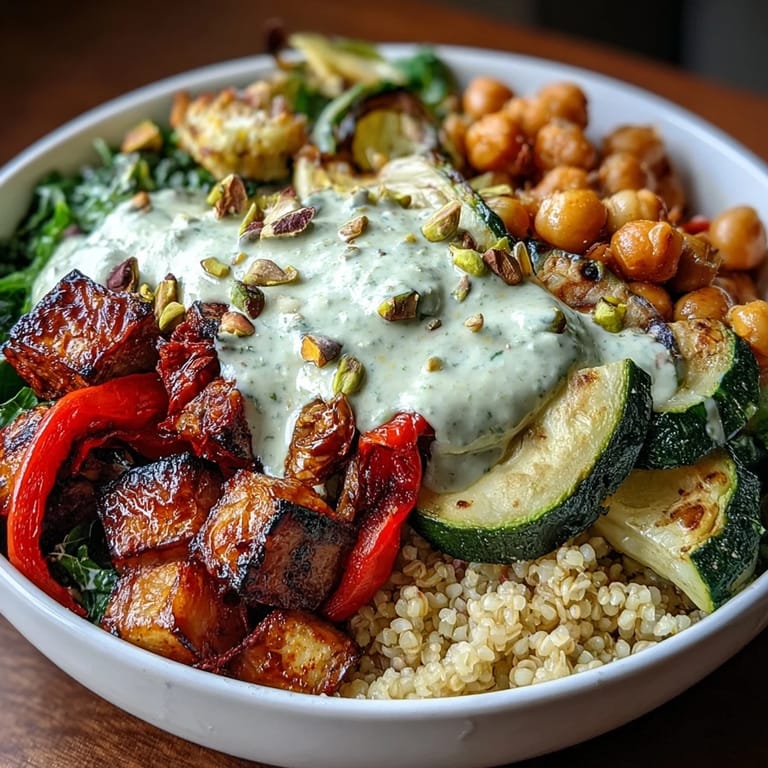
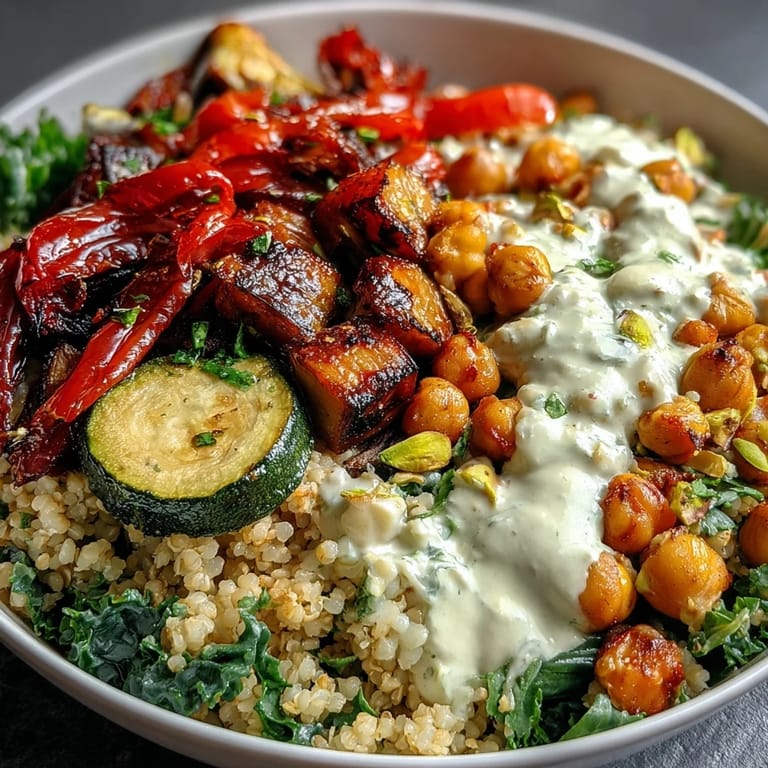
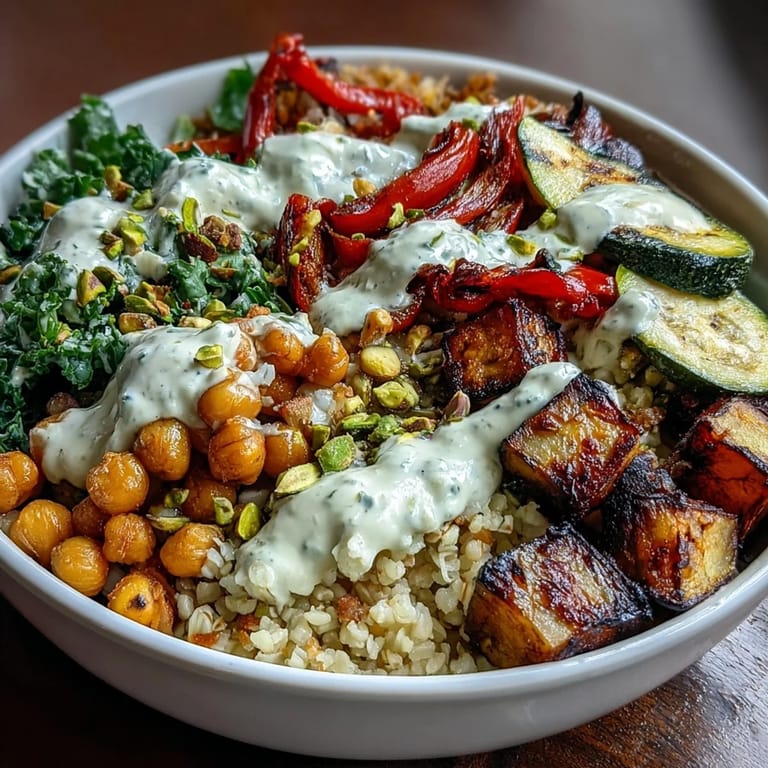
- Start with bulgur as the base, then arrange vegetables, kale, and chickpeas on top like you're painting a picture. Drizzle the tahini dressing generously over everything—don't be shy here.
 Save
Save There's a moment right after you pour that tahini dressing over all the components and see how it finds its way into every crevice, and suddenly it's not just a collection of healthy ingredients anymore—it's a complete thought on a plate. That's when I know someone's going to eat this and feel better than when they started.
Why This Bowl Works as Meal Prep
I learned the hard way that some salads get sad and soggy by Wednesday, but this bowl actually improves slightly as it sits. The flavors get to know each other better, the tahini dressing continues to soften the bulgur, and everything becomes more integrated. Container it on Sunday and you'll still be genuinely excited to eat it on Friday afternoon.
Building Your Own Version
The structure of this bowl is flexible enough that it can become something completely different depending on what's in your market or your garden. I've made it with quinoa instead of bulgur when I was avoiding wheat, swapped roasted sweet potato for eggplant when someone mentioned they'd never tried it that way, and once used whatever greens we had growing in the backyard instead of kale. The tahini dressing is the constant that makes it all feel cohesive.
Storage and Reheating
These bowls keep beautifully for four or five days in the fridge, though I recommend storing the dressing in a separate small container so it doesn't saturate everything. When you're ready to eat, either combine it all and eat cold, or warm the components gently in a skillet if you prefer your vegetables hot and grains warm. Some people like mixing it all together cold straight from the fridge, and honestly, that's perfect too.
- Keep tahini dressing separate until you're ready to eat so textures stay crisp and distinct.
- If you're adding grilled tofu or tempeh, pack that separately and warm it fresh for the best flavor and texture.
- Chopped fresh herbs stirred in right before eating add brightness that drowns out any fridge staleness.
 Save
Save This bowl has become the recipe I make when I want to feel like I'm taking care of myself and the people I feed. It's nourishing without being preachy about it.
Recipe Q&A
- → How long does this keep in the refrigerator?
Stored properly in airtight containers, this bowl stays fresh for 4-5 days. The roasted vegetables hold their texture well, and the tahini dressing actually benefits from sitting overnight as the flavors meld together. If you prefer your greens crisper, pack the kale separately and add it just before eating.
- → Can I freeze this bowl?
While you can freeze the roasted vegetables and chickpeas for up to 3 months, the bulgur and kale don't freeze as well—their textures become mushy upon thawing. For best results, prepare fresh portions weekly or freeze components separately and assemble when ready to eat.
- → What can I use instead of bulgur?
Quinoa makes an excellent gluten-free substitute with similar cooking time. Brown rice or farro work wonderfully too, though they'll require longer cooking. Cauliflower rice offers a lighter, low-carb option that cooks in just minutes. Adjust the broth quantity according to your grain's package directions.
- → How do I make the tahini dressing smoother?
Room-temperature tahini blends much more easily than cold from the refrigerator. Whisk vigorously, adding water one tablespoon at a time until you reach your desired consistency. If the dressing separates, simply whisk again with another splash of water. The dressing will also thin as it sits.
- → Can I shorten the roasting time?
Cut your vegetables into smaller, uniform pieces—about ½-inch instead of 1-inch—and roast at 450°F for 15-18 minutes. Keep an eye on them as smaller pieces cook faster and may caramelize more quickly. You'll still achieve that sweet, roasted flavor in significantly less time.