 Save
Save The first time I made zaatar bread, I was standing in my friend's kitchen in Beirut, watching her mother press the fragrant spice mixture into dough with the kind of casual confidence that comes from doing something a thousand times. She handed me a warm piece straight from the oven, and I understood immediately why this bread shows up at every table in the Levant—it's humble, generous, and somehow tastes like home even if you've never been there before. That afternoon changed how I think about simple bread. Now, whenever I make it, I'm chasing that same magic.
I learned the real value of this bread when I brought a batch to a potluck and watched people cluster around it like it was the only thing on the table, tearing off pieces and dipping them in hummus while barely pausing for breath. One woman told me it reminded her of sitting in a Damascus courtyard thirty years ago, and another just quietly ate three pieces and said nothing, which somehow meant more. That's when I realized zaatar bread isn't about technique—it's about creating a moment where everyone feels welcome.
Ingredients
- All-purpose flour (2 cups): Use a standard all-purpose flour—avoid bread flour, which will make the dough too elastic and tough.
- Instant dry yeast (1 teaspoon): Don't use old yeast; if it's been sitting for more than six months, buy fresh. Your rise depends on it.
- Sugar (1 teaspoon): This feeds the yeast and helps it wake up during the rise.
- Salt (3/4 teaspoon): Salt strengthens the gluten and adds depth; measure carefully because too much will slow fermentation.
- Olive oil for the dough (2 tablespoons): Good olive oil makes a difference in flavor and texture, creating a tender crumb.
- Warm water (2/3 cup): Warm means around 110°F (43°C)—too hot kills yeast, too cold and nothing happens.
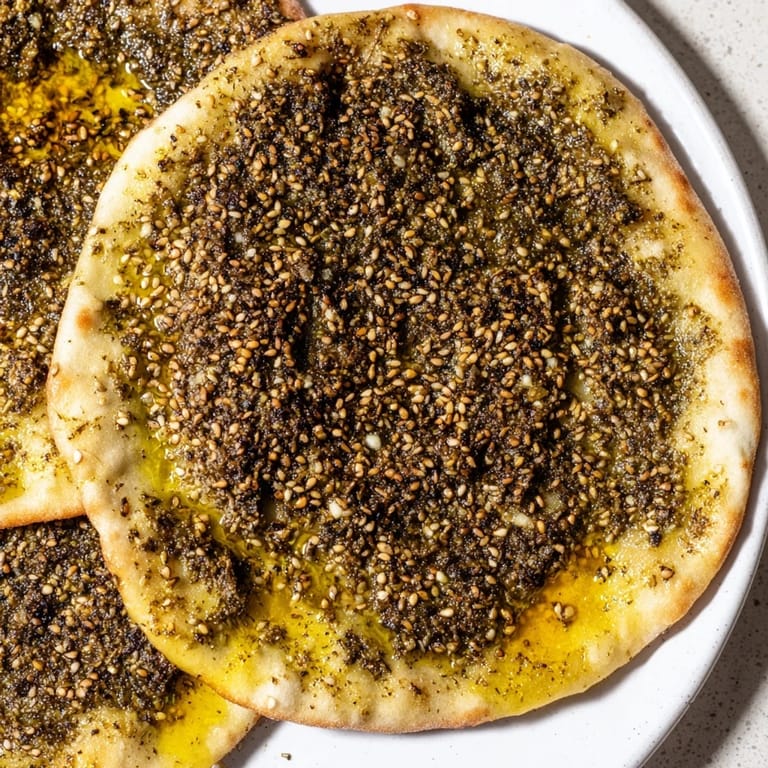
- Zaatar spice blend (1/4 cup): This is the soul of the bread; use a quality blend with sumac, thyme, and sesame, not the dusty stuff that's been in the cupboard for years.
- Toasted sesame seeds (2 tablespoons): Toast your own if you can; the difference between raw and toasted is the difference between boring and unforgettable.
- Extra virgin olive oil for topping (1/3 cup): This is where you don't skimp—it's the final flavor statement, so use something you actually like tasting.
Tired of Takeout? 🥡
Get 10 meals you can make faster than delivery arrives. Seriously.
One email. No spam. Unsubscribe anytime.
Instructions
- Wake the yeast:
- In a large bowl, whisk together your flour, yeast, sugar, and salt like you're mixing dry ingredients for anything else. Drizzle in the olive oil, then gradually add warm water while stirring until the dough is shaggy and soft—not a tight ball yet, just a messy, forgiving mass.
- Develop the dough:
- Flour your counter lightly and knead for 5 to 7 minutes, working the dough until it's smooth and elastic and springs back when you poke it. You'll feel the transformation under your hands; trust that feeling.
- Let it rise:
- Oil a bowl lightly, place the dough inside, and cover it with a damp cloth or plastic wrap. Set it somewhere warm—a turned-off oven with the light on works beautifully—and walk away for an hour or until it's roughly doubled.
- Prepare your oven and workspace:
- Heat your oven to 220°C (425°F) and line two baking sheets with parchment paper. This bread bakes hot and fast.
- Shape the flatbreads:
- Gently deflate the dough and divide it into four equal pieces. Roll each into a ball, then flatten it with your fingers or a rolling pin into a round about 6 to 7 inches across—this is forgiving, so don't stress the exact shape.
- Make the zaatar paste:
- In a small bowl, mix your zaatar, sesame seeds, and olive oil into a loose paste. Stir well so the oil coats everything evenly.
- Top the breads:
- Spread the zaatar mixture generously over each dough round, leaving a small border naked at the edges so you have something to hold when you tear into it warm.
- Bake until golden:
- Slide the sheets into your hot oven and bake for 12 to 15 minutes, until the bread is golden brown and the edges are starting to crisp. You'll smell it before it's done—a warm, herbaceous, slightly nutty aroma that fills the entire kitchen.
- Rest and serve:
- Pull the breads from the oven and let them cool for just a few minutes—they're still cooking slightly from residual heat. Serve warm or at room temperature with whatever you're in the mood for: labneh, olives, fresh vegetables, or just your own hands and appetite.
 Save
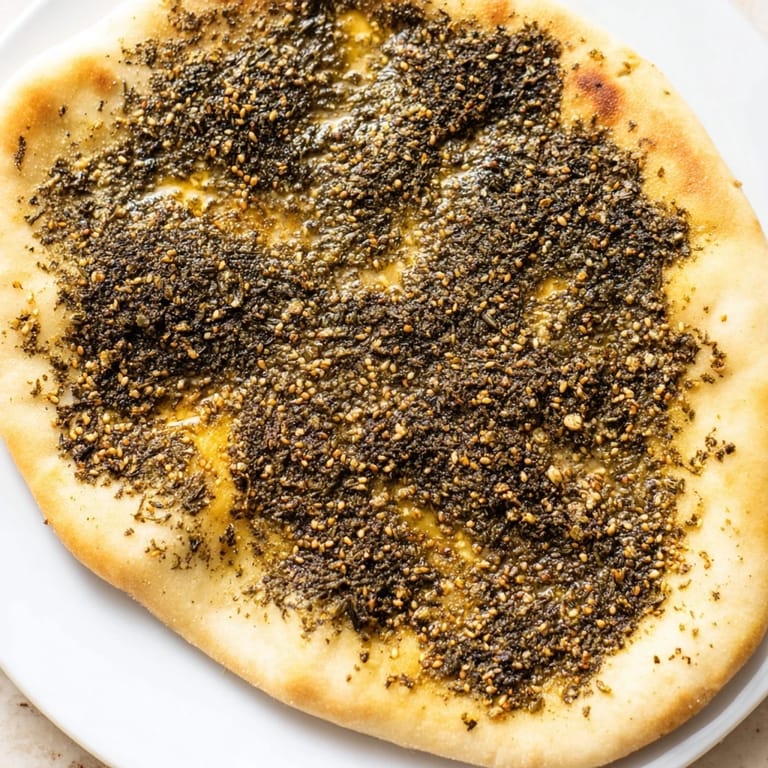
Save There's a moment when you pull zaatar bread from the oven and the heat causes the oil and spices to release all at once—that's the moment people stop what they're doing and actually pay attention. I've seen it happen dozens of times, and it never gets old, the way a room just seems to pause for the aroma.
The Zaatar Topping: Why It Works
Zaatar is a blend that combines dried thyme, sumac, and sesame seeds—each ingredient plays a role. The thyme gives you herbs, the sumac brings a subtle tartness that wakes up your palate, and the sesame adds nuttiness and texture. When you mix it with olive oil, you're creating a paste that clings to the warm dough and infuses every bite. I learned this the hard way after trying to sprinkle dry zaatar on top of baked bread and watching most of it slide off; the oil is what makes it stick and sing.
Timing and Temperature
This bread is all about respect for timing. The dough needs a full hour to rise and develop flavor; I used to try to rush it with a hot oven and ended up with dense, yeasty bread that tasted more like bread and less like zaatar. The oven temperature of 220°C (425°F) is deliberately hot because you want the bread to develop color and crispness in the 12 to 15 minutes it takes to bake. Too low and you'll get pale, soft bread; too high and the edges char before the interior cooks through.
Variations and Serving Suggestions
Once you make this once, you'll start thinking about what you can do with it. I've added a pinch of chili flakes for heat, doubled the sesame seeds for crunch, and even scattered fresh za'atar leaves on top before baking for a brighter, fresher taste. Serve it warm alongside hummus, baba ganoush, or labneh for a proper Levantine spread, or break it apart to scoop up roasted vegetables and grilled meats. It's also incredible the next day, reheated gently, and works beautifully as a canvas for any dip or spread you have on hand.
- Toast your own sesame seeds instead of buying pre-toasted for a fresher, more vibrant flavor.
- If your kitchen is cool, let the shaped dough rest for 10 minutes before topping to give it extra rise and a fluffier texture.
- Serve this bread within a few hours of baking while the crust is still crisp; after that, it softens, which is still delicious but different.
 Save
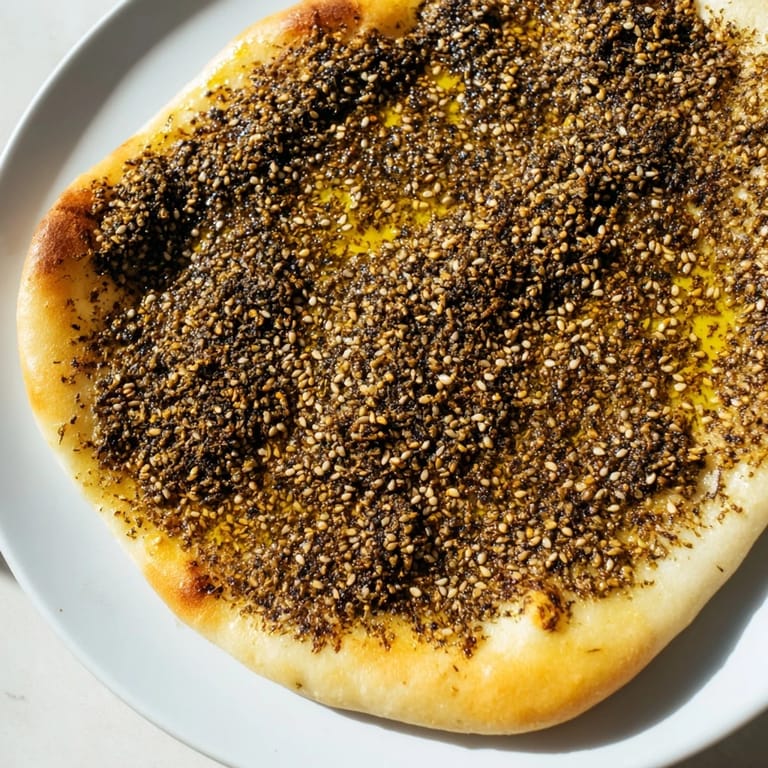
Save Zaatar bread is one of those recipes that tastes like tradition but feels completely accessible to make. It brings people together in the simplest, most honest way.
Recipe Q&A
- → What is zaatar and how is it used?
Zaatar is a Middle Eastern spice blend typically made of dried herbs, sesame seeds, and sumac. It’s mixed with olive oil and spread over dough to add a savory, aromatic flavor.
- → Can I make the dough ahead of time?
Yes, you can prepare the dough in advance and refrigerate it. Allow it to come to room temperature before shaping and baking for best results.
- → How do I achieve a crisp crust on the flatbread?
Baking at a high temperature (around 220°C/425°F) on parchment-lined sheets helps develop a golden, crisp crust while keeping the interior soft.
- → What are good serving suggestions for this flatbread?
Serve warm alongside dips like labneh, hummus, or baba ganoush, or enjoy as a snack with fresh vegetables and olives.
- → Can I add spices to customize the flavor?
Absolutely. Adding a pinch of chili flakes to the zaatar mixture gives a pleasant spicy kick that complements the herbs.