 Save
Save The first time I made labneh, I wasn't even sure I was doing it right. I'd bought a kilogram of yogurt at the Middle Eastern market, draped it in cheesecloth over a bowl, and then just... waited. My partner walked past the fridge the next morning and asked if I'd forgotten something in there, and I realized I'd left it straining overnight without thinking twice. When I unwrapped it, that tangy, creamy cheese was staring back at me like a small miracle, and suddenly I understood why every Levantine home keeps a batch on hand.
I brought a bowl of labneh to a dinner party once, not thinking much of it, and watched people tear into warm pita with it for the whole evening. One guest actually asked for the recipe, which made me laugh because there's barely a recipe here—just yogurt doing what it's meant to do. That night, labneh stopped being a background player and became the thing people actually wanted to eat.
Ingredients
- 1 kg full-fat plain yogurt: Use Greek yogurt or a strained variety if you can find it, because it drains faster and gives you a thicker cheese. Full-fat is not negotiable here—low-fat yogurt will give you something watery and sad.
- ½ tsp fine sea salt: Don't skip salting the yogurt before straining; it seasons the cheese deeply and helps draw out moisture, making the whole process work faster.
- 2 tbsp extra-virgin olive oil: This is your finishing touch, so use one you actually enjoy tasting. The oil clings to the cheese and makes every bite richer.
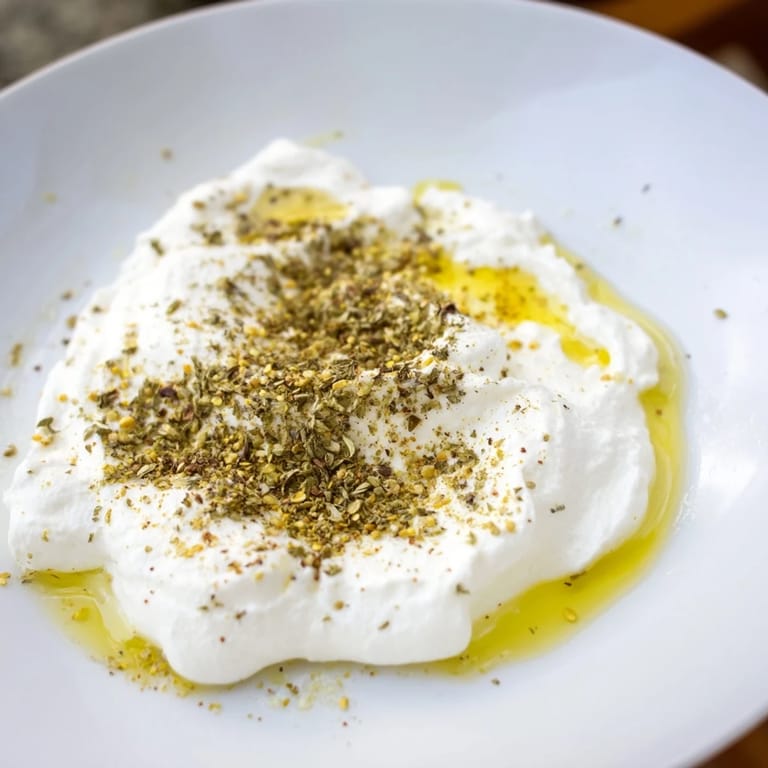
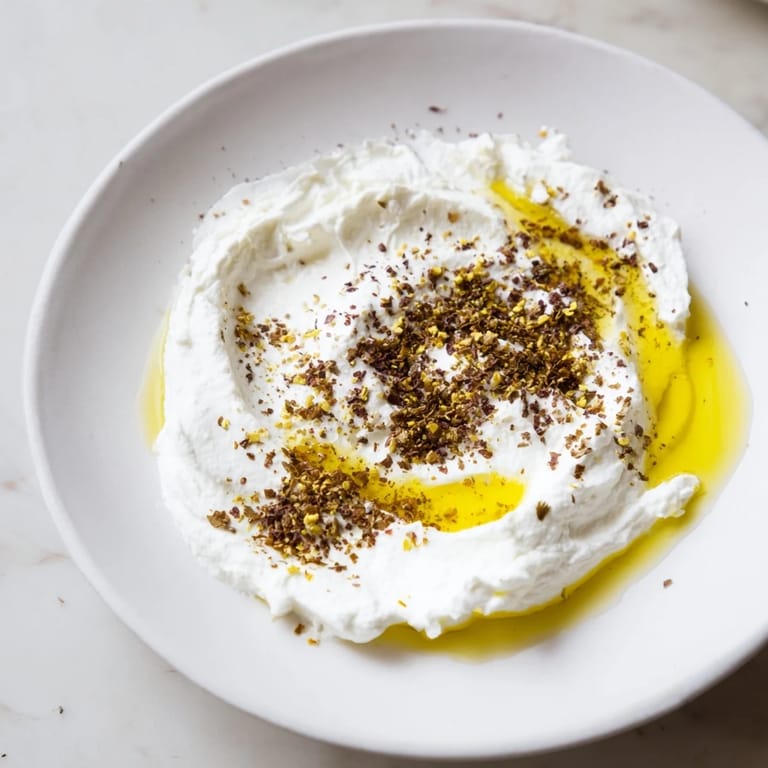
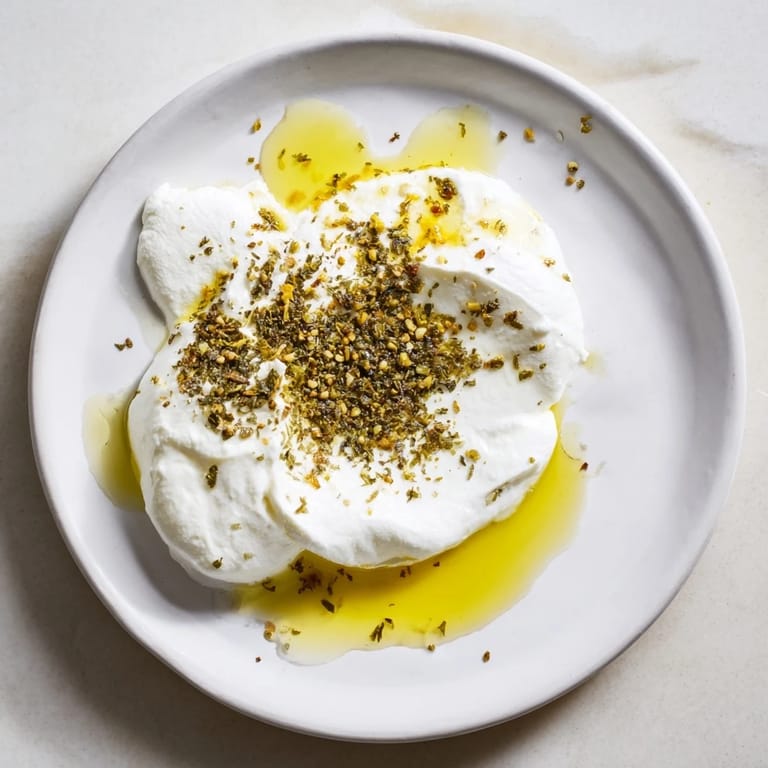
- Dried mint, zaatar, or Aleppo pepper: These aren't decorative—they're flavor, warmth, and color all at once. Pick whichever speaks to your mood.
Tired of Takeout? 🥡
Get 10 meals you can make faster than delivery arrives. Seriously.
One email. No spam. Unsubscribe anytime.
Instructions
- Salt and stir:
- Pour your yogurt into a bowl and sprinkle the salt over the surface, then stir gently until the salt dissolves completely. This takes less than a minute, but it matters.
- Prepare your strainer:
- Double-layer your cheesecloth or use a thin, clean kitchen towel and nestle it into your sieve or colander. Set the sieve over a deep bowl—you need that space beneath to catch the whey that's about to drain.
- Transfer and hang:
- Pour the salted yogurt into the cloth-lined sieve and gather the edges of the cloth loosely over the top, just enough to keep out dust and anything that might fall in. Don't tie it tight.
- Let time do the work:
- Slide this into your fridge and leave it alone for 12 to 24 hours. At 12 hours, you'll have something soft and spreadable; at 24, it'll be firmer, almost cheese-like. Neither is wrong—it depends on what you want to do with it.
- Unwrap and serve:
- Gently peel back the cloth and transfer your labneh to a shallow bowl or plate. This is the moment you'll realize why people keep this around—it's so creamy and unexpectedly luxurious for something so simple.
- Dress it up:
- Drizzle a generous pour of olive oil across the top, then scatter your choice of herbs or spices. The oil should pool slightly on the surface, inviting you to dip right in.
 Save
Save The quiet ritual of making labneh has become something I do when I need to slow down. There's no rushing it, no technique to master, just the gentle act of preparation and then the gift of waiting. By the time you unwrap it, you're already excited to eat something you made with your own hands.
How to Roll It Into Cheese Balls
If you want labneh that travels well or looks stunning in a mezze spread, strain it all the way—a full 24 hours until it's firm enough to hold its shape. Then, using slightly damp hands to keep it from sticking, roll walnut-sized balls and nestle them into a clean jar, covering them completely with olive oil and a scatter of dried herbs or whole spices. These will keep beautifully in the fridge and make you look like you've spent hours on something that took minutes.
Serving Ideas That Actually Work
Labneh isn't fussy, which is exactly why it works in so many places at the table. Serve it cold with warm pita bread and let people scoop it however they like—it's both spread and dip, whatever you need it to be. I've also spooned it onto plates alongside olives, sliced tomatoes, and crisp cucumber, and I've folded it into sandwiches where it acts like the best mayo you've ever tasted.
Storage and Making It Last
Labneh keeps in the fridge for up to five days, which is longer than you'd think for something so fresh and simple. If you've made it in oil with herbs, it actually stays fresh even longer, and those flavors get braver and friendlier as they sit. I store mine in a shallow bowl covered with plastic wrap, and every time I open the fridge, it somehow makes the whole fridge smell better.
- Always make sure your labneh is fully submerged in oil if you're storing it long-term—this protects it and keeps it creamy.
- If you notice any off smell or visible mold, trust your instincts and don't eat it, but this is rare because the salt and oil are protective.
- You can freeze labneh, though the texture softens when it thaws, so it's better used in cooking than served fresh.
 Save
Save Making labneh feels like a secret once you know how, the kind of skill that seems impressive until you realize it asks almost nothing of you. It's generous food that asks only for time and salt, and gives back something far greater than the sum of its parts.
Recipe Q&A
- → What is labneh made from?
Labneh is made by straining full-fat yogurt to remove the liquid whey, leaving a thick and creamy dairy cheese.
- → How long should yogurt strain for labneh?
Straining typically lasts between 12 to 24 hours; 12 hours yields a soft texture, while 24 hours produces a firmer cheese.
- → What are traditional garnishes for labneh?
Common garnishes include extra-virgin olive oil, dried mint, zaatar, and a sprinkle of Aleppo pepper or sumac.
- → Can labneh be made vegan?
Yes, by using a thick plant-based yogurt, similar straining techniques can produce a vegan-friendly spread.
- → How is labneh typically served?
It is served chilled, often with warm pita bread, fresh vegetables, or as part of a mezze platter.
- → How should labneh be stored?
Keep labneh refrigerated and consume within 5 days for optimal freshness and flavor.