 Save
Save There's something almost meditative about making hummus from scratch. I discovered this years ago when a friend brought me to a small market in Beirut, and I watched a vendor press chickpeas and tahini together with the kind of casual expertise that made it look effortless. When I tried recreating it at home, I realized the magic wasn't in fancy ingredients—it was in patience and the right balance of lemon and garlic. Now it's the first thing I make when I want to feel grounded, and somehow it always brings people together.
I remember serving this hummus for the first time at a dinner party where I was genuinely nervous about impressing people. When someone asked for the recipe, I realized I'd been keeping it a secret by accident—it's just that good, and so easy that I almost felt guilty claiming it as my own. Now it's my go-to when I need something that feels both effortless and impressive.
Ingredients
- Chickpeas: Use 1½ cups cooked chickpeas or one drained can as your base; canned is perfectly fine and honestly what most of us use when we're being honest.
- Tahini: This creamy sesame seed paste is what transforms chickpeas into silky hummus, so don't skip it or substitute it with something else.
- Lemon juice: Squeeze it fresh if you can—the acidity brightens everything and gives hummus its signature tang that bottled juice just can't match.
- Garlic: One small clove is enough; garlic can quickly overpower, and this is about balance, not heat.
- Cold water: This is your secret weapon for achieving that restaurant-like silkiness without thinning out the flavor.
- Cumin: Ground cumin adds a gentle warmth and earthy depth that makes people ask what your secret ingredient is.
- Sea salt: Fine salt dissolves evenly and seasons the hummus without grittiness.
- Extra virgin olive oil: The drizzle on top isn't just decoration; it's where the final kiss of flavor comes from.
- Paprika or sumac: Either one adds a visual flourish and a subtle flavor that hints at the Levantine origin of this dish.
- Fresh parsley: It's the bright finish that makes everything feel intentional and fresh.
Tired of Takeout? 🥡
Get 10 meals you can make faster than delivery arrives. Seriously.
One email. No spam. Unsubscribe anytime.
Instructions
- Gather and measure everything:
- Before you turn on the food processor, lay out all your ingredients so you're not hunting through the pantry mid-blend.
- Build the base:
- Add your chickpeas, tahini, lemon juice, minced garlic, cold water, cumin, and salt to the food processor. This order doesn't matter much, but I always add the tahini first so it coats the blade.
- Blend until it transforms:
- Start blending and let it run for a full minute—longer than feels comfortable. You'll hear it go from chunky to creamy to almost silky, and that's when you know you're close. Stop and scrape down the sides with a spatula, then blend again.
- Reach for silkiness:
- This is where patience wins. If your hummus still feels thick, add cold water one tablespoon at a time, blending after each addition, until you reach that cloud-like consistency that makes you want to dive in with a spoon.
- Taste and adjust:
- Take a small spoonful and think about what it needs—more salt makes it savory, more lemon makes it bright, and sometimes both. Trust your instincts; this is your hummus to perfect.
- Plate it with intention:
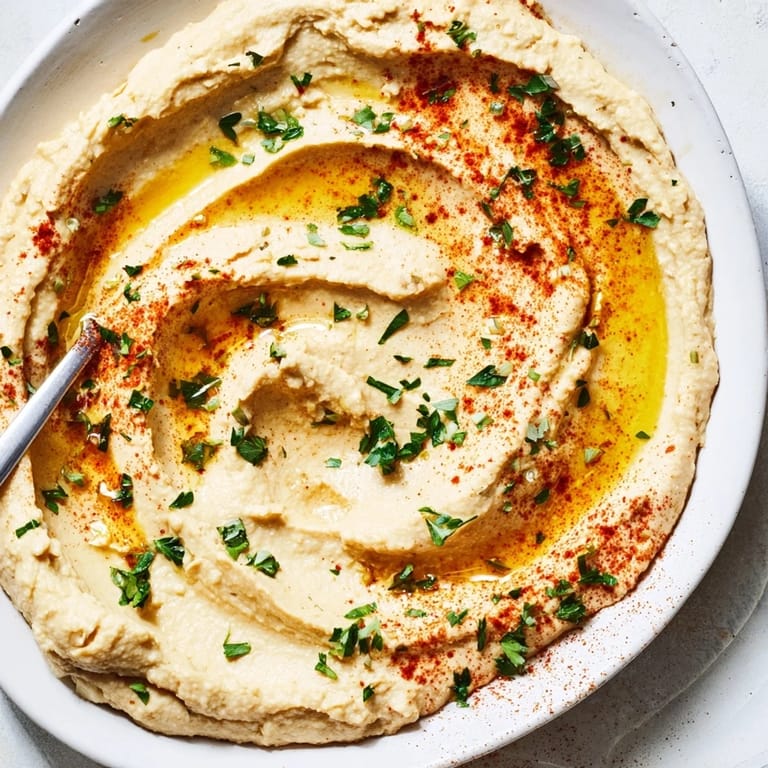
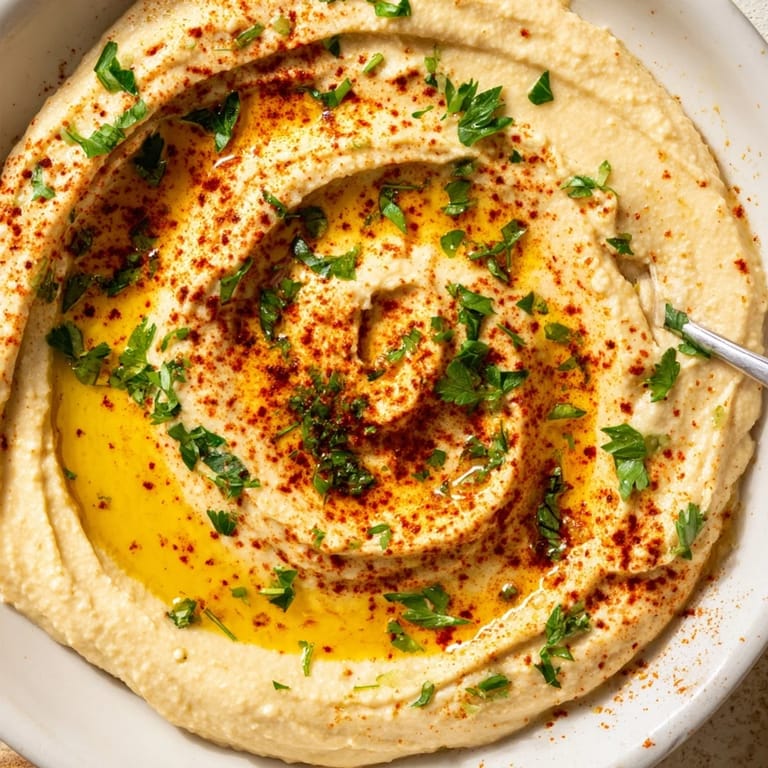
- Spread your hummus into a shallow dish and use the back of a spoon to create a gentle well or swirl in the center. This isn't just pretty; it's the traditional way, and it gives you space for that final drizzle of olive oil.
- Crown it:
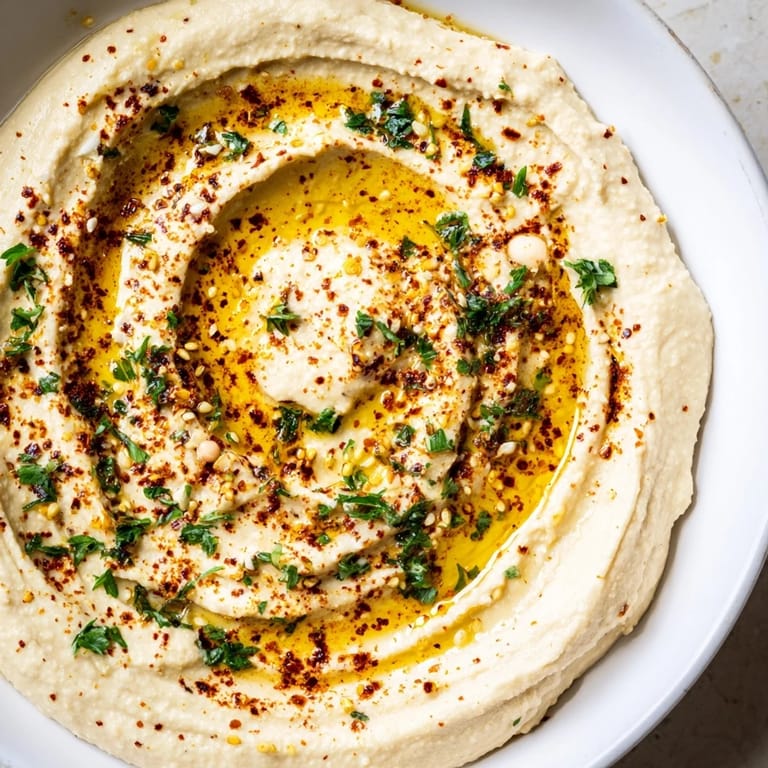
- Drizzle olive oil in a thin stream, letting it pool slightly in the center, then dust with paprika or sumac and scatter fresh parsley across the top. Step back and admire what you made.
 Save
Save There was a moment when my grandmother tasted this hummus that I'll never forget. She closed her eyes, took another bite, and said it tasted like home—and suddenly I understood that food is really just a way of saying I remember you. Now every time I make it, I feel a little closer to every table it's graced.
The Secret to Silky Hummus
The difference between grainy, stiff hummus and the kind that makes you close your eyes is almost invisible to spot but magical in the making. It comes down to understanding that tahini and lemon juice need time to emulsify together, and cold water helps that happen without making everything thin. I learned this when a batch went wrong because I was impatient and used warm water, and the hummus never quite came together—it just sat there separated and sulking. Now I've learned that the best hummus is made without rushing.
How to Serve It Like You Mean It
Hummus isn't meant to sit alone on a plate; it's an invitation to gather. I've found that the most successful hummus moments happen when you surround it with things to dip—warm pita torn into pieces, bright red tomatoes, cool cucumber slices, or tangy olives. The oil pooling in the center catches the light and makes it look restaurant-quality, but really it's just you, a food processor, and 15 minutes of your time. Serve it at room temperature, and if you're making it ahead, let it sit out for 30 minutes before serving so the flavors wake up.
Storing and Making It Last
One of the kindest things about hummus is that it gets better with a day or two in the refrigerator, as if the flavors need time to settle and get comfortable with each other. I always cover mine with plastic wrap pressed directly onto the surface so it doesn't dry out, and it keeps perfectly for up to four days. If you want to make a bigger batch or bring hummus to someone else's table, it travels beautifully and actually improves in flavor as it sits.
- Store in an airtight container with plastic wrap pressed against the surface to prevent browning.
- Always bring hummus to room temperature before serving so the flavors sing instead of whisper.
- If it dries out slightly in the fridge, a drizzle of fresh olive oil and a quick stir brings it right back to life.
 Save
Save Hummus has taught me that some of the best things in life are simple and made with your own hands. It's the kind of dish that asks so little but gives so much in return.
Recipe Q&A
- → What ingredients make the hummus creamy?
The creaminess comes from blending cooked chickpeas with tahini, olive oil, and cold water until smooth and silky.
- → How can I adjust the consistency of the hummus?
If the mixture is too thick, add cold water one tablespoon at a time while blending until desired smoothness is achieved.
- → What seasonings enhance the flavor?
Ground cumin, fresh lemon juice, garlic, and sea salt balance the flavors and add depth to the spread.
- → How should the hummus be served?
Transfer to a shallow dish, create a swirl, then drizzle with olive oil and sprinkle paprika or sumac and chopped parsley on top.
- → What are common accompaniments to this dish?
It pairs wonderfully with warm pita bread, fresh vegetable sticks, or as part of a mezze platter.
- → How to store leftover hummus properly?
Keep refrigerated in an airtight container for up to four days to maintain freshness.