 Save
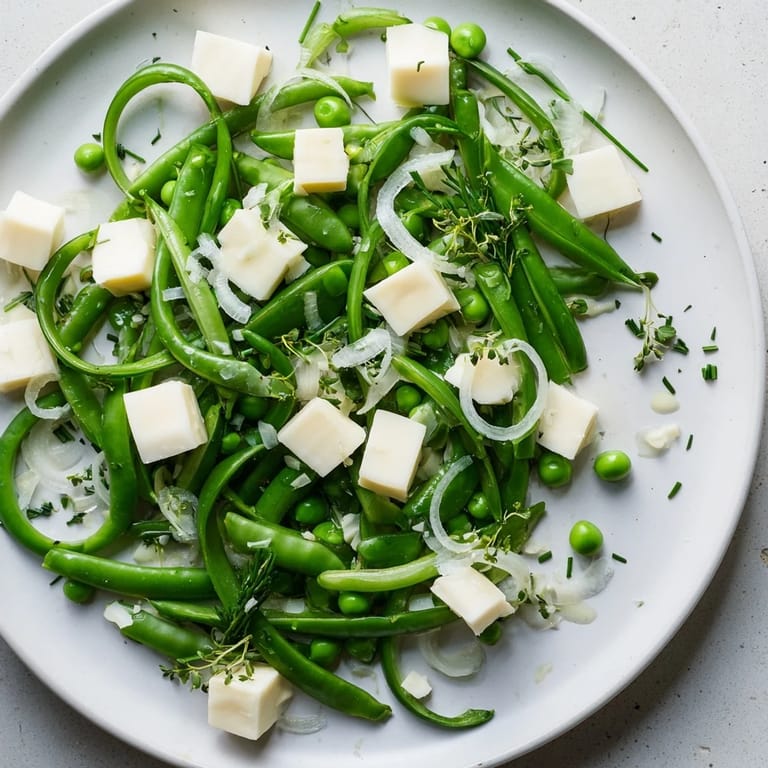
Save There's something about the name The English Ivy that made me smile the first time I heard it, probably because it captures exactly what happens when you plate this salad—those long, tender snap peas and green beans naturally spiral across the dish like vines climbing a garden wall. I discovered this combination almost by accident, standing in a farmers market on a crisp spring morning, drawn to the brilliant green beans and thinking about how their natural shape could become the architecture of a plate. When I got home and paired them with sharp white cheddar, something clicked; the bright, snappy vegetables met that intense, almost salty cheese and suddenly I understood why British kitchens have always loved this kind of simplicity with depth.
I made this for my neighbor Sarah one evening when she brought over eggs from her backyard chickens, and she sat at my kitchen counter watching me arrange the peas and beans into those winding patterns, asking if I'd trained as a chef. I hadn't, of course, but there was something about how the vegetables naturally wanted to be presented this way that made the whole thing feel intentional and a little bit special. She came back three days later asking for the recipe, and I realized that sometimes the most impressive dishes are just about paying attention to what the ingredients are already trying to do.
Ingredients
- Snap peas (200 g): The stars of the show—their natural sweetness becomes even brighter when you blanch them just right, and they hold their snap even after tossing with dressing.
- Green beans (200 g): They're the more delicate partner to the snap peas, adding length and a slightly earthier note that balances the sweetness.
- Sharp white cheddar (100 g): Don't use the mild stuff; you want a cheddar with real character, the kind that makes your mouth water a little.
- Small shallot: Sliced paper-thin, it adds a whisper of bite without overwhelming the fresh vegetables.
- Extra virgin olive oil (2 tbsp): This carries the whole dressing, so choose one you actually like tasting on its own.
- Fresh lemon juice (1 tbsp): The acid that makes everything brighter and helps the flavors find each other.
- Dijon mustard (1 tsp): Just enough to add depth and help the dressing coat the vegetables evenly.
- Honey (½ tsp): A tiny kiss of sweetness that rounds out the sharpness without making this a sweet salad.
- Fresh chives: Chopped fine and scattered at the end, they add color and a gentle onion whisper.
- Salt and black pepper: Taste as you go; the cheese is already salty, so you might need less than you think.
Tired of Takeout? 🥡
Get 10 meals you can make faster than delivery arrives. Seriously.
One email. No spam. Unsubscribe anytime.
Instructions
- Boil the water and blanch:
- Fill a large pot generously with salted water—it should taste like the sea—and bring it to a rolling boil. The sound of that boil is your signal; add the snap peas and green beans together and set a timer for exactly 2 minutes. You're not cooking them through; you're just waking them up.
- Shock them in ice water:
- The moment the timer goes off, scoop them out with a slotted spoon and plunge them into a bowl of ice water. This stops the cooking dead and locks in that brilliant green color and that perfect snappy texture. Drain well and pat completely dry with a kitchen towel.
- Build your dressing:
- In a large mixing bowl, whisk together the olive oil, lemon juice, mustard, and honey until it emulsifies and becomes creamy. Taste it before you add salt and pepper, and adjust both to your preference—remember the cheese will contribute its own saltiness.
- Toss and marry the flavors:
- Add the blanched vegetables and that paper-thin shallot to the bowl and toss gently but thoroughly, making sure every piece gets coated in dressing. The vegetables will start absorbing the flavors immediately.
- Arrange like vines:
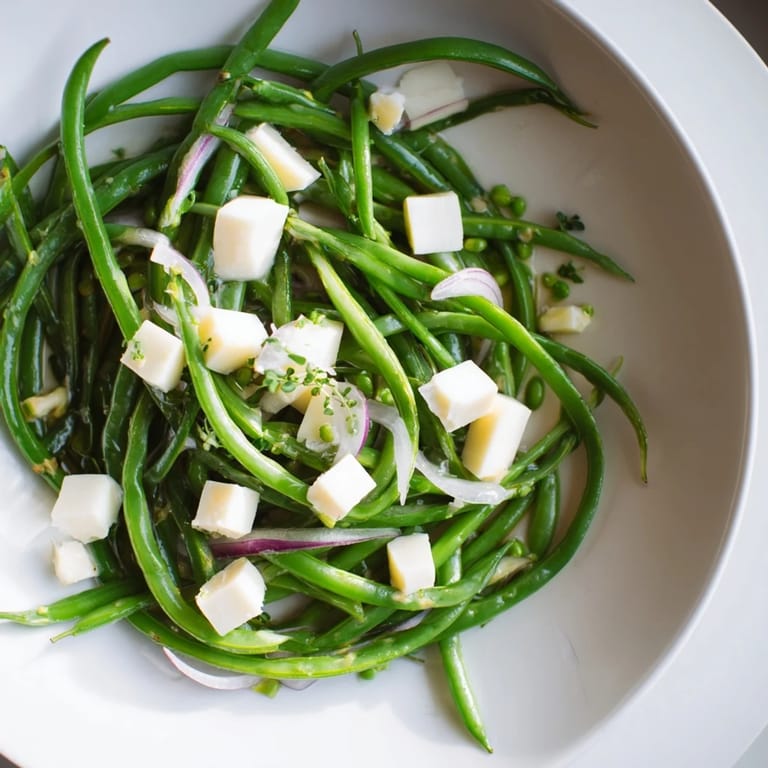
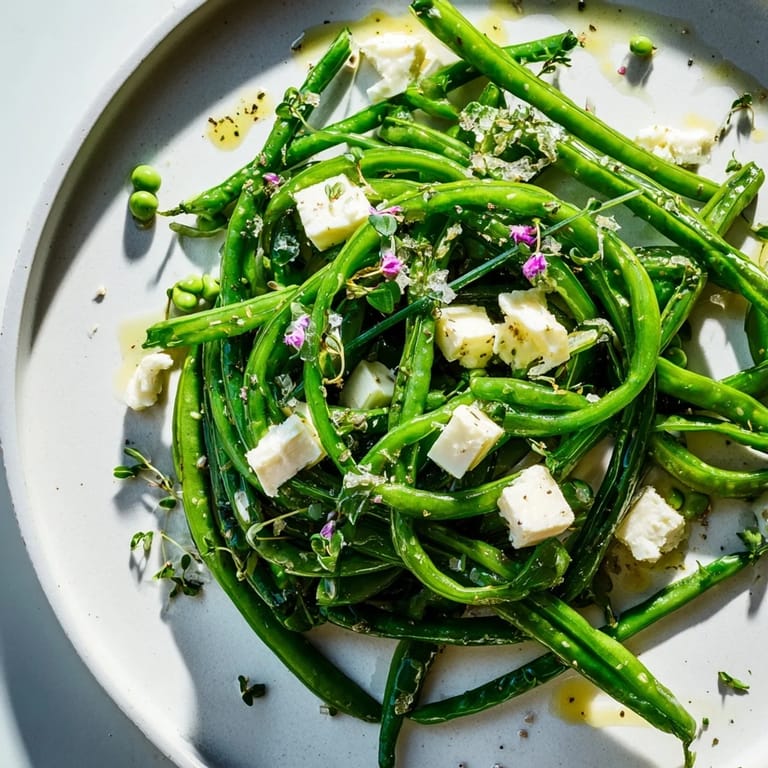
- On a serving platter, arrange the vegetables in long, winding lines, letting them spiral and overlap naturally—this is where the name makes sense. Scatter the cheddar shards or cubes over top, letting some nestle between the vegetables and some sit proudly on the surface.
- Finish and serve:
- Sprinkle with chopped chives and add microgreens if you have them, then serve right away while everything is still cool and the vegetables haven't started to wilt.
 Save
Save My daughter asked me once why salad had to be heavy and complicated, and this dish is my answer to her—it's proof that vegetables can be exciting on their own terms when you treat them with a little respect. The first time she helped me assemble it, she understood immediately why I kept making it, and now she actually requests it, which is something I never thought a teenager would do.
Why Blanching Makes All the Difference
The blanching step isn't just about cooking the vegetables; it's about calibrating their texture. When you blanch for exactly 2 minutes, the fiber softens just enough to make them pleasant to eat without losing that satisfying bite that makes this salad feel substantial. I learned this the hard way by overcooking them once, and the whole dish became flabby and forgettable. Now I'm religious about the timer.
The Cheese as Anchor
Sharp white cheddar might seem like an unusual choice for a fresh salad, but it's actually the genius move here—it cuts through the brightness of the vegetables and the lemon, providing earthiness and richness that makes you feel like you're actually eating something, not just pushing greens around a plate. The sharpness also means you need less of it; a little goes so far that the salad stays light but feels luxurious. Some people worry that cheese and vegetables don't belong together, but this salad is evidence that they do.
Serving and Storage Wisdom
This salad is best eaten the moment it's plated, when the vegetables are still cold and the cheese hasn't started to soften into the dressing. If you need to make it ahead, blanch and chill the vegetables, but wait to dress and assemble until just before serving. You can make the dressing hours in advance and keep it in a jar in the refrigerator, which makes last-minute assembly almost effortless.
- For leftovers, store the undressed vegetables and dressing separately in airtight containers for up to 2 days.
- If you're adding nuts or other mix-ins, wait until the last moment so they stay crispy.
- This salad pairs beautifully with roasted chicken or grilled fish if you want to make it part of a larger meal.
 Save
Save Every time I make this, I'm reminded that the best meals are often the ones that let the ingredients speak for themselves. This salad celebrates snap peas and green beans for exactly what they are, and that simplicity is its own kind of elegance.
Recipe Q&A
- → How long should I blanch the snap peas and green beans?
Blanch the snap peas and green beans for 2 minutes in boiling salted water until bright green and just tender, then quickly cool in ice water to stop cooking.
- → Can I use other cheeses instead of sharp white cheddar?
Yes, goat cheese or feta can be substituted for a tangier flavor and creamy texture.
- → What is the best way to preserve the crunch of the vegetables?
After blanching, immediately transfer the vegetables to ice water to halt cooking and maintain their crispness.
- → Are there any recommended additions for extra texture?
Toasted walnuts or almonds add a pleasant nutty crunch and enhance the salad’s texture.
- → What dressings complement the fresh vegetables?
A dressing of olive oil, lemon juice, Dijon mustard, honey, salt, and pepper balances sharp and sweet notes, complementing the fresh vegetables perfectly.