 Save
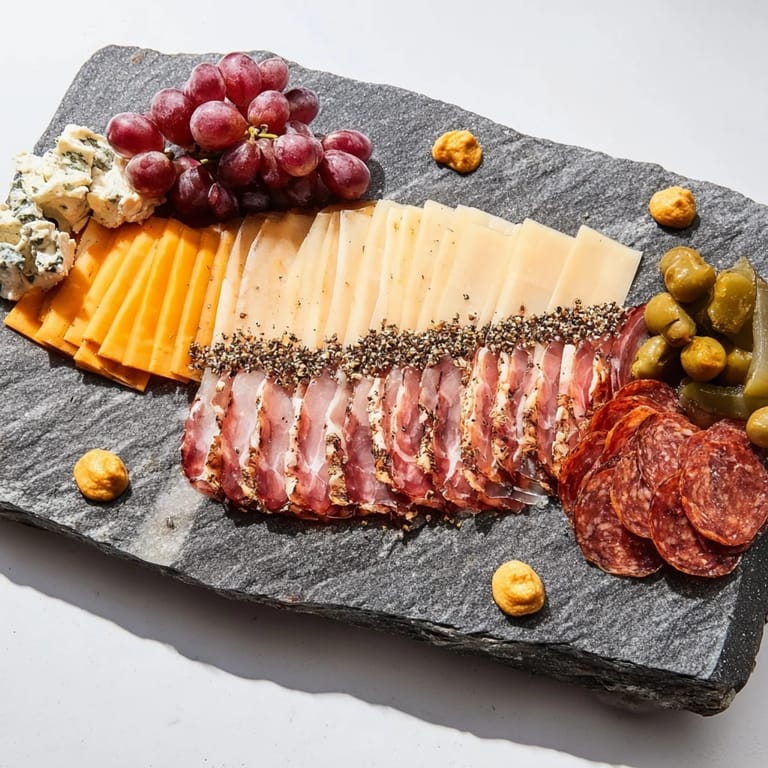
Save The first time I set out to impress a group of friends with something beyond the usual cheese and crackers, I found myself mesmerized by the stark beauty of a restaurant's charcuterie board—all geometric precision on raw stone. There was something almost architectural about it, the way each ingredient had its place, no apologies, just bold lines and confident colors. I went home that night determined to recreate that feeling, and what emerged was this: The Industrial Slate, a platter that looks like it belongs in a modern gallery but tastes like pure indulgence.
I remember arranging this for my partner's book club, hovering over the slate like it was a puzzle I had to solve, when they walked in early and just stopped. No one reached for it right away—they just stood there taking it in. That moment taught me something: sometimes the presentation is part of the meal, not separate from it. By the end of the night, the board was bare except for mustard smudges and the occasional olive pit.
Ingredients
- Smoked prosciutto: Paper-thin and salty, this is your anchor—let it curl naturally on the slate and it becomes almost sculptural.
- Soppressata: Firmer than prosciutto, sliced thick enough to taste, this adds weight and depth to your meat lineup.
- Coppa: The sweeter, marbled cousin in this trio—its richness balances the sharper elements around it.
- Mortadella: Silky and studded with fat, this is the comfort player that rounds out the savory landscape.
- Aged cheddar: Choose something with real bite here; the sharpness is what makes this whole thing sing.
- Manchego: Nutty and creamy at once, this bridges the gap between the meats and the blue beautifully.
- Gruyère: Slightly sweet and complex, it becomes a gentle pause in all that intensity.
- Blue cheese: The wild card that changes everything—use a creamy one if you want boldness, a crumbly one if you prefer restraint.
- Seedless red grapes: These clean your palate between bites and add color that photographs like a dream.
- Cornichons: Their vinegary snap cuts through the richness in exactly the right way.
- Whole grain mustard: Textured and tangy, this keeps things from feeling too heavy.
- Mixed olives: A mix of green and black gives you both briny and fruity notes in one handful.
- Freshly cracked black pepper: Don't skip this—it adds aroma and a gentle heat that lingers.
Tired of Takeout? 🥡
Get 10 meals you can make faster than delivery arrives. Seriously.
One email. No spam. Unsubscribe anytime.
Instructions
- Find your canvas:
- Set that heavy, unpolished slate down where everyone will see it—this board is part of the show.
- Map out your meats:
- Lay the four cold meats in straight, parallel lines on one side, each type distinct and proud of itself. Think of it like you're creating sections in a composition, not cramming things in randomly.
- Mirror it with cheese:
- On the opposite side, arrange your cheeses in similar lines, grouping each type together so people know what they're reaching for.
- Fill the silence:
- Nestle your grapes, cornichons, and olives into the spaces between meats and cheeses—these gaps are where the geometry becomes art.
- Add your accents:
- Place small dollops of whole grain mustard in neat lines or tuck it into a corner bowl; it's a flavor checkpoint, not background noise.
- Finish with intention:
- Crack black pepper over everything, letting the aroma rise—this final touch says you care about every detail.
- Present without delay:
- Serve immediately so your guests can experience the full sensory moment, from sight to smell to taste.
 Save
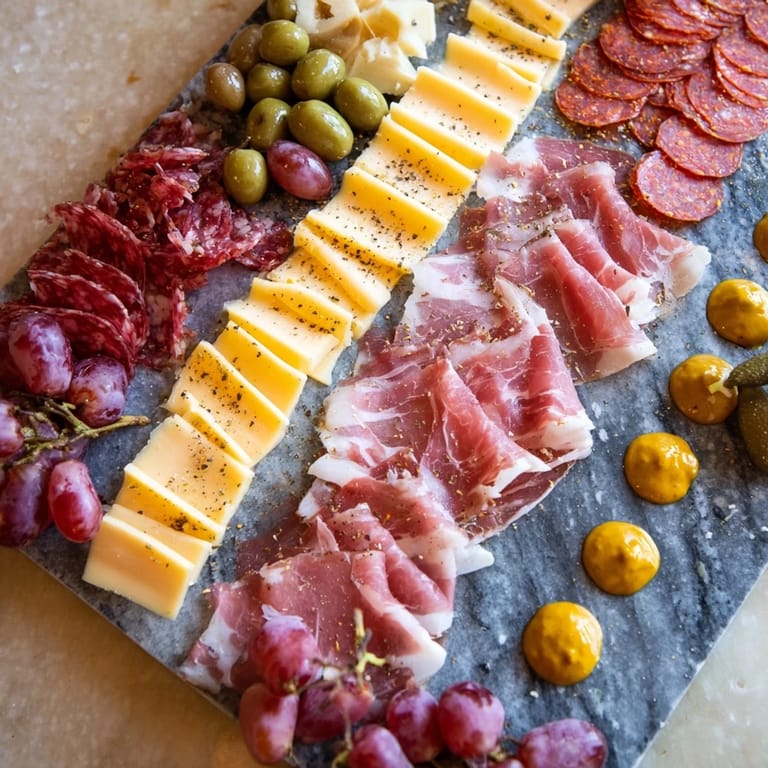
Save The moment someone said, 'This looks too beautiful to eat,' and then ate it anyway, I realized this platter was never really about being a standard appetizer. It was about slowing people down long enough to notice what they were tasting, to linger over the combinations instead of just grabbing something.
The Stone Matters More Than You Think
I used a polished marble board once and it felt wrong—too refined, like it was trying too hard. The unpolished slate is what makes this work; it's rough enough to grip the ingredients, honest enough to let them be the stars. If you can chill it in the freezer for 20 minutes before assembling, the ingredients stay fresher longer and the whole thing feels cooler to the touch, which somehow makes people eat more slowly. That small detail changed everything about how the evening unfolded.
Building Your Own Balance
There's no strict science to ratios here—it's more about listening to what you have and what your guests like. If someone's vegetarian, swap the meats for marinated artichoke hearts and roasted almonds; the geometry stays the same, the vibe shifts slightly. Some nights I've skipped the blue cheese because a friend mentioned they weren't into it, and honestly, the platter still sings. The architecture is forgiving because the ingredients themselves are so good.
What to Drink Alongside This
I've found that pairing matters here—a crisp Sauvignon Blanc cuts through the fat beautifully, while a bold Cabernet Sauvignon makes the whole thing feel like a celebration. On one evening I tried an orange wine just to see, and it was unexpectedly perfect with the cornichons and mustard. The point is to think about wine as part of the composition, not an afterthought.
- A dry white wine amplifies the sharpness of the cheeses and keeps your palate dancing.
- If you're going red, choose something with tannins that can stand up to all that richness.
- Don't forget non-wine options—sparkling water with lemon, or even a dry cider, can work beautifully too.
 Save
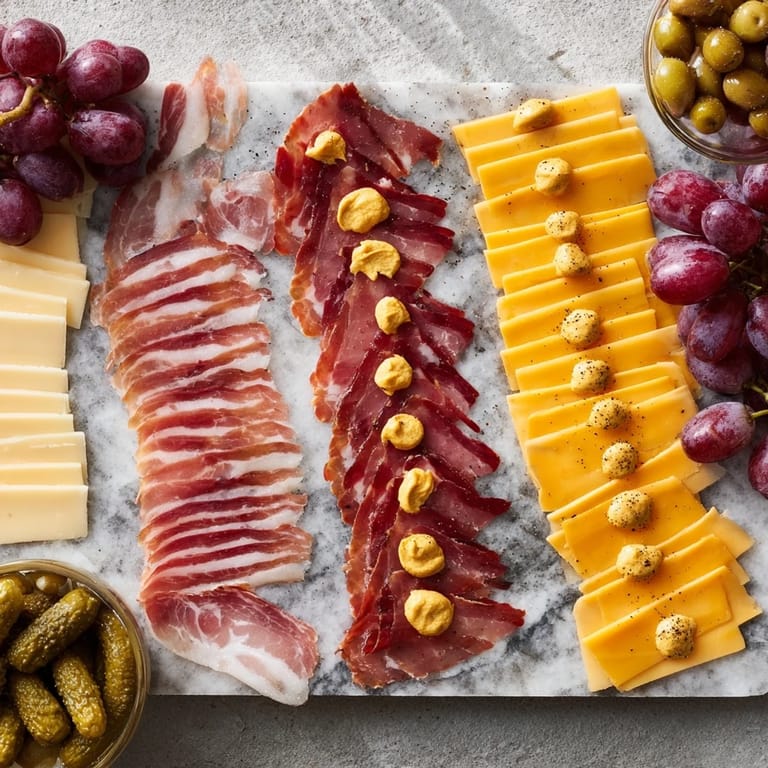
Save Every time I make this now, I'm reminded that some of the best moments around food aren't about complexity or time spent cooking—they're about intention and presence. This platter gives you that, effortlessly.
Recipe Q&A
- → What type of slate is best for serving?
A heavy, unpolished stone or slate board is ideal as it enhances the rustic, industrial look while providing a sturdy surface for arrangement.
- → Can the platter be prepared in advance?
For best presentation, arrange just before serving. You can chill the slate beforehand to keep ingredients cold slightly longer.
- → How should the cold meats and cheeses be arranged?
Place cold meats in straight, parallel lines on one side, then position sliced cheeses similarly opposite. This creates a clean, modern aesthetic.
- → Are there suitable alternatives for vegetarian guests?
Yes, omit cold meats and add marinated artichoke hearts and roasted nuts to maintain texture and flavor contrast.
- → What accompaniments enhance the platter's flavor?
Include seedless grapes, cornichons, mixed olives, and whole grain mustard dots to offer brightness and tangy balance.
- → Is this platter gluten-free?
The main ingredients are gluten-free, but always verify processed meats’ labels to ensure no hidden gluten presence.