 Save
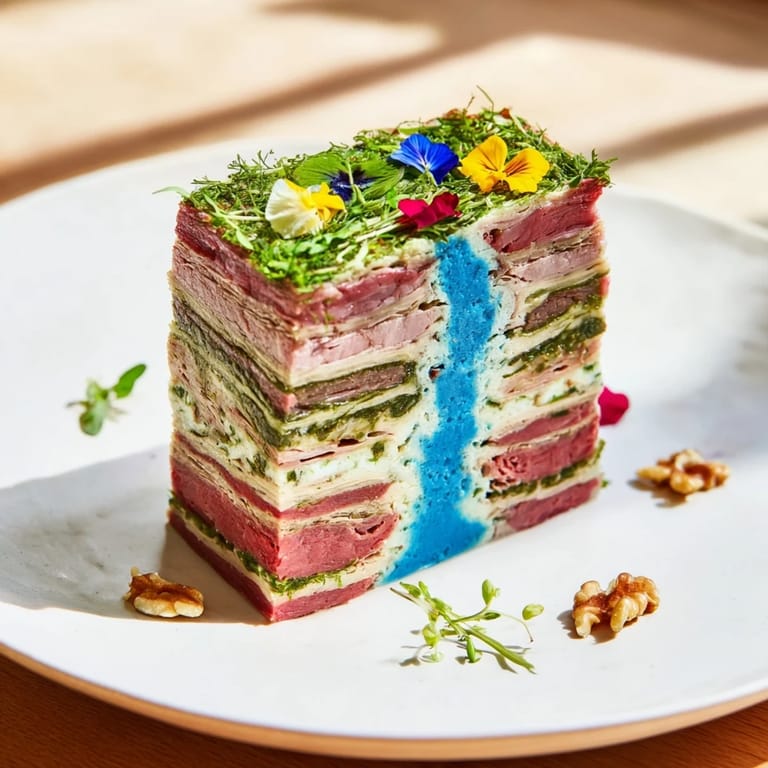
Save I stumbled upon the Grand Canyon Rim concept while flipping through old travel photos at midnight, remembering how the canyon's layers seemed to hold entire geological stories. That visual stuck with me for weeks until I found myself staring at a wedge of blue cheese in my fridge, imagining it as a river carving through stone. The idea obsessed me enough to spend a Saturday experimenting with meat layers and binding, and when I finally sliced into that first chilled terrine, the whole room went quiet—my partner literally gasped at the architecture on the plate.
The first time I made this for a dinner party, I was so nervous about it failing that I didn't tell anyone what they were eating until after the first slice landed on the plate. Watching their expressions shift from confusion to wonder to genuine excitement was worth every anxious hour of prep work. One guest asked if I'd trained as a chef, which probably shouldn't have made me this happy, but it absolutely did.
Ingredients
- Beef sirloin, thinly sliced: The foundation of your canyon—choose a cut with good marbling so each layer stays tender even after the long chill, and slice it yourself if you have time because the thickness really matters for layering.
- Turkey breast, thinly sliced: This brings lightness between the richer meats and creates natural color variation in your canyon walls, almost like erosion patterns.
- Smoked ham, thinly sliced: A bridge of flavor that prevents the terrine from feeling one-dimensional, plus the smoke adds visual depth to the layers.
- Pork loin, thinly sliced: The closer you can get to translucency with this one, the better it'll conform to your layering pattern and create seamless transitions between sections.
- Blue cheese, crumbled: This is your river and deserves respect—use a genuinely good blue with personality, not the dusty stuff that's been sitting in the back of the dairy case.
- Cream cheese, softened: The binding agent that holds your river together without diluting the blue cheese flavor, so don't skip the softening step or it'll be impossible to blend smoothly.
- Heavy cream: Loosens everything just enough to spread easily while you work, creating a mousse that's luxurious but still holds its shape through chilling.
- Fresh chives and parsley, finely chopped: These herbs brighten the richness and add subtle vegetal notes that keep the palate from getting fatigued.
- Eggs, whole milk, and cream for binding: This mixture is what transforms the whole thing from a cold platter into an actual terrine with structure—don't rush the whisking or you'll trap too much air.
Tired of Takeout? 🥡
Get 10 meals you can make faster than delivery arrives. Seriously.
One email. No spam. Unsubscribe anytime.
Instructions
- Set up your mold and preheat:
- Line your loaf pan with plastic wrap like you're tucking in a present, leaving enough overhang so you can seal it all from the top. Start your oven at 160°C and let it reach temperature while you prep everything else, because rushing this step is how you end up with an unevenly cooked terrine.
- Make the binding mixture:
- Whisk together eggs, milk, cream, salt, and pepper until there are no streaks of yolk visible and the whole thing moves like liquid silk. This binding layer is what holds your architecture together during the long chill, so take the two minutes to get it right.
- Create your blue cheese river:
- Blend the blue cheese, softened cream cheese, and heavy cream until it's completely smooth and almost mousse-like—small lumps are fine and actually add texture, but big chunks won't spread evenly. Fold in the herbs last so they don't get pulverized and turn the whole thing gray.
- Begin the canyon layers:
- Start laying beef slices down one side of the pan, overlapping them slightly like roof shingles and creating a subtle slope toward where your river will go. This isn't precision engineering—trust your eye to create that cliff effect and don't stress about perfection because the finished terrine will be more visually striking than you imagined anyway.
- Build the cliff walls:
- Add turkey, then ham, then pork, layering around and over each other while maintaining that downward slope, then brush with a little binding mixture before starting the next section. By about the third or fourth layer, you'll find your rhythm and the whole process becomes almost meditative.
- Insert the river:
- When you're roughly halfway up the pan, spoon that blue cheese river down the center in a thick line, creating the visual anchor of your entire piece. Continue layering meats around and over the river, being careful not to disturb it and letting it peek through slightly—this is what people will see first when you slice it.
- Seal and cook:
- Fold the plastic wrap over the top to seal everything in, then cover with foil and set the whole pan into a larger roasting dish filled with hot water up to about halfway. Bake for 1 hour 15 minutes—the water bath ensures gentle, even cooking that won't dry out the delicate terrines in restaurant kitchens.
- Chill properly:
- Remove from the oven and cool to room temperature while covered, then refrigerate for at least 4 hours but ideally overnight because the proteins need time to fully set and the flavors need to marry. This patience is non-negotiable—slice it too early and the whole structure will crumble.
- Unmold and slice:
- Run a thin knife around the edges and lift the entire terrine onto your serving platter in one confident motion, then slice thickly with a sharp knife dipped in hot water between cuts. The beauty of the reveal moment never gets old, no matter how many times you make it.
 Save
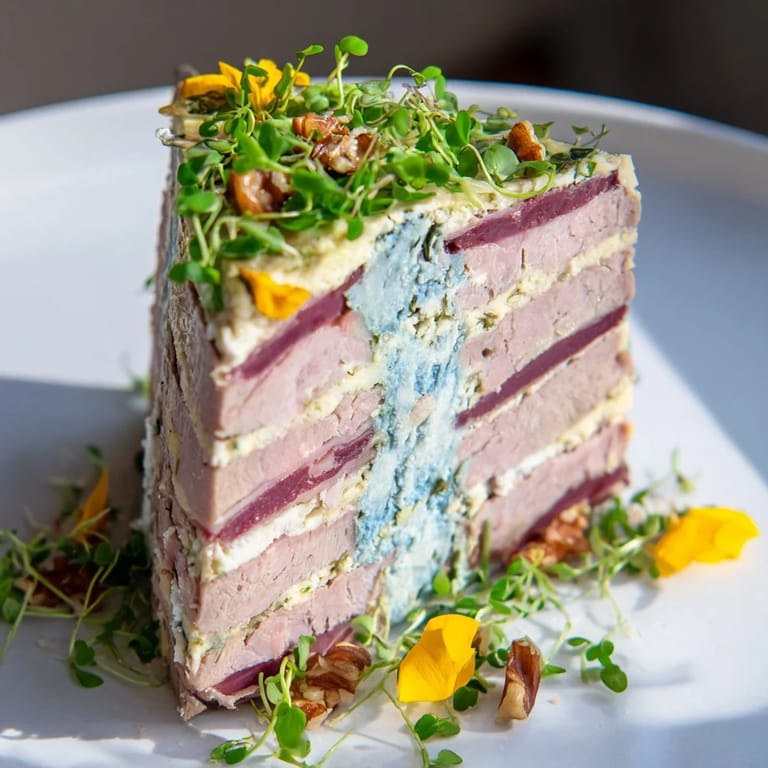
Save There's something profound about watching someone's face light up when they realize what they're eating isn't just beautiful—it's actually telling the story of a place they care about. That moment when the fork cuts through and everything holds together perfectly is when you realize the technique wasn't just about showing off, it was about turning geography into something you could taste and share.
Variations and Substitutions
Once you understand the basic structure, this dish invites experimentation in ways most recipes don't. I've made versions with smoked duck instead of ham, which adds a richness that makes the blue cheese feel almost delicate by comparison. A friend suggested herbed goat cheese in place of the blue cheese river, which sounds wrong until you actually taste how the tanginess plays against the savory meats—it's lighter and brighter, perfect for spring dinners.
Serving and Pairings
The presentation moment deserves as much attention as the construction because this dish is meant to be admired before it's eaten. I always serve it with crispy brioche on the side to give people something to anchor each bite, and a simple green salad with a bright vinaigrette cuts through the richness beautifully. As for wine, I've found that light reds work better than heavier ones because they don't fight with the blue cheese, though a crisp white wine if you're going the goat cheese route.
Timing and Make-Ahead Magic
This is the kind of dish that actually improves with advance planning, which is rare and genuinely wonderful. You can assemble it completely the day before, which means you're just slicing and plating on dinner day—the stress moves to your prep day when you're actually relaxed enough to enjoy it. The only thing you can't rush is the chilling time, so think of that 4-hour minimum as insurance that everything will hold together perfectly when it matters.
- Make-ahead tip: Wrap the unmolded terrine tightly in plastic and refrigerate for up to 3 days, slicing only when you're ready to serve.
- Garnish decision: Microgreens and edible flowers are optional but they transform a beautiful dish into an absolutely stunning one, so find them if you can.
- Leftover reality: Slices keep for about 3 days in the fridge and are somehow even better as cold snacks than they are as a main course.
 Save
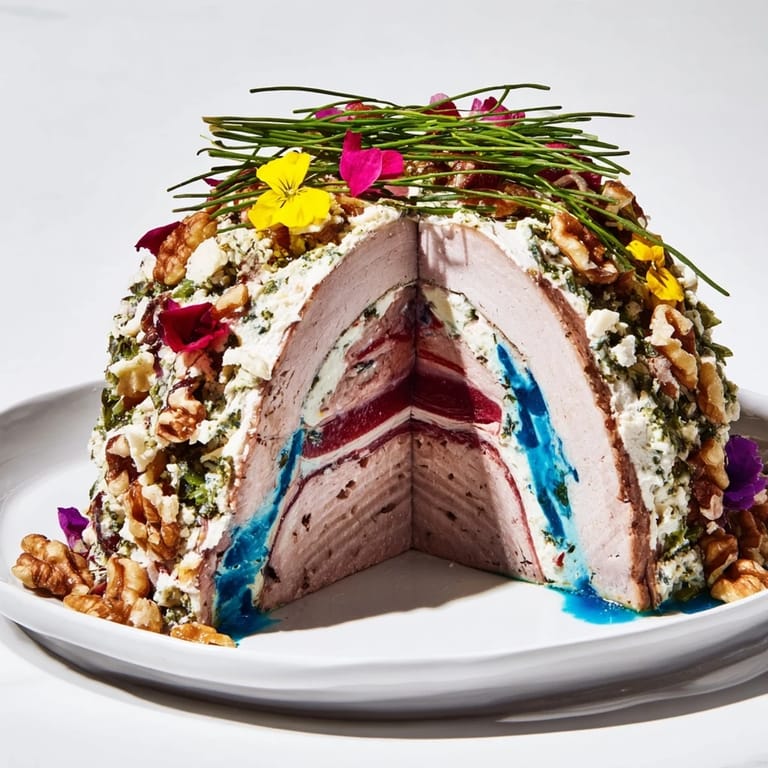
Save This terrine lives somewhere between restaurant technique and home cooking magic, and that hybrid space is exactly where it should stay. Making it once changes how you think about plating and structure forever.
Recipe Q&A
- → How do I achieve the layered canyon effect?
Arrange thin slices of different meats in alternating layers, slightly overlapping and angled downward to mimic canyon walls, enhancing the visual impact.
- → What is the purpose of the blue cheese mixture?
The blue cheese mousse creates a creamy river running through the terrine, adding tangy richness and a striking contrast to the savory meat layers.
- → How should the terrine be cooked?
It is baked in a loaf pan set in a water bath (bain-marie) at a moderate temperature to ensure gentle, even cooking and maintained moisture.
- → Can I substitute the meats used?
Yes, you can swap some meats for smoked duck or prosciutto to introduce smoky flavors that complement the layered composition.
- → What garnishes complement the finished dish?
Microgreens, edible flowers, and toasted walnut pieces add freshness, color, and texture, balancing the rich terrine layers elegantly.
- → How long should the terrine chill before serving?
A minimum of 4 hours chilling is recommended, preferably overnight, to allow the layers to set firmly and flavors to meld.