 Save
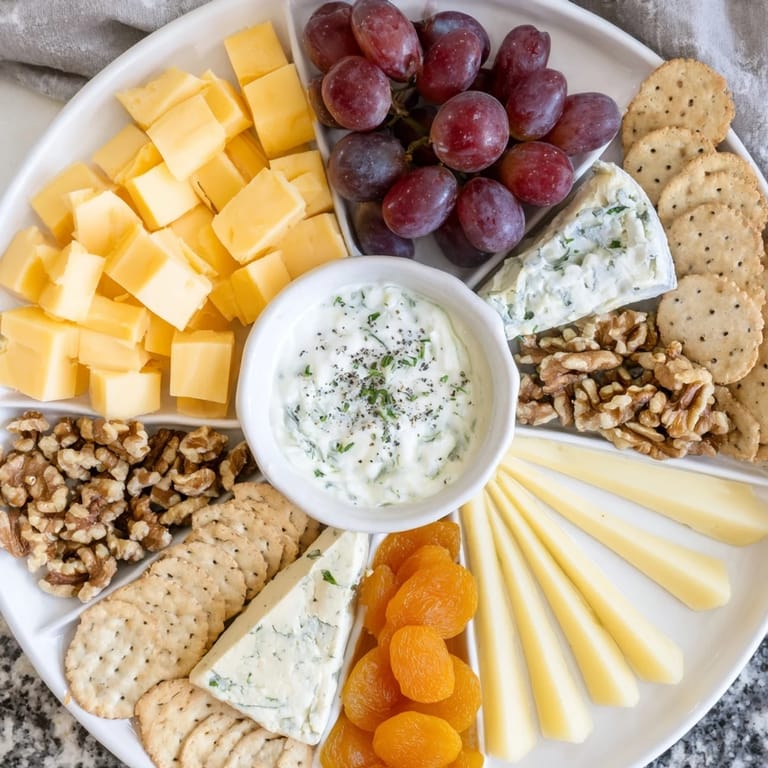
Save There's something almost ceremonial about arranging a cheese board, isn't there? I was hosting a dinner party one autumn evening when I decided to abandon the usual scattered approach and create something with actual intention. I remembered reading about the Celtic cross symbol and thought, why not let that ancient geometry guide my platter? What started as a quirky challenge became one of those happy kitchen accidents where form and function collided beautifully, and suddenly everyone was talking more about how the board looked than what was on their plates.
I made this for my friend Siobhan's book club night, and she walked in, saw the platter, and actually gasped. That moment—when people pause before eating, just to take in what's in front of them—that's when you know you've done something right. The cross design made it feel personal, like I'd put thought into every angle, which of course I had.
Ingredients
- Irish cheddar, cubed: Brings a sharp, slightly sweet bite that grounds the whole board and reminds you this is built on substance, not just aesthetics.
- Brie, sliced: The crowd-pleaser that softens as it sits, becoming almost buttery—always keep this at room temperature or it'll be stubbornly firm.
- Blue cheese, crumbled: For the bold-spirited guests who want a real flavor punch; a little goes a long way, which is why I crumble rather than slice.
- Manchego, sliced: The sophisticated friend of the group, with that nutty, slightly caramel undertone that bridges all the other flavors together.
- Sour cream or Greek yogurt for the dip: Choose Greek yogurt if you want it tangier and lighter, sour cream if you want pure comfort—both work beautifully.
- Fresh chives, finely chopped: Don't skip the fresh herb; it's the whisper that says someone cared.
- Lemon juice: Just a teaspoon wakes up the dip and keeps it from tasting flat and one-dimensional.
- Seedless red grapes: They catch the light and add sweetness between savory moments; choose ones that feel firm in your hand.
- Dried apricots: Chewy, bright, and they create pockets of color that make the board feel alive.
- Walnuts: Toasted if you have time, but honestly raw works too—they add that textural crunch everyone unconsciously reaches for.
- Honey: Drizzled over the blue cheese, it creates a temperature contrast and softens the intensity just enough.
- Rustic crackers: Not the thin, delicate kind; go for something sturdy that won't crumble under the weight of a proper cheese portion.
- Baguette slices: Toasted lightly so they hold up, or keep them soft if your crowd prefers—either way, slice them at an angle for that elegant look.
Tired of Takeout? 🥡
Get 10 meals you can make faster than delivery arrives. Seriously.
One email. No spam. Unsubscribe anytime.
Instructions
- Blend the dip into something special:
- Combine your yogurt or sour cream with the finely chopped chives and lemon juice, seasoning as you taste. The mixture should taste bright but creamy, not too sharp. Spoon it into that small bowl and let it sit while you build the board—the flavors will meld and deepen.
- Find the heart of your platter:
- Set that dip bowl dead center on your large round platter. This is your anchor, your focal point, the reason everything else will orbit around it in perfect balance.
- Divide and arrange with intention:
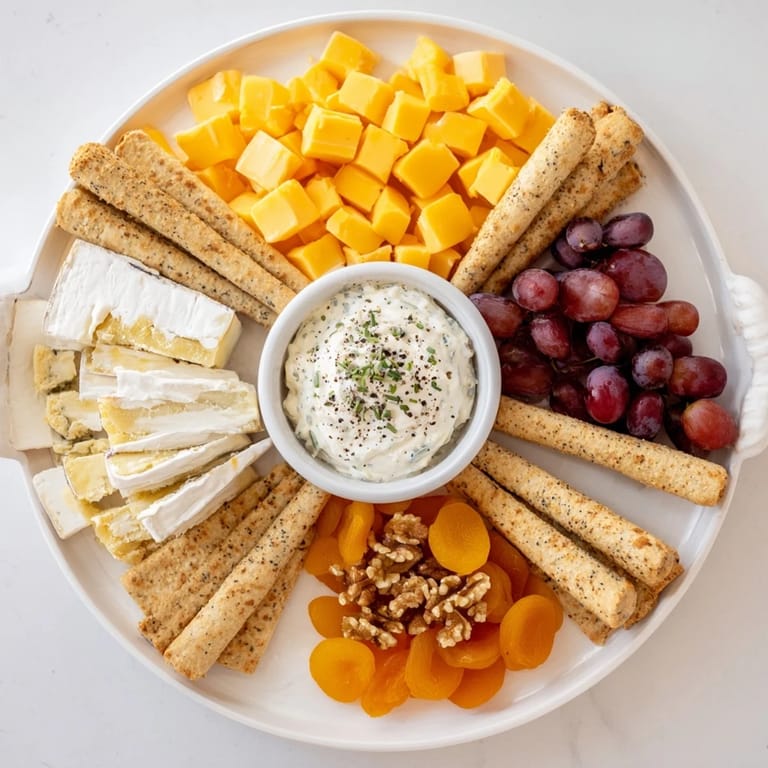
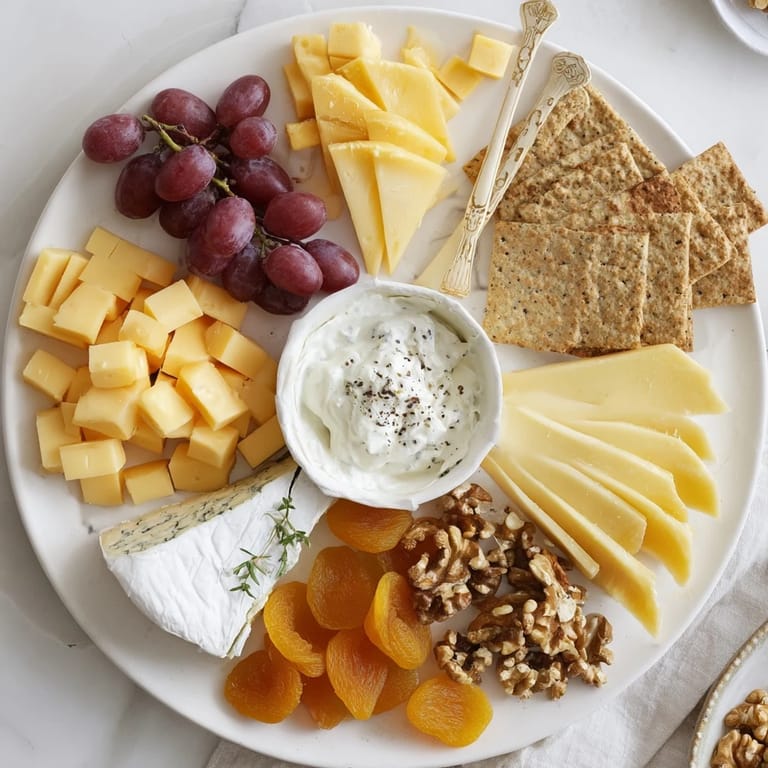
- Imagine the platter as four equal pie slices radiating from the center bowl. In one quadrant, fan your Irish cheddar cubes so they catch the light; in another, layer the Brie slices slightly overlapping like roof shingles; pile the blue cheese crumbles in a third; and arrange the Manchego slices in the final quadrant.
- Fill the spaces with color and texture:
- This is where the board comes alive. Tuck grapes, apricots, and walnuts into the gaps between quadrants, creating visual pathways that guide the eye around the cross. You're aiming for that balance of busy but organized, abundant but not chaotic.
- Add the honey accent:
- Drizzle a light stream of honey over just the blue cheese quadrant. It'll pool slightly, catching the light like an offering, and when people taste that sweet-sharp combination, they'll understand why you did it.
- Crown the edges with crackers and bread:
- Arrange your crackers and baguette slices around the outer rim of the platter, propping them gently so they're accessible but not overwhelming the design. They're there to serve the cheese, not compete with it.
- Serve at the moment of readiness:
- Let everything reach room temperature if it hasn't already—cold cheese is locked-up cheese, and you want every flavor profile open and generous. Set it on the table and step back; you've created something worth pausing over.
 Save
Save After that book club night, I realized that how we present food is a kind of hospitality in itself. When you take the time to arrange things with thought, people feel it. They linger longer, taste more consciously, and somehow conversations go deeper. A cheese board stopped being just appetizer that night.
The Celtic Cross Story
The Celtic cross has been a symbol of intersection and balance for centuries—where horizontal and vertical lines meet, where earth meets sky. Using that geometry on a cheese platter is a way of saying the meal matters, that the gathering matters. It transforms something casual into something ceremonial, and honestly, that's what good entertaining should do.
Cheese Temperature and Flavor
I learned this the hard way: cheese tastes completely different depending on temperature. Warm cheese spreads, releases its aromatics, and becomes creamy and complex. Cold cheese is tight, dense, and one-dimensional. The 30-minute rule isn't precious—it's practical. Every flavor note in that cheddar, every subtle funk in the blue, every buttery note in the Brie opens up when given time.
Building a Board That Works
The secret to a board that people actually enjoy is contrast and balance. You're not just throwing things together; you're creating a conversation between flavors and textures. The sweetness of apricots playing against sharp cheddar, the creaminess of Brie softening the intensity of blue cheese, the crunch of walnuts anchoring everything. When you arrange it thoughtfully, those conversations happen naturally.
- Always include at least one creamy cheese, one sharp cheese, and one with funk or complexity—this gives guests a range to explore.
- The honey drizzle over blue cheese is more than decoration; it's a flavor bridge that makes the board feel cohesive.
- Don't slice or cube everything the same way; varied shapes and sizes make the board feel more generous and thoughtful.
 Save
Save Every time I set out a cheese board now, I think about intention. It's just food, sure, but it's also an invitation to slowness, to tasting carefully, to connecting. That's worth the 20 minutes.