 Save
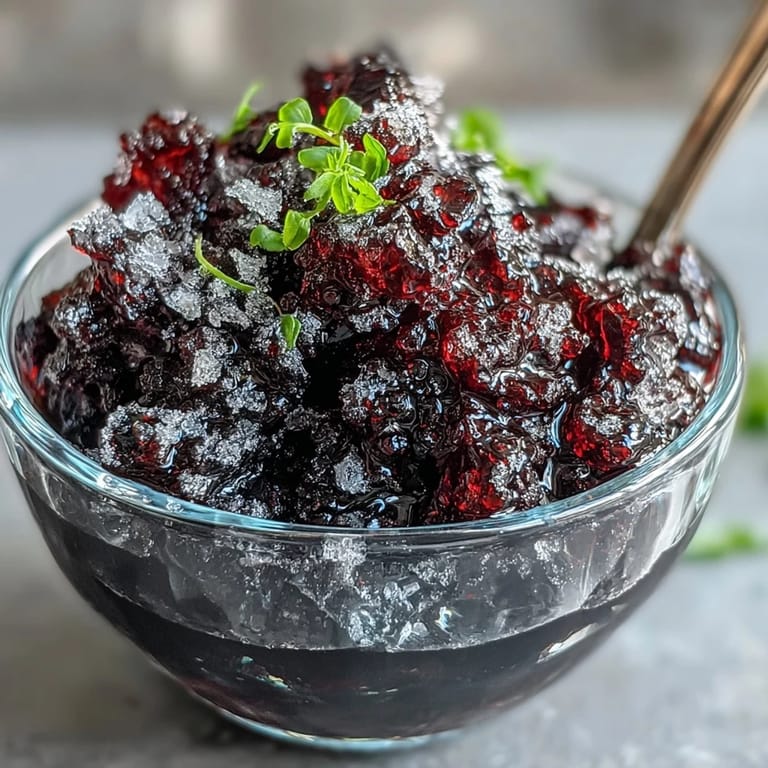
Save This Black Currant Granita is a refreshing, crystalline frozen dessert bursting with the bold, tangy flavor of black currants. Perfect for sweltering summer days or as a sophisticated palate-cleansing finale, it offers an intense berry experience with a light, icy texture.
Save Rooted in Italian tradition, granita relies on a simple freezing and scraping technique that creates delicate, shaved-ice crystals. It is the ultimate low-effort, high-reward dessert that celebrates seasonal fruit at its peak.
Ingredients
Tired of Takeout? 🥡
Get 10 meals you can make faster than delivery arrives. Seriously.
One email. No spam. Unsubscribe anytime.
- 500 g (about 3 cups) fresh or frozen black currants
- 150 g (3/4 cup) granulated sugar
- 400 ml (1 2/3 cups) water
- 1 tablespoon freshly squeezed lemon juice
Instructions
- Step 1
- Rinse the black currants thoroughly. If using fresh currants, remove stems.
- Step 2
- In a medium saucepan, combine the black currants, sugar, and water. Bring to a simmer over medium heat. Stir occasionally until the sugar dissolves and the currants burst, about 10 minutes.
- Step 3
- Remove from heat and let cool slightly.
- Step 4
- Puree the mixture using a blender or immersion blender until smooth.
- Step 5
- Strain the puree through a fine-mesh sieve into a large bowl, pressing to extract as much juice as possible. Discard seeds and skins.
- Step 6
- Stir in the lemon juice.
- Step 7
- Pour the strained mixture into a shallow metal baking dish.
- Step 8
- Place in the freezer. After 45 minutes, use a fork to scrape and break up any icy edges. Return to the freezer.
- Step 9
- Every 30–45 minutes, scrape and fluff the mixture with a fork until the granita is fully frozen and fluffy, about 4 hours total.
- Step 10
- Serve immediately in chilled glasses or bowls.
Zusatztipps für die Zubereitung
To ensure the best crystalline structure, use a shallow metal baking dish, as metal conducts the cold more efficiently than glass or plastic. Consistency is key: don't skip the periodic scraping, as this prevents the mixture from turning into a solid block of ice.
Varianten und Anpassungen
For an adult twist, you can add 2 tablespoons of crème de cassis or black currant liqueur to the mixture before freezing. This not only deepens the flavor profile but the alcohol also helps create a slightly softer texture.
Serviervorschläge
Serve your granita in pre-chilled glasses or bowls to slow down melting. For a professional look, garnish each portion with a sprig of fresh mint or a few reserved whole black currants to provide a contrast to the icy crystals.
 Save
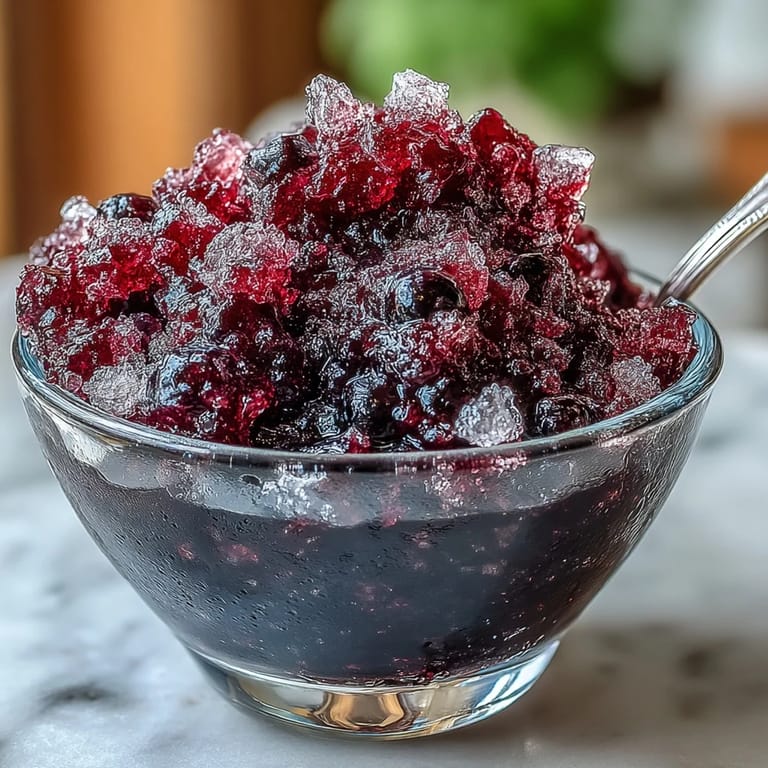
Save With its striking color and punchy flavor, this Black Currant Granita is a sophisticated yet easy-to-make dessert that perfectly captures the essence of summer.
Recipe Q&A
- → What makes granita different from sorbet or ice cream?
Granita has a coarser, crystalline texture achieved by regularly scraping the freezing mixture with a fork. Unlike ice cream, it contains no dairy, and unlike sorbet, it's not churned, resulting in fluffy ice crystals rather than a smooth consistency.
- → Can I use frozen black currants instead of fresh?
Absolutely. Frozen black currants work perfectly and may even break down more easily during simmering. No need to thaw first—just add them directly to the saucepan with the sugar and water.
- → How far in advance can I make this?
You can prepare the granita up to 2 days ahead. Simply fluff with a fork before serving to restore the crystalline texture. Keep covered in the freezer to prevent ice crystals from absorbing other flavors.
- → What can I use instead of a metal baking dish?
A glass baking dish works, though metal freezes faster and more evenly. The key is using a shallow container to allow rapid, uniform freezing. Avoid deep containers which make consistent scraping difficult.
- → How do I know when the granita is ready?
The granita is complete when the entire mixture has transformed into uniform icy crystals that fluff easily with a fork. This typically takes about 4 hours total, with scraping every 30-45 minutes.
- → Can I reduce the sugar in this recipe?
Sugar helps create the proper texture and prevents the mixture from freezing into a solid block. You can reduce slightly, but too little sugar will result in hard, icy crystals that are difficult to scrape.