 Save
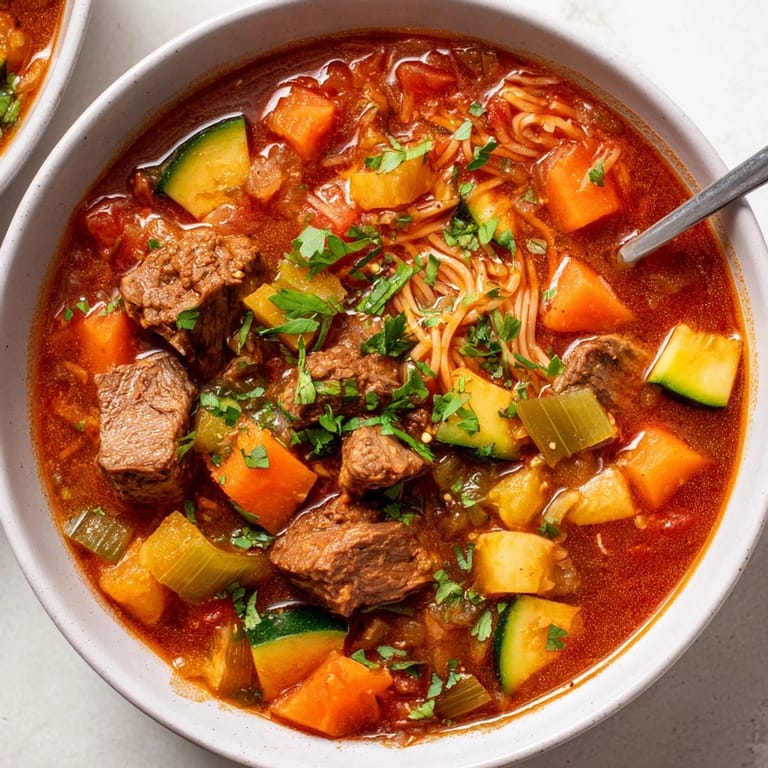
Save My grandfather used to say that a proper chorba could tell you everything about a cook's patience and soul. Years ago, watching him tend a pot of this Algerian soup, I noticed how he'd stand there for nearly two hours, occasionally stirring, letting the spices whisper their secrets into the broth. There's something about the way lamb softens into the tomatoes and spices that feels less like cooking and more like a small act of care. When I finally made it myself, I understood why he never rushed it. The kitchen filled with cinnamon and cumin, and suddenly I wasn't just making soup—I was connecting across years and tables.
I made this soup for a friend during a particularly cold week, when she needed something that felt like more than food. She sat at my kitchen counter, and as we talked, she kept drifting toward the aroma rising from the pot. By the time we served it, she'd already decided it was her new favorite thing I make. That's when I realized chorba isn't just a recipe—it's a small way of saying "you matter" without having to say it out loud.
Ingredients
- Lamb shoulder, cut into 2 cm cubes (500 g): The shoulder has just enough fat to flavor the broth while becoming silky through slow cooking; avoid the leaner cuts that turn stringy.
- Onion, finely chopped (1 large): The foundation of every good soup; take your time mincing it finely so it softens completely and sweetens the broth.
- Carrots, diced (2): They stay slightly firm and add natural sweetness that balances the spices.
- Celery stalks, diced (2): The subtle herbaceous note that professionals know makes all the difference.
- Potato, peeled and diced (1 medium): It thickens the soup naturally as it breaks down; don't skip it.
- Zucchini, diced (1): Added near the end so it stays tender and doesn't turn to mush.
- Fresh tomato, peeled and diced (1 large): Combined with canned tomatoes, it gives a fresher edge to the broth.
- Canned chopped tomatoes (400 g): Reliable and always ripe, this is your safety net for consistent flavor.
- Garlic cloves, minced (2): Never skip the mincing—garlic chunks are unforgiving in a slow-cooked soup.
- Tomato paste (2 tbsp): A spoonful of this concentrated deepness transforms the entire character of your broth.
- Fresh coriander, chopped (1 bunch): The bright, citrussy finish that makes people ask for the recipe.
- Fresh parsley, chopped (1 bunch): The green that softens the earthiness and makes it feel fresh.
- Ground cumin (1 tsp): Warm and slightly nutty; this is the soul of the spice blend.
- Ground coriander (1 tsp): Subtle and floral, it adds complexity without announcing itself.
- Paprika (1 tsp): Color and gentle warmth; don't use smoked unless you want to shift the whole personality of the dish.
- Ground cinnamon (1/2 tsp): Just enough to remind you this is North African, not Middle Eastern.
- Ground black pepper (1/2 tsp): Fresh ground makes a noticeable difference here.
- Ground turmeric (1/2 tsp): The earthy note that ties everything together.
- Chili flakes, optional (1/2 tsp): Add only if you want people to remember the heat along with the flavor.
- Salt (1 1/2 tsp): Start here and taste as you go; the broth concentrates as it simmers.
- Olive oil (2 tbsp): Good quality matters; it's one of the few ingredients that tastes like itself.
- Water or low-sodium beef stock (1.5 L): Stock adds depth, but water lets the spices speak louder—choose based on your mood.
- Vermicelli or small soup pasta (60 g): It should be thin enough to absorb the broth without becoming mushy.
Tired of Takeout? 🥡
Get 10 meals you can make faster than delivery arrives. Seriously.
One email. No spam. Unsubscribe anytime.
Instructions
- Sear the lamb until it's golden and proud:
- Heat your olive oil over medium heat until it shimmers. Work in batches if needed so the lamb browns rather than steams; this takes about 5 minutes and fills your kitchen with the first promise of what's coming. Don't skip this step—the browning creates depth that simmering alone never will.
- Build the aromatics into a soft foundation:
- Add the onions, garlic, carrots, celery, and potato, stirring occasionally for about 5 minutes until they start to soften at the edges. You're not cooking them through; you're just waking them up.
- Toast the spices until they're fragrant and alive:
- Stir in the tomato paste and all your spices, cooking for about 2 minutes. Your kitchen should smell like North Africa now—cinnamon and cumin dancing together. This bloom releases the essential oils in the spices and prevents them from tasting raw.
- Add the tomatoes and vegetables in layers:
- Toss in your fresh diced tomato, canned tomatoes, and zucchini, stirring well so everything mingles. The mixture will look thick and concentrated at this moment.
- Pour in the liquid and let everything come together:
- Add your water or stock and bring to a boil, then immediately reduce the heat to low, cover the pot, and let it simmer gently for about 1 hour. Skim away any foam that rises during the first few minutes—it's just impurities saying goodbye. The lamb should be so tender it nearly falls apart when stirred.
- Finish with pasta and fresh herbs:
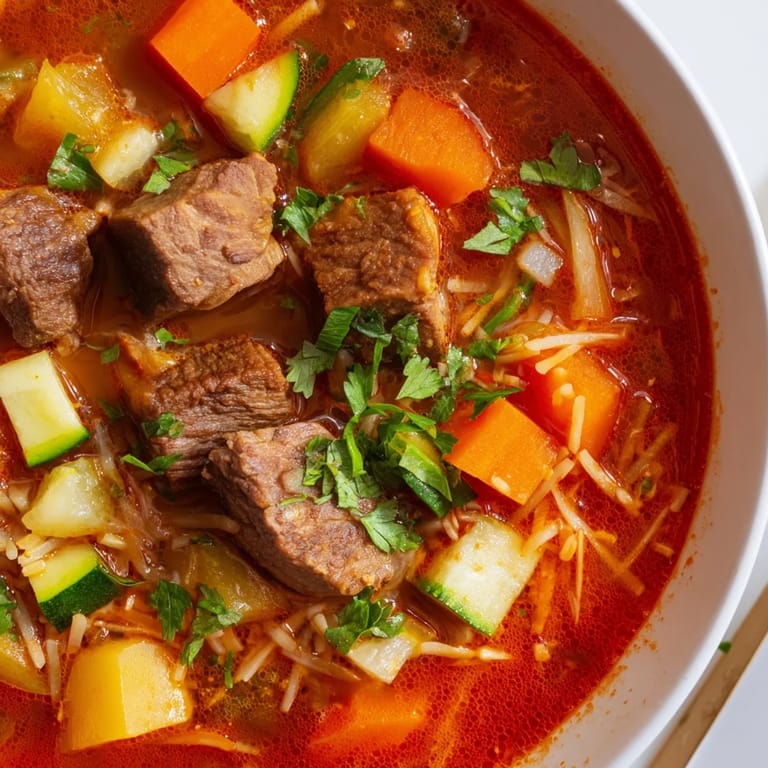
- Add the vermicelli or pasta and simmer for 10–12 minutes, stirring occasionally so it doesn't clump. When it's tender, stir in your chopped parsley and coriander, taste it carefully, and adjust the salt if needed.
- Serve with ceremony and fresh lemon:
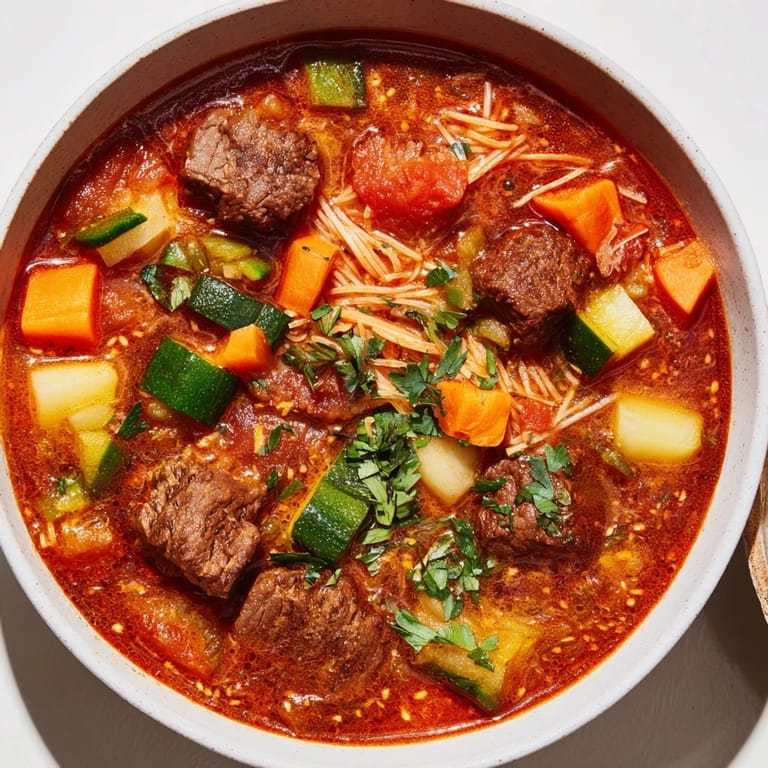
- Ladle the soup into bowls, scatter the reserved herbs on top, and set out lemon wedges so people can squeeze them in according to their taste. This final brightness ties everything together.
 Save
Save I remember my neighbor stopping by just as I was ladling the finished soup, the steam rising like an invitation. She asked if she could stay for a bowl, and suddenly we were sitting together, talking about everything and nothing, while the soup did what good food does best—it created a reason to pause. That's when I understood that chorba isn't really about lamb or spices; it's about giving yourself and others permission to slow down.
The Magic of North African Spices
The spice blend in this soup is deliberately balanced—cinnamon and cumin provide warmth without overwhelm, while coriander adds a subtle floral note that most people can't quite name but absolutely notice when it's missing. Turmeric ties them together with earthiness, and paprika adds gentle color and depth. What makes this blend work is that no single spice shouts; instead, they create a harmony that makes you want another spoonful. I learned this by making the mistake of doubling the cinnamon once, which made the whole pot taste like I'd raided a spice cabinet rather than built something intentional.
Why Slow Cooking Matters Here
The hour-long simmer isn't about following rules; it's about transformation. The lamb gradually surrenders to the broth, releasing gelatin that makes the soup silky on your tongue. The vegetables soften completely, almost disappearing into the liquid, so you're not eating chunks but rather flavors that have merged into something unified. If you rush it, you get soup; if you let it be, you get comfort in a bowl. I once tried to speed things up by increasing the heat, and the result was tough lamb and bitter spices—a reminder that some things refuse to be hurried, and that's actually a gift.
Variations That Keep It Interesting
While this version with lamb is traditional, I've found that chorba is flexible enough to accommodate what's in your kitchen or what your body is asking for. Chicken works beautifully if you want something lighter, though it needs less cooking time—add it in the second batch of aromatics rather than at the very beginning. Chickpeas add a creamy texture and extra protein if you're cooking for vegetarians or just want more substance. Some people add a pinch of ground ginger, which creates a subtle warmth that makes the soup feel almost spiced differently. The foundation is strong enough that it welcomes thoughtful additions.
- Chicken becomes tender in about 40 minutes; don't cook it as long as the lamb.
- Chickpeas add earthiness and should be stirred in alongside the fresh vegetables.
- A squeeze of fresh lemon juice just before serving brightens everything without changing the recipe.
 Save
Save Chorba is the kind of soup that teaches you something new every time you make it—about cooking, yes, but also about why we gather around food in the first place. Make it once, and you'll understand why my grandfather never rushed.
Recipe Q&A
- → What type of meat is used in Algerian Chorba?
Tender lamb shoulder cut into cubes is traditionally used, providing rich flavor and texture.
- → Can I substitute the lamb with other proteins?
Yes, chicken can be used as a lighter alternative without compromising the dish’s essence.
- → What spices contribute to the flavor profile?
Ground cumin, coriander, paprika, cinnamon, turmeric, and optional chili flakes create the aromatic spice blend.
- → What vegetables are included in the dish?
Carrots, celery, potato, zucchini, fresh and canned tomatoes, garlic, and fresh herbs enhance the texture and flavor.
- → How is the dish typically served?
Served hot, often garnished with fresh coriander and parsley, and accompanied by lemon wedges and crusty bread.
- → Is the dish gluten-free?
Care must be taken with vermicelli or pasta choices, as traditional versions contain wheat; gluten-free pasta can be substituted.