 Save
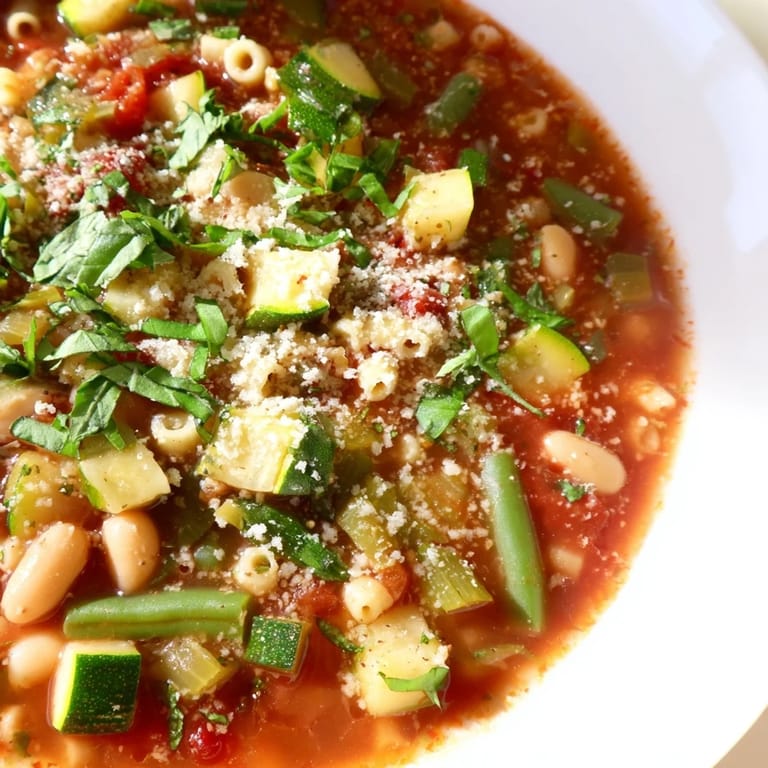
Save There's something about the smell of onions hitting hot olive oil that signals the start of something good. I stumbled into this tomato basil minestrone on a cold afternoon when I had more vegetables than I knew what to do with and wanted something warm without any fuss. The first bowl taught me that the simplest soups are often the ones people come back for—no fancy techniques, just good ingredients simmering together until they become something greater than the sum of their parts.
I made this for a friend who'd just moved into a new apartment with barely a stocked kitchen. She had a pot and a cutting board, and I had grocery bags. We chopped vegetables while catching up, and by the time we sat down an hour later with steaming bowls and crusty bread, the apartment finally felt like a home. That's when I realized this soup isn't just food—it's an excuse to slow down and feed people without pretending it's complicated.
Ingredients
- Olive oil: Two tablespoons is enough to coat the pot and let the vegetables release their moisture—use good oil you actually enjoy the taste of.
- Onion, carrots, and celery: This trio is the foundation; don't skip the soften step or you'll taste the rawness later.
- Garlic: Mince it fine so it dissolves into the broth instead of floating around in chunks.
- Zucchini and green beans: Add texture and keep the soup interesting; if you don't have these exact vegetables, use what you have.
- Diced and crushed tomatoes: The combination of both gives you body and flavor—one can alone won't deliver the same depth.
- Vegetable broth: Four cups is a starting point; taste as you go and add more if you want it brothier.
- Dried oregano and thyme: These are your flavor anchors; dried herbs bloom in hot liquid, so don't skip them.
- Tomato paste: Stir this in early so it dissolves and adds concentrated tomato flavor throughout.
- Small pasta: Ditalini or elbow macaroni absorbs the broth without disappearing; add it late so it doesn't turn mushy.
- Cannellini beans: They add protein and creaminess; rinsing them removes excess salt from the can.
- Fresh basil and parsley: Add these at the very end so they stay bright and don't turn dark and bitter.
- Parmesan cheese: Optional but transforms a simple soup into something people ask for again.
Tired of Takeout? 🥡
Get 10 meals you can make faster than delivery arrives. Seriously.
One email. No spam. Unsubscribe anytime.
Instructions
- Start with the base:
- Heat olive oil in a large pot over medium heat and add diced onion, carrots, and celery. Let them soften for about 5 minutes, stirring occasionally so they don't stick—you want them tender enough to break apart easily with a wooden spoon.
- Layer in the next vegetables:
- Stir in minced garlic, zucchini, and green beans, cooking for 3 minutes until the garlic becomes fragrant. This is when your kitchen starts smelling like an Italian grandmother's house.
- Build the broth:
- Add both cans of tomatoes, vegetable broth, dried oregano, thyme, salt, pepper, red pepper flakes if you want heat, and tomato paste. Stir everything together so the paste dissolves into the liquid, then bring it to a boil.
- Let it simmer:
- Once boiling, turn the heat down and let it bubble gently uncovered for 15 minutes. This gives the vegetables time to get tender and the flavors time to get to know each other.
- Add the pasta and beans:
- Stir in the uncooked pasta and drained cannellini beans, then simmer for another 10 to 12 minutes until the pasta is tender but not falling apart. Taste a piece to know when it's ready.
- Finish with fresh herbs:
- Turn off the heat and stir in chopped fresh basil and parsley—their brightness cuts through the richness of the tomato broth. Taste and adjust salt and pepper if needed.
- Serve:
- Ladle the soup into bowls and top with grated Parmesan if you like. Serve with crusty bread on the side for soaking up every last bit of broth.
 Save
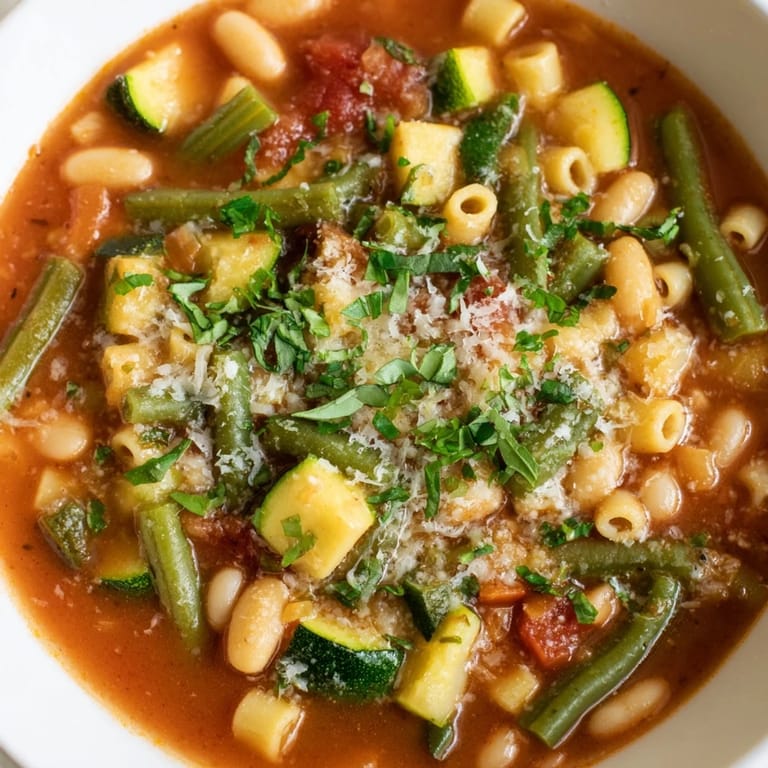
Save The first time I made this and actually left the basil for the very end instead of tossing it in with everything else, I understood why someone would write a poem about a humble bowl of soup. The brightness of fresh herbs against the deep tomato flavor was the moment I stopped thinking of minestrone as just another soup and started seeing it as something intentional.
Why This Soup Works Every Time
Minestrone is forgiving in a way that fancier soups aren't. The long simmer means small mistakes get absorbed into the overall flavor. If you chop the vegetables slightly uneven, it doesn't matter. If your broth is a bit saltier than expected, the tomatoes balance it out. This is the kind of dish that teaches you cooking doesn't require precision as much as it requires paying attention.
Flexibility Without Losing the Plot
You can substitute nearly any vegetable and the soup stays delicious. Spinach wilts into invisibility but adds nutrition. Diced bell peppers bring sweetness. Even canned diced potatoes work if fresh vegetables aren't happening. The rule I follow is simple: if it's something you'd normally cook in a pot of water, it belongs in minestrone. The pasta and beans keep everything grounded while you experiment around them.
Building Flavor Without Fussing
The secret to deep flavor in something this simple is the combination of diced and crushed tomatoes plus tomato paste. The paste is concentrated umami that makes you forget there's no cream or meat in the pot. The dried herbs have time to unfold in the heat, so they taste stronger than if you sprinkled them fresh over finished soup. This is how a weeknight soup becomes something you actually crave.
- If you want spice, don't skip the red pepper flakes; they warm up the whole bowl.
- Keep the heat at a gentle simmer rather than a rolling boil so nothing breaks apart and the broth stays clear.
- This soup tastes even better the next day when flavors have had time to get cozy with each other.
 Save
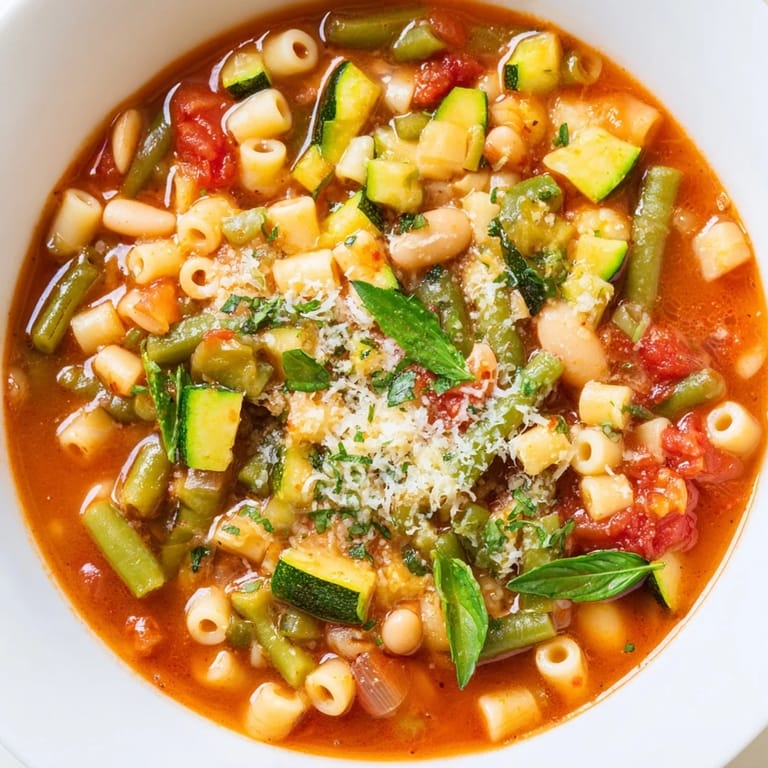
Save There's quiet comfort in a bowl of soup that asks nothing from you except to sit with it and eat. This minestrone earned a permanent spot in my rotation because it delivers exactly that.
Recipe Q&A
- → What type of pasta works best in this soup?
Small pasta shapes like ditalini or elbow macaroni are ideal as they hold up well and blend smoothly with the vegetables and broth.
- → Can I make this soup gluten-free?
Yes, simply substitute the traditional pasta with a gluten-free variety to maintain the texture and taste.
- → How can I add more greens to this dish?
Adding spinach or kale toward the end of cooking provides extra nutrition and vibrant color without overpowering the flavors.
- → Is it necessary to add Parmesan cheese?
Parmesan is optional; it adds a savory finish but the soup is delicious and hearty without it, making it suitable for vegan diets.
- → How long should I simmer the soup for best flavor?
Simmer uncovered for 15 minutes after adding the tomatoes and broth, then another 10–12 minutes after adding pasta and beans to develop depth and allow pasta to cook.
- → What herbs enhance the flavor profile?
Dried oregano and thyme add a fragrant, earthy note that complements the fresh basil and tomato base perfectly.