 Save
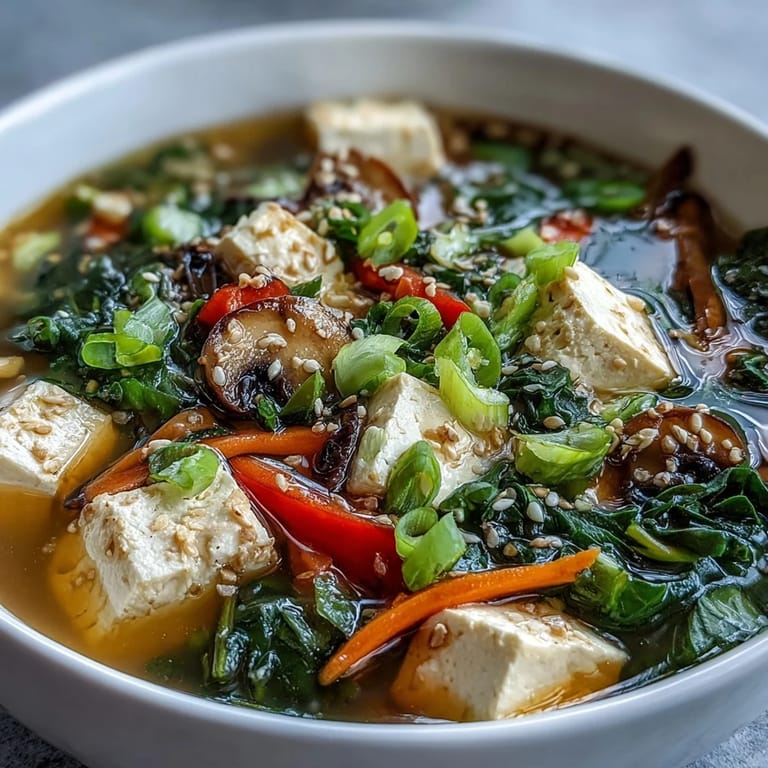
Save There's something about standing over a steaming pot of Asian soup that makes everything feel manageable, even on chaotic weekdays. I discovered this tofu and vegetable soup while experimenting with what felt like the hundredth variation of homemade broth, convinced I needed something that wouldn't demand hours of my attention. What struck me wasn't the simplicity—it was how the silken tofu absorbed the delicate flavors around it, becoming almost invisible yet essential. This bowl became my reliable answer whenever I wanted something nourishing without the fuss.
I made this soup for my roommate when she came home exhausted from a double shift, and watching her shoulders drop after the first spoonful reminded me why I love cooking. She asked for the recipe the next day, and now her version has become something entirely different with added chili oil and whatever vegetables were on sale. That's when I knew it was worth sharing.
Ingredients
- Low-sodium vegetable broth (1.5 liters): This is your foundation, so don't skimp on quality—it's the difference between a soup that tastes alive and one that tastes like a grocery store shelf.
- Soy sauce or tamari (2 tablespoons): Use tamari if you're cooking gluten-free; it has a deeper flavor that doesn't feel like a substitute.
- Fresh ginger (1 tablespoon, thinly sliced): Slicing rather than mincing lets you fish out the pieces later if someone in your household prefers their ginger more subtle.
- Garlic (2 cloves, minced): Mince it small so it disperses throughout the broth without anyone getting a surprise bite.
- Sesame oil (1 teaspoon): Toast-flavored sesame oil is non-negotiable here; the regular kind tastes like disappointment by comparison.
- Carrot (1 medium, julienned): Cut into thin matchsticks so they soften in minutes, not the soggy mess that happens when you chop them too thick.
- Shiitake mushrooms (100 g, sliced): Their earthy umami flavor is what makes people say this tastes more complex than it actually is.
- Baby bok choy (100 g, chopped): The tender leaves add a gentle bitterness that balances the sesame and soy.
- Red bell pepper (1 small, thinly sliced): Red peppers are sweeter than green ones, which matters in a delicate broth.
- Spring onions (2, sliced): Save half for garnish; the raw ones on top taste completely different from the cooked ones in the pot.
- Silken tofu (300 g, cubed): Buy this fresh, not shelf-stable if you can help it—the texture difference is worth the trip to the Asian market.
- Fresh cilantro (optional garnish): I skip this if cilantro tastes soapy to you, but it's worth trying once.
- Toasted sesame seeds (1 teaspoon, optional garnish): Toast them yourself in a dry pan for 30 seconds if you have time; the flavor comes alive.
- Lime wedges (optional garnish): A squeeze of brightness at the end changes everything.
Tired of Takeout? 🥡
Get 10 meals you can make faster than delivery arrives. Seriously.
One email. No spam. Unsubscribe anytime.
Instructions
- Wake up the sesame oil:
- Heat that teaspoon of sesame oil in your large pot over medium heat—you'll smell it within seconds, that toasted, almost nutty aroma that makes your kitchen smell intentional. Add your minced garlic and sliced ginger, letting them sizzle for about 90 seconds until the edges just start to brown and the fragrance fills the room.
- Build your broth:
- Pour in your vegetable broth and soy sauce, then bring everything to a gentle simmer—the kind where bubbles break lazily at the surface, not a rolling boil that will shred your delicate tofu later. Taste it now and see if you want more soy sauce; it's easier to add flavor than to take it away.
- Start with the hard vegetables:
- Drop in your julienned carrot, sliced shiitake mushrooms, and red bell pepper slices, which all need about 5 minutes to soften just enough to bite through without resistance. Keep the heat at that gentle simmer—you're coaxing flavor out, not attacking it.
- Add the tender greens:
- Stir in your chopped bok choy and sliced spring onions, letting them cook for 2 to 3 minutes until the leaves turn a brighter shade of green and become just tender. You want them to still have a whisper of crunch, not limp.
- Introduce the tofu gently:
- This is the moment where patience matters—lower your silken tofu cubes into the hot broth as if you're placing something breakable, because you are. Let it warm through for just 2 minutes without aggressive stirring; the goal is for it to stay intact and silky.
- Taste and adjust:
- This is your moment to be honest about the flavor—does it need more soy sauce for depth, or is it perfect as is? Take a spoonful and really taste it.
- Serve with intention:
- Ladle the soup into bowls, making sure each one gets a good mix of vegetables and tofu, then scatter your garnishes on top if you're using them—cilantro, sesame seeds, a squeeze of lime. The fresh elements on top give every spoonful a little surprise.
 Save
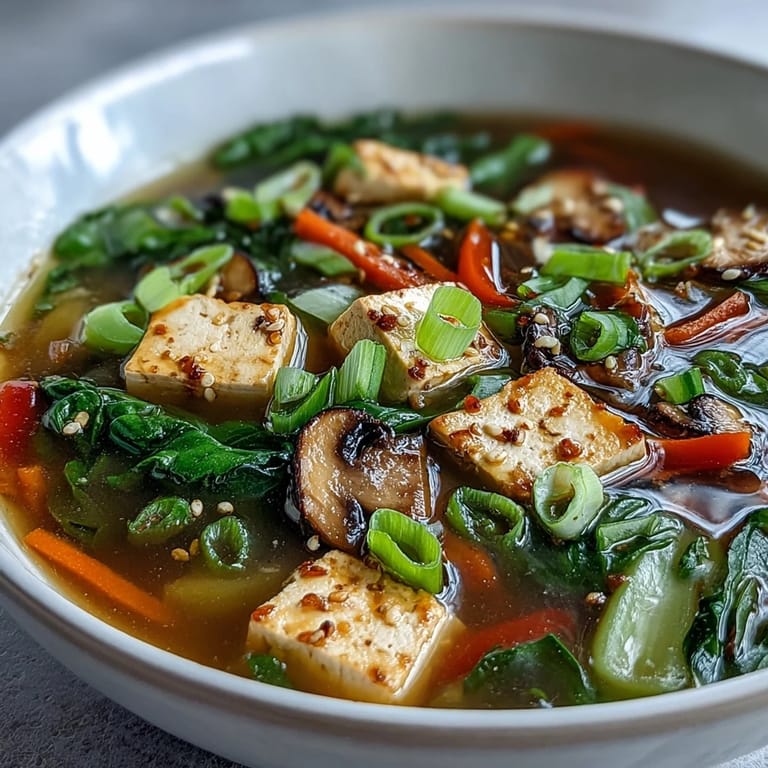
Save There was an evening when a friend came over saying she'd been eating the same sad sandwich for three days straight because nothing felt worth cooking. I heated up a pot of this soup, and by the time she finished the bowl, she looked like someone had reminded her what comfort actually tasted like. That's when I realized this recipe wasn't just convenient—it was kind.
Why This Soup Feels Like a Hug
The magic here is that nothing competes for attention; everything works together in a way that feels almost accidental. The tofu doesn't have a strong flavor of its own, so it becomes whatever you need it to be—protein, texture, a vehicle for broth to cling to. The vegetables are cut thin enough that they're ready before you lose interest in the stove, and the broth tastes like someone who knows what they're doing made it, even though you've been cooking for all of 15 minutes.
The Art of Vegetable Cuts That Actually Matter
I learned the hard way that how you cut your vegetables changes everything in a soup that cooks this fast. Thick carrot chunks take forever and sit there half-raw while the softer vegetables turn to mush—but when you julienne them thin, they're tender in exactly the time you need them to be. The same goes for the bell pepper and mushrooms; thin slices cook in minutes, while chunks feel like they're mocking you from the bottom of the pot. It's not about being fancy; it's about physics and respect for your time.
Making This Soup Your Own
This is one of those recipes that's actually grateful when you improvise with it. I've made it with snow peas instead of bok choy when that's what was in the crisper drawer, and once I added a splash of chili oil at the end because I was tired of eating plain things. The structure holds up to changes because the broth is strong enough to carry whatever vegetables you throw at it.
- Try adding a handful of enoki mushrooms instead of shiitake, or mix both for different textures in each spoonful.
- A dash of chili oil or fresh sliced chili stirred in just before serving turns this into something with a little attitude, if that's what your evening needs.
- Firm tofu works if you want something with more bite and substance, though you lose some of that delicate, almost creamy quality that silken tofu brings.
 Save
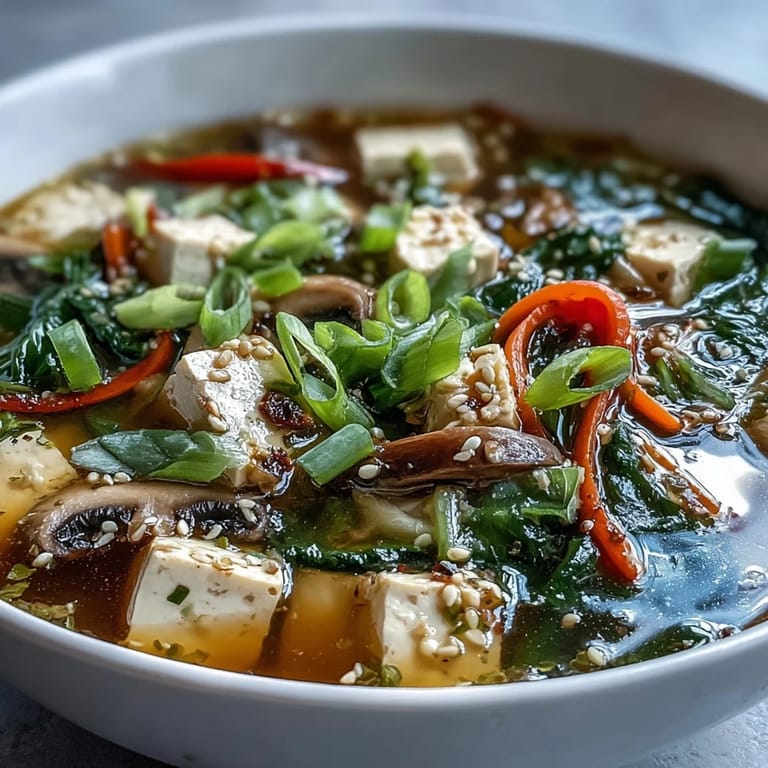
Save This soup has become my answer to 'what should I make that feels intentional but doesn't demand three hours of my life.' It's proof that simple doesn't have to mean boring, and quick doesn't have to feel rushed.
Recipe Q&A
- → What makes this broth flavorful?
The broth gets its depth from fresh ginger, minced garlic, soy sauce, and a hint of toasted sesame oil. These aromatics infuse the vegetable broth with savory umami notes without overwhelming the delicate ingredients.
- → Can I use different vegetables?
Absolutely. Snow peas, napa cabbage, enoki mushrooms, or spinach work beautifully. The key is adding sturdy vegetables first, then delicate greens like bok choy or spinach in the last few minutes.
- → Is silken tofu necessary?
Silken tofu provides a delicate, creamy texture that contrasts nicely with crisp vegetables. However, firm tofu works well if you prefer more bite—just add it earlier so it absorbs more flavor.
- → How do I make it spicy?
Stir in chili oil or sliced fresh chilies during the last minute of cooking. Sriracha or sambal oelek also work well—add these to individual bowls so diners can control their preferred heat level.
- → Can this be made ahead?
The broth and vegetables reheat well, but silken tofu is delicate. Store components separately: broth with vegetables in one container, tofu in another. Combine when reheating to maintain texture.
- → Is this gluten-free?
Use tamari instead of regular soy sauce to make this completely gluten-free. All other ingredients—including the vegetable broth, tofu, and fresh vegetables—are naturally gluten-free.