 Save
Save There's a particular moment in cooking that I live for—when the first whiff of green curry paste hits the hot oil and suddenly your kitchen transforms into a Bangkok street market. I discovered this soup years ago while craving something that felt both comforting and alive, and I've made it countless times since. What started as a way to use up vegetables in my crisper drawer became my go-to dish when I wanted to feel transported without leaving home. The coconut milk swirls in like cream, the vegetables stay just tender enough to bite through, and somehow it tastes like both a weeknight dinner and something you'd order at a restaurant. This is the kind of soup that reminds you why cooking matters.
I remember cooking this for my friend Kai on a gray November evening when she showed up needing comfort food after a rough week. She sat at my counter while I sliced vegetables, and by the time the curry paste released its fragrance into the air, she was already smiling. The soup did what good food should do—it gave us something warm to hold onto while we talked, and somehow made the evening feel less heavy. She's asked me to make it for her at least a dozen times since then.
Ingredients
- Firm tofu or chicken breast: Pick whichever speaks to you that day; tofu absorbs the curry flavors beautifully while chicken adds a lighter, cleaner taste.
- Green curry paste: This is non-negotiable for the soul of the soup—store-bought works perfectly and saves you from an hour of grinding spices.
- Coconut milk: Full-fat creates that luscious richness, but light coconut milk works if you want something less heavy.
- Vegetable or chicken broth: Use whatever you have; homemade is wonderful but store-bought won't betray you here.
- Fish sauce: Only a tablespoon, but it adds a savory depth that makes people ask what's in the soup; soy sauce works for vegetarian versions.
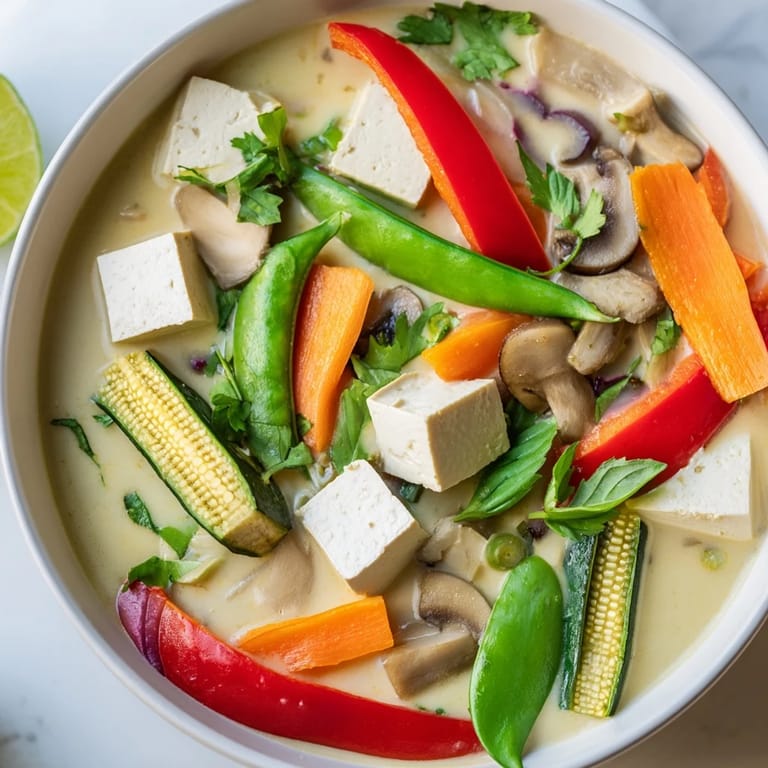
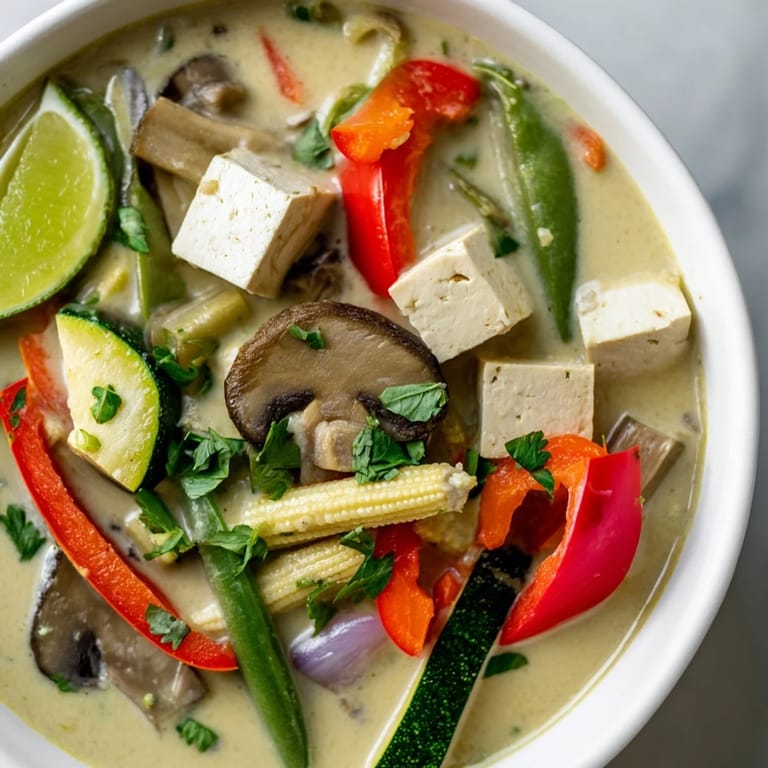
- Fresh vegetables: The bell pepper, zucchini, snap peas, and mushrooms create a garden's worth of textures and colors—swap them freely based on season.
- Fresh cilantro and Thai basil: These aren't optional; they brighten everything at the very end and make the whole bowl come alive.
Tired of Takeout? 🥡
Get 10 meals you can make faster than delivery arrives. Seriously.
One email. No spam. Unsubscribe anytime.
Instructions
- Toast the curry paste:
- Heat oil in your pot over medium heat and add the curry paste, letting it sizzle for a minute or two until your kitchen fills with that unmistakable aroma. You'll know it's ready when it smells like you're standing in a Thai market.
- Soften the aromatics:
- Toss in your sliced onion and let it become translucent and sweet, about two minutes—this builds the foundation of everything that comes next.
- Add your protein:
- Whether it's tofu or chicken, add it now and let it start cooking through, which takes just a few minutes. You're not aiming for fully cooked; just a head start before the broth arrives.
- Pour in the liquid:
- Add both the coconut milk and broth in one gentle motion, stirring as you go so the curry paste dissolves evenly. Bring it to a soft simmer—not an aggressive boil, but a lazy, purposeful bubble.
- Add the vegetables:
- All your prepared vegetables go in now and get about 8 to 10 minutes to become tender while keeping their slight bite and bright colors. This is where the soup transforms from a curry-scented liquid into something with real substance.
- Finish and taste:
- Stir in the fish sauce and sugar, then taste and adjust—more salt, more heat, more lime brightness if it needs it. This is your moment to make it yours.
- Serve with celebration:
- Ladle into bowls and crown each one with cilantro, Thai basil, a lime wedge, and sliced chili if you want more heat. The fresh herbs and citrus are what elevate this from good to unforgettable.
 Save
Save The first time someone told me this soup tasted like the real thing—like something they'd eaten on a street in Thailand—I felt seen in a way that only happens with food. It meant the balance was right, that something honest had made it into the bowl. That's what I'm always reaching for now when I make it again.
Building Flavor Layers
What makes this soup sing isn't any single ingredient; it's the order in which you introduce them and how you give each element its moment. The curry paste needs heat and time to transform from a paste into a fragrant base. The onion needs space to soften and sweeten before the broth arrives. The vegetables want the coconut milk to be gently simmering before they join, so they cook at the right pace. And the fresh herbs? They only work their magic at the very end, when they're still alive and vibrant.
Customizing Without Losing the Soul
The beauty of this recipe is that you can change almost everything and it still tastes like itself. Swap the vegetables for whatever's in your market that day—eggplant, bok choy, cauliflower all work beautifully. Use coconut cream instead of milk if you want richness, or thin it with more broth if you prefer something lighter. Add ginger, lemongrass, or galangal if you want to deepen the complexity. The structure stays the same; only the details shift.
- Start with the curry paste toasted in oil every single time—this is the non-negotiable moment.
- Taste before serving and adjust salt, heat, and brightness to match your mood and preferences.
- Serve it with jasmine rice, rice noodles, or even bread if that's what you have and what you want.
The Soul of a Good Weeknight Dinner
This soup exists in that sweet spot where it feels special enough to serve to people you care about but simple enough that you'll make it on a random Tuesday when you need something nourishing and fast. It proves that weeknight cooking doesn't have to be boring or utilitarian—it can be bright, complex, and genuinely delicious.
 Save
Save This soup has become one of those recipes I make without thinking, the way you'd hum a favorite song. It's never let me down, and it always brings people together around the table.
Recipe Q&A
- → Can I substitute chicken with tofu in this curry?
Yes, firm tofu can be used as an excellent plant-based substitute, absorbing the curry flavors beautifully.
- → What vegetables work best in this soup?
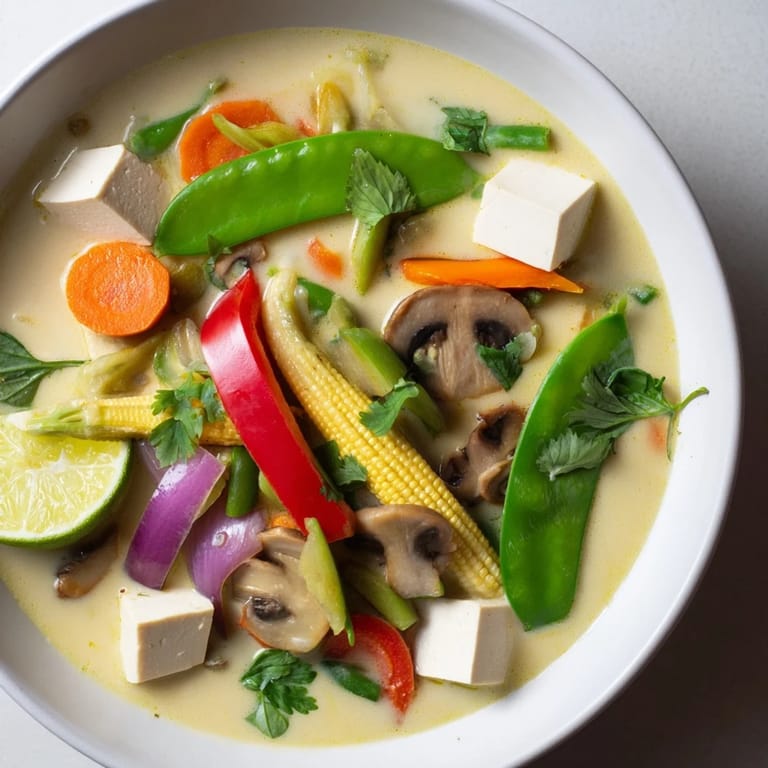
Fresh bell pepper, zucchini, baby corn, snap peas, mushrooms, carrot, and onion are traditional choices that offer a balanced texture.
- → How spicy is the curry and can I adjust it?
The curry has a medium heat. You can increase spice by adding more green curry paste or fresh sliced chili.
- → Is there a gluten-free option for the sauce?
Using gluten-free soy sauce instead of regular soy or fish sauce keeps the dish gluten-free without compromising flavor.
- → What are good accompaniments to serve with this curry soup?
Steamed jasmine rice or rice noodles complement the creamy, spicy broth perfectly.
- → Can I prepare this dish in advance?
It’s best enjoyed fresh, but you can prepare the curry base ahead and combine with vegetables shortly before serving.