 Save
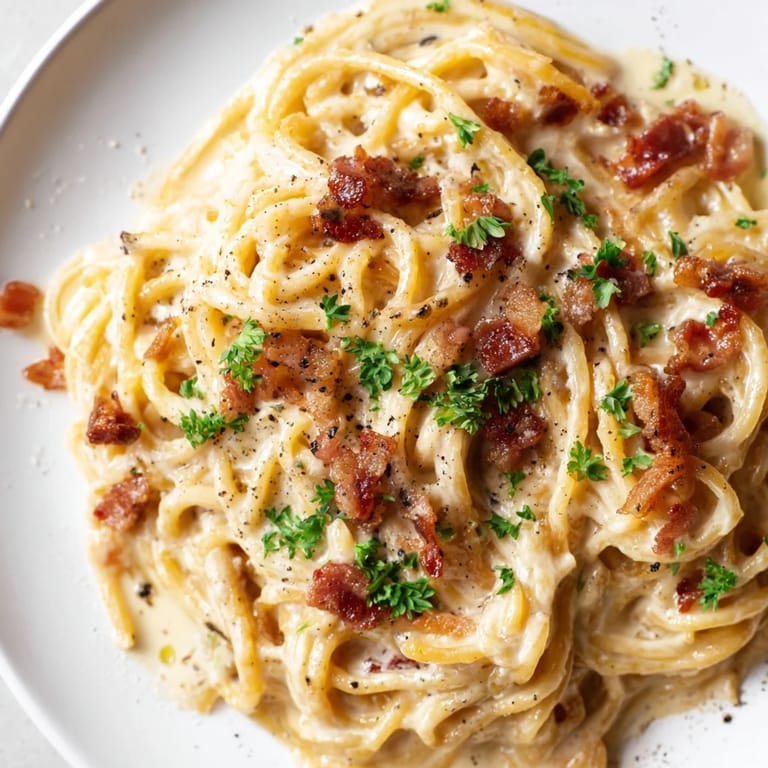
Save There's a moment in every cook's life when two worlds collide in the best way possible. Mine happened on a rushed weeknight when I had fancy cravings but only instant ramen in the pantry. I remembered carbonara from a trip to Rome, that silky egg and cheese sauce clinging to hot pasta, and thought: what if I brought that elegance to these humble noodles? Fifteen minutes later, I was twirling ramen on my fork like it was tagliatelle, the creamy sauce catching the kitchen light. Sometimes the best dishes are born from necessity and a little culinary rebellion.
I made this for a friend who swore by instant ramen as a survival food, nothing more. When she tasted it, her eyes widened like I'd done something impossible. She kept saying "this is actually restaurant-level" while twirling noodles, and I realized then that sometimes the smallest gestures in the kitchen—knowing when to elevate something ordinary—matter more than elaborate recipes.
Ingredients
- 1 packet instant ramen: Discard the flavor packet entirely—you're building something better. The thin noodles cook quickly and hold onto the creamy sauce beautifully.
- 1 large egg: This is the heart of carbonara, emulsifying with heat to create that silky coating. Room temperature works best so it doesn't scramble.
- 1/3 cup grated Parmesan cheese or Pecorino Romano: Freshly grated makes all the difference in texture and flavor. Pre-grated cheese won't melt as smoothly and tastes noticeably duller.
- 2 tablespoons heavy cream: Optional but worth it—this keeps the sauce from breaking and adds a cloud-like richness that makes each bite feel indulgent.
- 1 clove garlic, minced: Just enough to whisper its presence into the sauce without overpowering the delicate cheese and egg.
- 1/4 teaspoon black pepper and a pinch of salt: Black pepper should taste fresh and slightly sharp. Taste as you go since the cheese and reserved cooking water add saltiness too.
- 2 strips cooked bacon or pancetta, chopped: Optional, but if you use it, cook it until crispy so it stays textured rather than disappearing into the sauce.
- Fresh parsley and extra Parmesan: The final flourish that makes a simple bowl look like someone who knows what they're doing made it.
Tired of Takeout? 🥡
Get 10 meals you can make faster than delivery arrives. Seriously.
One email. No spam. Unsubscribe anytime.
Instructions
- Boil the noodles:
- Bring a small pot of water to a rolling boil and add the instant ramen. Set a timer for exactly 3 minutes—this is not the time to wander off. When they're tender, drain them completely and set aside 2 tablespoons of that starchy cooking water. You'll use it like liquid gold to adjust the sauce.
- Build the sauce:
- While the noodles are cooking, whisk the egg, grated Parmesan, cream, minced garlic, black pepper, and salt in a bowl until it looks smooth and pale. This is your emulsion waiting to happen.
- Make the magic:
- This is the critical part: the noodles must still be steaming hot, and the pot must be off the heat. Pour the egg mixture over the hot noodles and toss vigorously for about 30 seconds. The residual heat will cook the egg just enough to coat every strand with a silky sauce, not scramble it.
- Adjust the texture:
- If the sauce looks too thick, add the reserved cooking water one tablespoon at a time, tossing after each addition until you reach that silky, glossy consistency. It should cling to the noodles like a gentle hug, not pool at the bottom.
- Finish and serve:
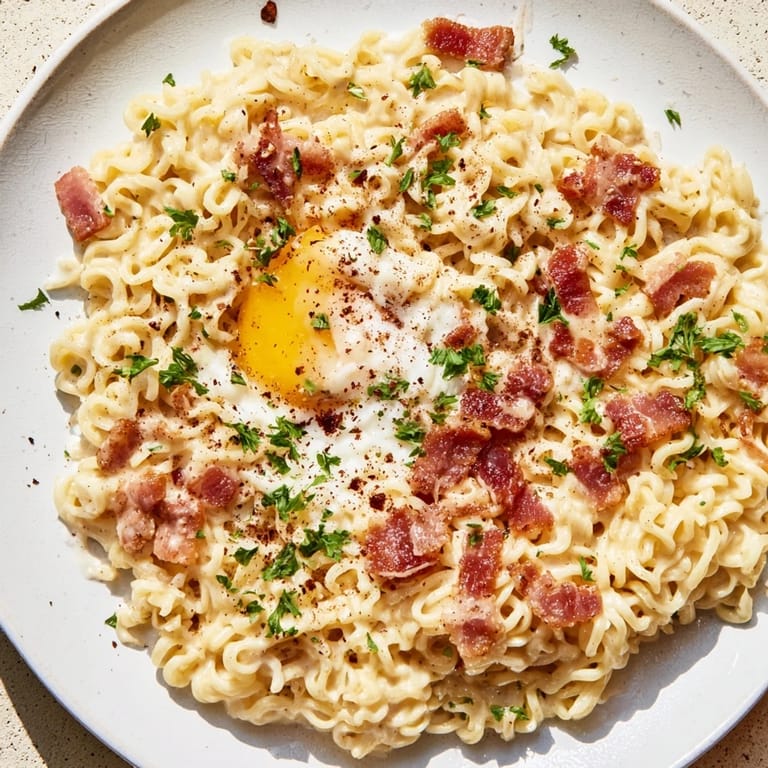
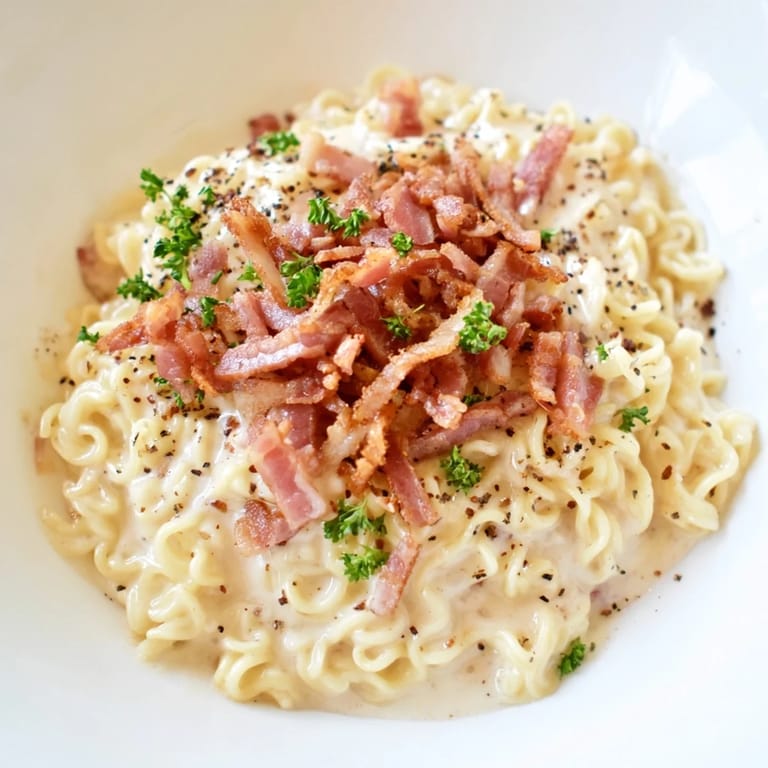
- Stir in your bacon if you're using it, transfer to a bowl, and shower the top with extra Parmesan and fresh parsley. Eat it immediately while the noodles are still hot and the sauce is still flowing.
 Save
Save The real magic of this dish hit me when I realized it wasn't just about fusion or shortcuts. It was about understanding that carbonara is fundamentally about balance—the heat of pasta, the richness of egg and cheese, a whisper of garlic, the contrast of black pepper. Those principles don't care whether the noodles are from Rome or a packet from a convenience store. Once I stopped thinking of instant ramen as budget food and started thinking of it as thin, delicate pasta, everything clicked into place.
The Vegetarian Question
If you're making this without bacon, the dish doesn't lose anything—it just whispers a different story. Sautéed mushrooms add an earthy depth that plays beautifully against the bright cheese and egg. Roasted cherry tomatoes bring a sweet acidity that cuts through the richness. Even just the noodles, sauce, and a generous handful of fresh herbs work beautifully. The soul of carbonara is the sauce, not the meat.
Why Fifteen Minutes Matters
Speed isn't just convenience here—it's actually part of the technique. Carbonara needs high heat and quick movement to work. The slow, meditative cooking that works for other dishes works against you here. This recipe respects your time without asking you to compromise on flavor or texture. You get restaurant quality at weeknight speed, which somehow makes the experience feel even better.
Making It Your Own
Once you understand how this works, you own it. Some nights I add a squeeze of lemon juice at the end for brightness. Other times I stir in a small knob of butter for even more luxury. The proportions are flexible as long as you keep the core logic intact: hot noodles, emulsified egg and cheese, enough starch to bind it all together. Taste constantly and adjust boldly.
- If the sauce breaks and looks separated, add a splash more hot pasta water and keep tossing—it usually comes back together.
- Black pepper should taste fresh and slightly sharp; if yours is old or dull, invest in a new grinder and notice the difference immediately.
- This dish is meant to be eaten in the moment, so have your bowl ready and your appetite aligned with your timing.
 Save
Save This dish taught me that cooking isn't about having fancy ingredients or complicated techniques. It's about understanding why things work and then trusting yourself to execute. Make this once and you'll make it a hundred times, each one tasting like something you pulled off with ease.
Recipe Q&A
- → Can I make this dish vegetarian?
Yes, simply omit bacon or pancetta and consider adding sautéed mushrooms or roasted vegetables for extra flavor and texture.
- → What type of cheese works best?
Grated Parmesan or Pecorino Romano cheese creates a flavorful and creamy sauce when combined with egg and cream.
- → How do I achieve a silky sauce texture?
Reserve some hot noodle cooking water to gradually mix into the egg and cheese mixture, which helps create a smooth, glossy coating for the noodles.
- → Is it necessary to add heavy cream?
Heavy cream is optional and can be added for extra richness, but the egg and cheese alone will still produce a creamy sauce.
- → What are good serving suggestions?
Top with extra grated cheese and fresh parsley for brightness. This dish pairs well with a light, crisp white wine like Pinot Grigio.