 Save
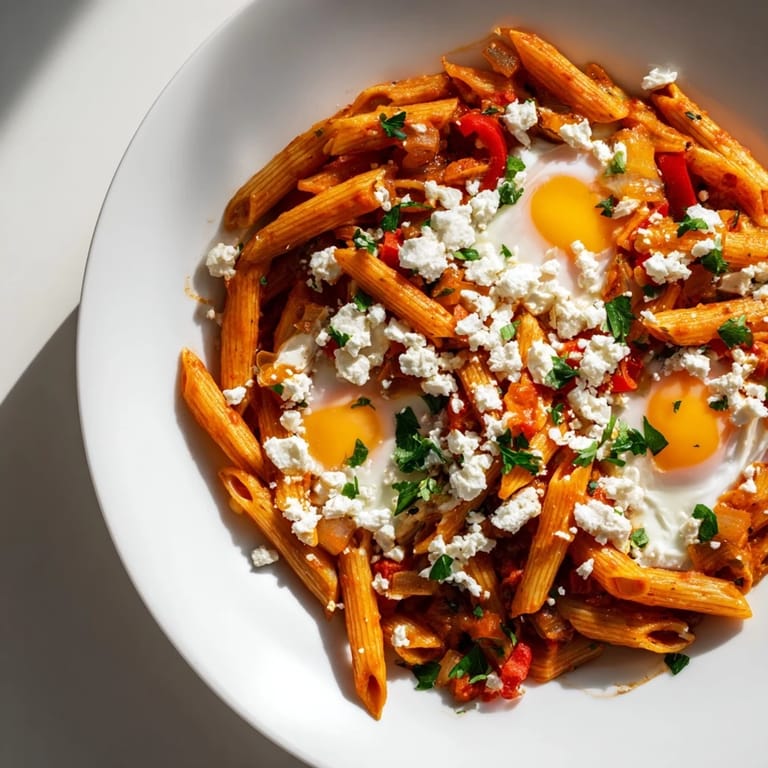
Save I discovered this dish on a Tuesday evening when I was staring at a half-empty fridge wondering what could possibly come together in under thirty minutes. Shakshuka had been on my mind—that gorgeous North African comfort dish with eggs nestled in spiced tomato sauce—but I needed something faster, something that could stand on its own without side dishes. Pasta seemed like the obvious answer, and when I tossed it all together, that first bite revealed something unexpected: the runny egg yolk mixed with the silky sauce created this luxurious coating that made the whole plate feel more indulgent than the sum of its parts. It's become my go-to when I want something that tastes like I've spent hours cooking but doesn't require much more than a quick flick of the wrist.
The first time I made this for someone else, I was nervous about timing the eggs just right—would they be too runny, too firm, impossible to plate without a mess? My friend arrived hungry and chatty, and by the time she sat down, I was plating directly from the skillet, cracking jokes about shakshuka being the great equalizer of dinner parties. She took one forkful, that yolk broke across her pasta, and she just went quiet. Not the awkward kind—the satisfied kind. Watching someone's face when food surprises them in a good way is exactly why I keep cooking.
Ingredients
- Penne or rigatoni: Use whatever pasta shape you prefer, but tube shapes hold sauce beautifully—I learned this the hard way after trying angel hair once and watching most of the sauce slip through.
- Olive oil: Good quality matters here since it's not cooked into oblivion; it carries flavor in the final dish.
- Onion and red bell pepper: The red pepper adds natural sweetness that balances the spices and creates a gorgeous color.
- Garlic: Mince it fine so it melts into the sauce rather than leaving chunks.
- Ground cumin and smoked paprika: These two are the backbone—cumin brings earthiness, paprika adds smokiness and depth that makes people ask what your secret ingredient is.
- Chili flakes: Keep them optional in the beginning; you can always add heat but you can't remove it.
- Crushed tomatoes and tomato paste: The paste concentrates flavor, the crushed tomatoes provide body; together they create sauce, not soup.
- Sugar: This small amount balances the acidity of the tomatoes without making anything taste sweet.
- Large eggs: Make sure they're room temperature or close to it; cold eggs can create rubbery whites when you're trying to keep those yolks runny.
- Fresh parsley or cilantro: This brightness matters—it cuts through the richness and reminds your palate you're eating something fresh.
- Feta cheese: Optional but it adds a salty, creamy element that elevates everything; I crumble it directly into the serving bowl so each bite has a chance at hitting some.
Tired of Takeout? 🥡
Get 10 meals you can make faster than delivery arrives. Seriously.
One email. No spam. Unsubscribe anytime.
Instructions
- Set your water to boil:
- Fill a large pot with salted water—make it taste like the sea—and bring it to a rolling boil before adding pasta. This head start means everything finishes around the same time.
- Build your sauce base:
- In a separate large skillet, warm olive oil over medium heat and let the onion and bell pepper soften for five minutes, stirring occasionally so they color gently rather than brown. You're looking for them to become translucent and fragrant, the moment when your kitchen smells like something worth looking forward to.
- Wake up the spices:
- Once the onion is soft, add minced garlic, cumin, smoked paprika, and chili flakes, stirring constantly for about a minute until the kitchen fills with warm, toasted aroma. This step makes the difference between a sauce that tastes adequate and one that tastes intentional.
- Simmer the tomato magic:
- Stir in crushed tomatoes, tomato paste, and sugar, then season with salt and pepper to taste. Let this bubble gently for eight to ten minutes, stirring now and then, until the sauce thickens and darkens slightly—you'll notice it coats the back of a spoon.
- Cook your pasta strategically:
- Get the pasta into that boiling water and cook it according to package directions until al dente, then drain it, reserving a half cup of that starchy water. That pasta water is liquid gold for adjusting consistency later.
- Create egg nests:
- With the sauce simmering and ready, use a spoon to make four shallow wells in the sauce, spacing them so each egg has room. Crack an egg into each well and immediately cover the skillet with a lid, reducing heat to low.
- Watch the eggs set gently:
- Cook covered for four to six minutes—the whites will turn opaque and the edges will set while the yolks stay soft and glossy. Peek at two minutes, but don't disturb them.
- Marry pasta and sauce:
- Gently pour the cooked pasta into the skillet with the eggs and sauce, tossing everything together softly so you don't break the yolks. If it looks dry, add a splash of reserved pasta water until it's creamy and clingy.
- Finish with flourish:
- Scatter fresh parsley or cilantro across the top and crumbled feta if you're using it, then serve immediately directly from the skillet if you're cooking for people who like drama, or divide among bowls for a more composed presentation.
 Save
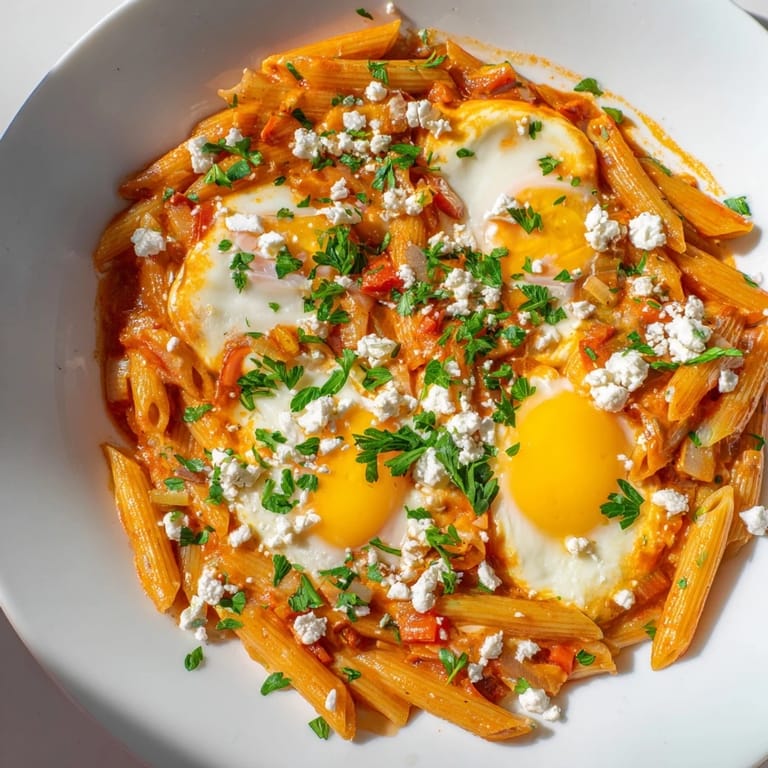
Save There's a moment, maybe three minutes after those eggs hit the heat, when everything feels precarious—will they set correctly, will the yolks stay runny, is anyone going to enjoy this—and then you lift that lid and see those opaque whites with the glossy yolks still jiggling slightly, and suddenly it's not just a weeknight dinner anymore, it's a small victory that tastes incredible. That's when I know why I keep making this.
The Spice Alchemy
Cumin and smoked paprika are not interchangeable—they're partners that create something neither could alone. Cumin brings warmth and earthiness while paprika adds color and a subtle smokiness that tricks your brain into thinking this took all day. I once tried this with just paprika and wondered why it tasted flat despite being the exact same recipe; that's when I understood that some flavors are architectural, each supporting the others. If you're hesitant about chili flakes, start with just a pinch and taste as you go—heat is personal, and you can always stir in more but you can't take it back.
Timing Is Everything
The beauty of this dish is that pasta and sauce finish at almost exactly the same moment if you keep a loose eye on things. Get your water boiling first, start the sauce while the pasta cooks, and by the time both are ready, you're just minutes away from eating. The egg cooking is the finale that brings everything together—it's not a separate thing happening in parallel, it's the crescendo. This means if someone shows up five minutes early, no problem; if they're five minutes late, just cover the skillet with the lid and it'll hold.
Personalize Without Overthinking
This recipe is sturdy enough to handle variations without falling apart. Swap feta for crumbled goat cheese if you want something tangier, or omit it completely and let the egg yolk be the richness. Some people add a splash of red wine to the sauce, others stir in fresh spinach at the very end, and one friend of mine always cracks in an extra egg because she's never satisfied with just four. The foundation is sound—it's the spices, the sauce, the eggs—so play around the edges.
- If you don't have smoked paprika, regular paprika works, though it'll taste less smoky and more straightforward—not bad, just different.
- Dairy-free eaters can skip the feta and finish with a squeeze of fresh lemon juice instead for brightness and complexity.
- Crusty bread is not optional for soaking up that final bit of sauce and egg yolk from the bottom of the bowl.
 Save
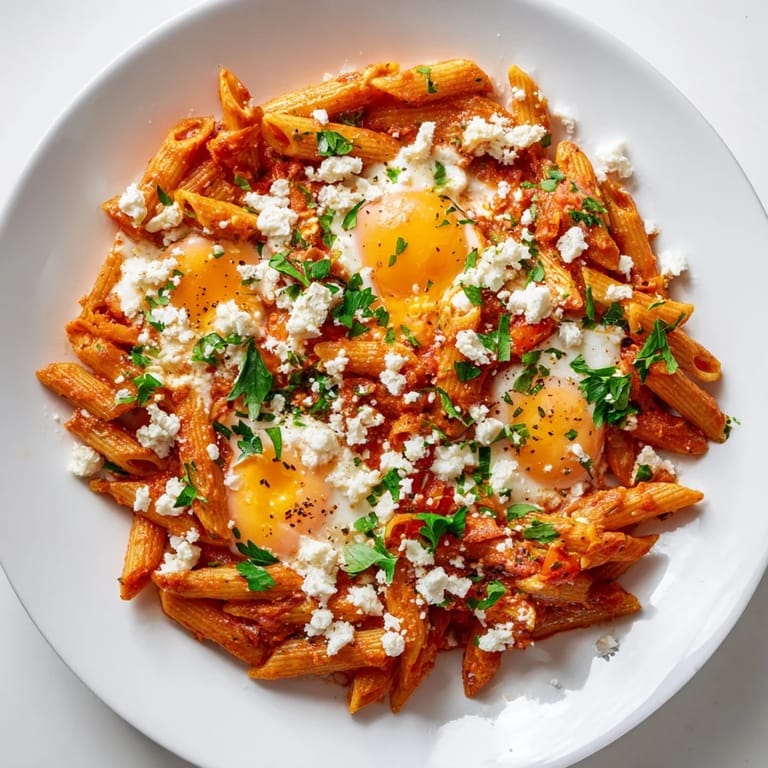
Save This dish has a way of making you feel like you know what you're doing in the kitchen even when you're moving fast and slightly unsure. That's the gift of good flavors and simple technique working together—it makes dinner feel intentional, and that's worth something.
Recipe Q&A
- → How do I cook the eggs perfectly in the sauce?
Create wells in the simmering sauce and crack eggs directly into them. Cover and cook for 4–6 minutes until whites set but yolks stay runny.
- → Can I use a different pasta type?
Penne or rigatoni works best to hold the sauce, but whole-wheat or gluten-free pasta can be used as alternatives.
- → How can I adjust the spice level?
Add more chili flakes or a pinch of cayenne for extra heat, or omit them for a milder flavor.
- → Is it possible to make this dish dairy-free?
Yes, simply omit feta cheese or substitute with a plant-based alternative for a dairy-free version.
- → What herbs complement this dish best?
Fresh parsley or cilantro adds brightness and balances the spice, enhancing the overall flavor.