 Save
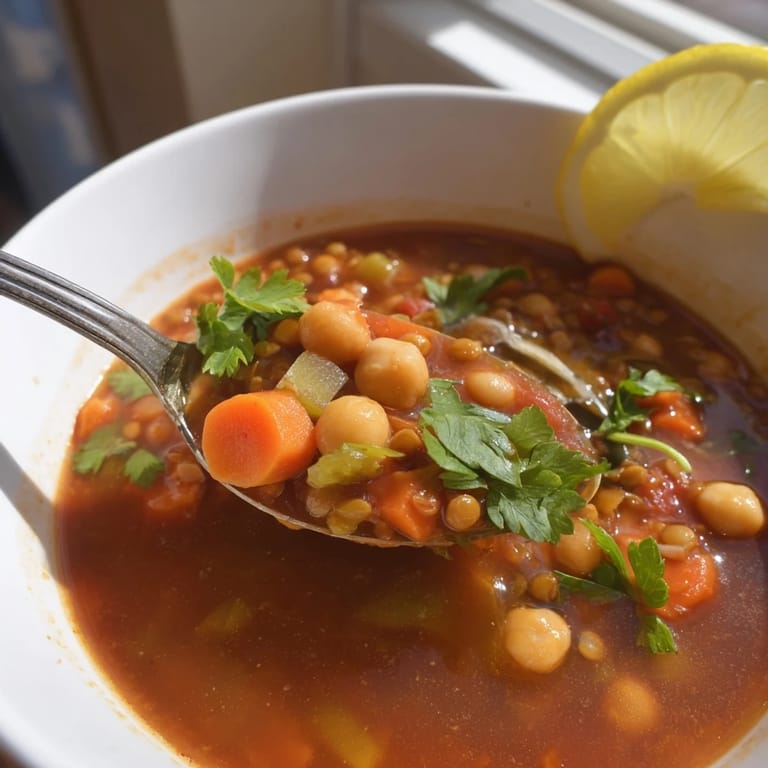
Save Years ago, a friend pressed a steaming bowl of harira into my hands on a cold evening, and I watched her face light up as I tasted it—that perfect balance of warm spices, honeyed apricots, and bright lemon that somehow felt both exotic and deeply comforting. I spent the next hour asking questions between spoonfuls, and she laughed, telling me it was nothing fancy, just the soup her family made whenever the weather turned chilly or when they wanted to gather around something meaningful. That bowl changed how I thought about North African cooking, and now whenever I make harira, I'm transported back to that moment of pure, uncomplicated joy.
I made this soup for a group of friends during a surprise dinner party, and what started as me nervously layering spices turned into the most requested recipe from that night. One friend came back into the kitchen asking if there was cardamom in it because it tasted almost dessert-like, and I realized that's exactly what makes harira so special—it walks this beautiful line between sweet and savory that catches people off guard in the best way.
Ingredients
- Dried chickpeas (1 cup, soaked overnight) or canned (2 cups): These are the heart of harira, and soaking dried ones overnight makes them absorb the flavors beautifully, though canned works perfectly if you're short on time.
- Dried lentils (1/2 cup): Red or brown lentils both work, and they cook down slightly to add body and earthiness without overpowering the other flavors.
- Olive oil (2 tbsp): Use a good quality oil here since it's building the flavor foundation for everything else.
- Onion, celery, and carrots: This aromatic base is where the magic starts—the softer vegetables release their natural sweetness as they cook down.
- Garlic (3 cloves, minced): Mince it fine so it disperses evenly and doesn't overpower any single spoonful.
- Canned chopped tomatoes (400 g): Fresh tomatoes work too, but canned gives you consistency and natural acidity that balances the spices.
- Tomato paste (2 tbsp): This deepens the flavor and adds a subtle sweetness that most people can't quite identify but love.
- Ground cumin, cinnamon, ginger, turmeric, and paprika: Toast these briefly in the hot oil with garlic to release their essential oils and make the whole kitchen smell incredible.
- Cayenne pepper (optional): Add this only if you want gentle heat; harira doesn't need to be spicy to be memorable.
- Vegetable broth (6 cups): A good broth makes the difference, so if you have time, make your own or choose one you'd actually drink straight.
- Dried apricots (1/2 cup, chopped): These are the secret ingredient that makes people pause mid-spoonful wondering what just made their mouth smile—they dissolve slightly and add natural sweetness.
- Fresh cilantro and parsley (1/4 cup each): These are stirred in at the end to add brightness and a fresh counterpoint to all that warmth.
- Lemon juice: This ties everything together like a final chord in music, sharpening all the flavors and making them pop.
Tired of Takeout? 🥡
Get 10 meals you can make faster than delivery arrives. Seriously.
One email. No spam. Unsubscribe anytime.
Instructions
- Warm your oil and build the base:
- Heat the olive oil in a large pot over medium heat, then add your chopped onion, celery, and carrots. You're looking for that moment when the onions turn translucent and the whole pot smells savory and sweet—about 6 to 8 minutes. Listen for a gentle sizzle, not a violent sear.
- Wake up the spices:
- Add your minced garlic and all the spices—cumin, cinnamon, ginger, turmeric, paprika—and let them sit for just about a minute. You'll know it's ready when your kitchen smells like a spice market and the raw edge of the spices has mellowed.
- Build the flavor layers:
- Stir in your tomato paste and let it brown slightly in the oil for a minute, then add the canned tomatoes, chickpeas, lentils, and chopped apricots. This is when the soup starts to look like itself.
- Let it simmer gently:
- Pour in the vegetable broth and bring everything to a boil, then lower the heat and let it simmer uncovered for 45 to 50 minutes, stirring occasionally. The chickpeas and lentils should be tender enough to break easily between your fingers when they're done.
- Finish with fresh brightness:
- Stir in the fresh cilantro, parsley, and lemon juice, then taste and adjust the salt and pepper to your preference. This final step is crucial—the acid and herbs transform the soup from warm to luminous.
- Optional heartier version:
- If you want a thicker, more substantial soup, cook some vermicelli or rice separately and stir it in, or ladle the soup over rice in each bowl.
 Save
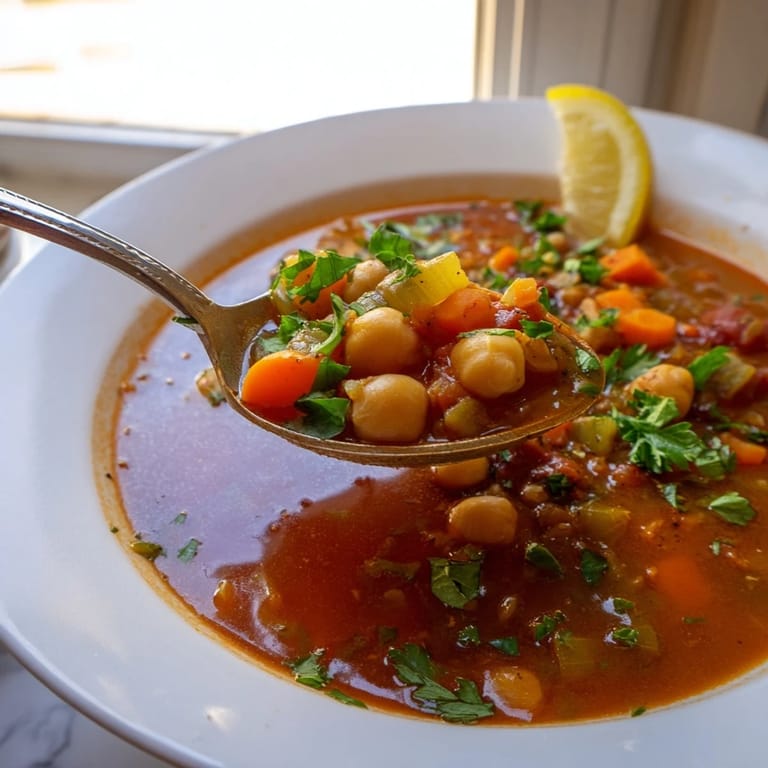
Save I'll never forget the first time someone told me this soup reminds them of home, of their grandmother's kitchen, of a place they hadn't been in years. That's when I understood that food is never just about taste—it's about the way certain flavors can unlock memories and feelings you didn't know you were carrying. Harira does that.
The North African Soul of Harira
Harira exists at the crossroads of Moroccan, Algerian, and Tunisian traditions, each region claiming it as their own and adding their own spin. What unites all versions is this philosophy: combine humble legumes with warm spices and unexpected sweetness, then serve it as an act of generosity. The soup is traditionally eaten during Ramadan to break the fast because it's nourishing without being heavy, comforting without being overwhelming. Every time I make it, I'm honoring that tradition even if I'm just cooking for myself on a Tuesday night.
Playing with Variations
Once you understand the basic structure of harira, you can let your pantry inspire you. I've made versions with white beans instead of chickpeas, added a pinch of saffron for luxury, stirred in a spoonful of harissa paste for depth, or used dried figs when apricots weren't on hand. The soup is forgiving because the spice balance is what matters most, not the exact vegetables or legumes. Some cooks add a splash of pomegranate molasses instead of just lemon, and their versions are equally beautiful.
Serving and Storage Wisdom
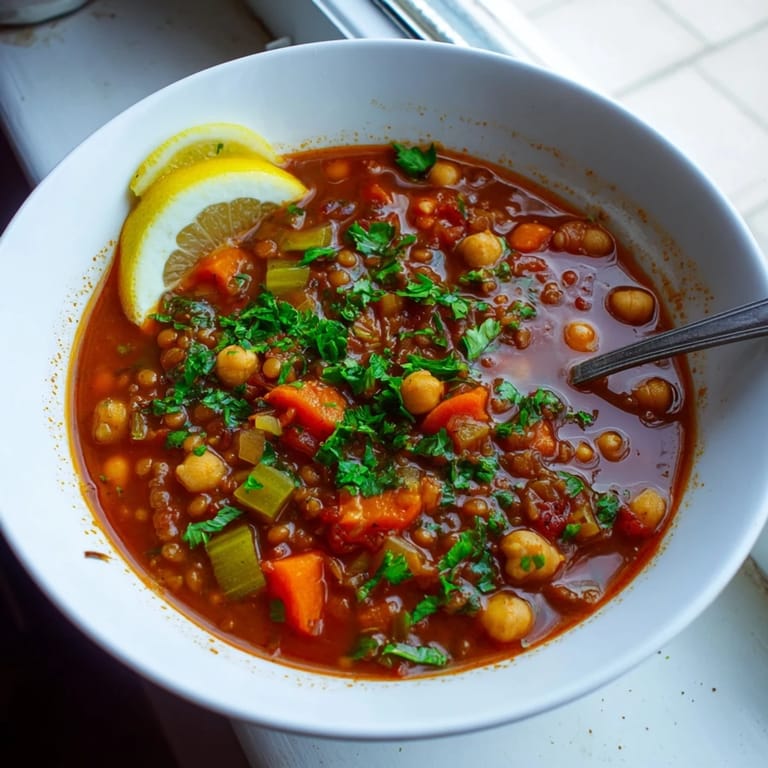
Harira is one of those dishes that improves as it sits, so don't hesitate to make it a day or two ahead. The flavors deepen and marry together overnight, and reheating it gently over the stove brings it back to silky life. I like to serve it in wide bowls with lemon wedges on the side so people can squeeze and taste and squeeze again, finding their own balance. A handful of fresh herbs on top, a drift of cooked rice or vermicelli if you're being generous, and suddenly it feels like a celebration even on an ordinary evening.
- Store cooled harira in airtight containers in the fridge for up to 5 days, or freeze for up to 3 months.
- If the soup thickens too much when stored, thin it with a little water or broth when reheating.
- Always taste and adjust seasoning after reheating, as flavors can shift subtly when stored.
 Save
Save Harira taught me that the best dishes are the ones that tell stories, carry traditions, and somehow manage to make you feel held and nourished at the same time. Make this soup, and you're doing something ancient and something entirely your own.
Recipe Q&A
- → What legumes are used in this dish?
Soaked dried chickpeas and rinsed lentils form the hearty base of this dish, providing texture and protein.
- → Which spices give the dish its signature flavor?
Aromatic spices such as cumin, cinnamon, ginger, turmeric, paprika, and optional cayenne pepper create a warm, layered flavor profile.
- → Can this dish be adapted for a vegan diet?
Yes, using plant-based broth ensures the dish remains vegan without compromising the rich taste.
- → What vegetables enhance the overall texture?
Onions, celery, carrots, garlic, and fresh herbs like cilantro and parsley contribute freshness and depth.
- → Are there recommended garnishes or additions?
Lemon wedges, extra herbs, and cooked vermicelli or rice can be added for traditional flair and extra heartiness.
- → How long does preparation and cooking take?
Preparation takes about 20 minutes, with a simmering time of approximately 1 hour for tender legumes and flavors to meld.