 Save
Save There's something about a bowl of New England clam chowder that stops time. I learned to make it years ago when a friend's grandmother showed me how to listen for the clams—that gentle click-click-click as they opened in the pot was the signal everything was working. She taught me that rushing ruins it, and that the best versions come from patience and respect for the ingredient. This creamy, briny soup became my answer to every gray afternoon and quiet dinner at home.
I remember bringing a pot of this to a potluck one October and watching it disappear before dessert was even mentioned. Someone asked for the recipe, then someone else, and by the end of the night I was writing it on the back of grocery lists for half the room. That's when I knew this wasn't just good soup—it was the kind of thing people actually want to make at home.
Ingredients
- Fresh littleneck clams (2 lbs): These are the sweet spot for chowder—big enough to have real flavor, small enough to stay tender. Scrub them well under cold water just before cooking.
- Clam juice (1 cup): This is your shortcut to deeper briny flavor; you'll also reserve the liquid from steaming the clams, which is liquid gold for this soup.
- Russet potatoes (2 medium): They break down slightly as they cook, which helps thicken the chowder naturally without needing extra cream.
- Yellow onion, celery, and carrot (1 each, finely chopped): These three are the foundation—chop them small so they soften quickly and become part of the soup rather than chunks you bite into.
- Garlic (2 cloves, minced): Add it with the other vegetables so it mellows and perfumes the entire pot.
- Heavy cream and whole milk (1½ cups and 1 cup): The combination gives you richness without being overwhelming; use both, not one or the other.
- Unsalted butter (2 tbsp): This is your cooking fat after the bacon is done, and it carries flavor better than bacon fat alone.
- All-purpose flour (2 tbsp): This thickens the soup without making it gluey; cook it with the vegetables to eliminate any raw flour taste.
- Bacon (2 slices, diced): Cook it first and set it aside—you want the rendered fat more than the bacon itself, though the smoky pieces are a welcome textural surprise.
- Bay leaf and dried thyme (1 and ½ tsp): Bay leaf comes out before serving; thyme stays and infuses the whole pot with herbaceous warmth.
- Salt, black pepper, and fresh parsley: Taste as you go and season aggressively at the end when you can tell what the soup actually needs; parsley is your bright finish.
- Oyster crackers (optional): They soften slightly in the hot soup and add a nostalgic crunch that feels very New England.
Tired of Takeout? 🥡
Get 10 meals you can make faster than delivery arrives. Seriously.
One email. No spam. Unsubscribe anytime.
Instructions
- Steam the clams until they open:
- Rinse the clams under cold water and scrub the shells clean. Put them in a large pot with 2 cups of water, cover, and bring to a boil over high heat. You'll hear them start to pop open after about 5 minutes—that's the moment you know you're close. Discard any clams that refuse to open after 7 minutes.
- Remove the clam meat and save every drop of liquid:
- Let the clams cool just enough to handle, then pry the shells open and chop the meat into rough, bite-sized pieces. Strain the cooking liquid through cheesecloth or a fine sieve to catch any sand, and reserve it all—this is flavor you can't buy.
- Render the bacon and start your flavor base:
- In a Dutch oven or heavy pot, cook the diced bacon over medium heat until the edges are crisp and the fat is golden. Lift the bacon out with a slotted spoon, leaving the fat behind, and set it aside on a paper towel.
- Build the soffritto with butter:
- Add the butter to the bacon fat, then add the chopped onion, celery, carrot, and garlic. Stir often and let it cook gently until the vegetables are soft and sweet, about 5 minutes. This slow sauté is where the soup gets its gentle, savory foundation.
- Make the roux and add liquid:
- Sprinkle the flour over the vegetables and stir constantly for about 1 minute—you want it to coat everything evenly and lose that raw flour smell. Pour in the reserved clam cooking liquid and bottled clam juice slowly, stirring to smooth out any lumps and scraping up the browned bits stuck to the bottom of the pot.
- Cook the potatoes until they're just tender:
- Add the diced potatoes, bay leaf, and thyme, and bring the whole pot to a gentle simmer. Let it bubble softly for 10 to 12 minutes until the potatoes are fork-tender but not falling apart. Taste a piece—if they're almost done, you're at the right moment.
- Gently finish with clams and cream:
- Reduce the heat to low and stir in the chopped clams, cooked bacon, cream, and milk. Let it warm through for 5 to 10 minutes, stirring every minute or so, but never let it boil—boiling breaks the cream and makes the clams tough. You want a gentle, steaming simmer.
- Season and serve:
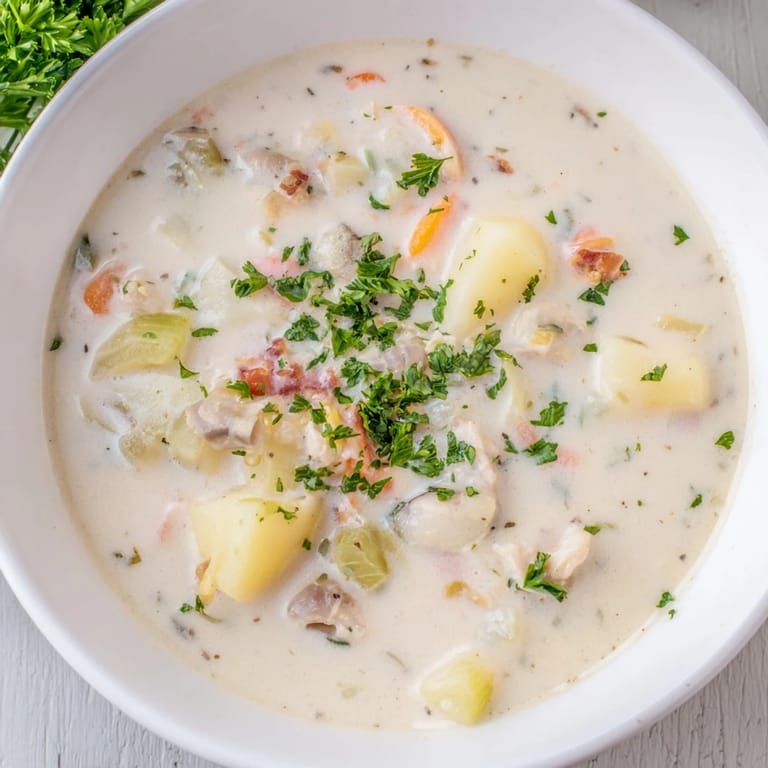
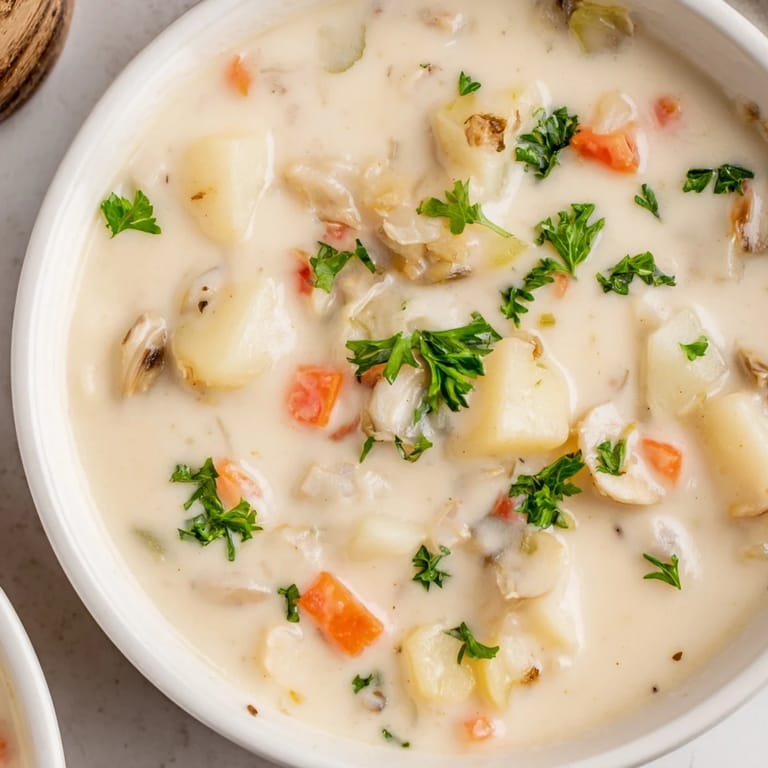
- Remove the bay leaf and taste carefully. Add salt and pepper until the soup tastes like the best version of itself—briny, creamy, and alive. Ladle into bowls, top with fresh parsley, and serve hot with oyster crackers on the side.
 Save
Save What surprised me most about this soup is how it brings people together without trying. It's humble enough to make on a Tuesday night, but fancy enough to serve at a dinner where you actually want people to notice. Every bowl feels like an invitation to slow down.
Making It Your Own
The beauty of clam chowder is that it welcomes small adjustments without falling apart. If you like it thicker, mash a few of the cooked potatoes right in the pot before adding the cream—this gives you body without a floury taste. For a lighter version that's still creamy, use half-and-half instead of the cream and milk combination, and nobody will know the difference. A dash of hot sauce or a pinch of smoked paprika at the end adds a whisper of heat or smoke if you want to twist tradition slightly.
What to Serve Alongside
This soup is rich and complete on its own, but it loves company. Oyster crackers are the traditional pairing, and they soften slightly in the hot soup in a way that feels right. A crisp white wine like Sauvignon Blanc cuts through the cream perfectly and makes the whole meal feel a little more celebratory. A simple green salad with a bright vinaigrette on the side balances the richness and gives your palate a place to rest.
Storage and Reheating Tips
This soup actually tastes even better the next day when all the flavors have mingled overnight. Store it in an airtight container in the refrigerator for up to 3 days, and reheat it gently on the stove over low heat, stirring often and adding a splash of milk if it's thickened too much. Don't use the microwave—high heat will curdle the cream and separate the soup.
- Let it cool completely before refrigerating so condensation doesn't dilute it.
- Freeze it without the cream for up to 2 months, then thaw, warm, and stir in fresh cream when you're ready to serve.
- The parsley garnish should always be fresh, so save that step for right before you serve.
 Save
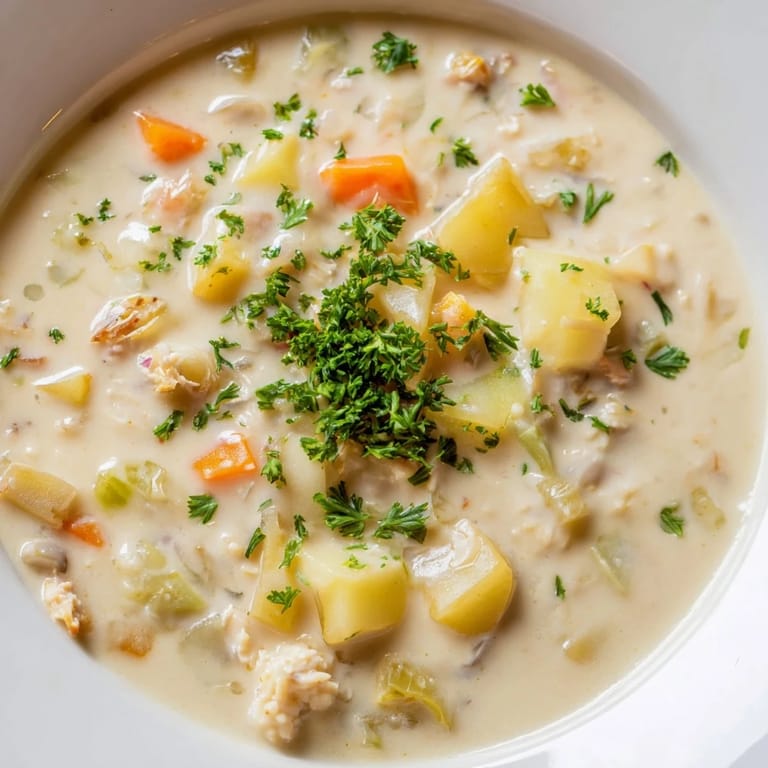
Save This is the kind of recipe that grows more rewarding every time you make it. Each bowl tastes like home, even if you're eating it for the first time.
Recipe Q&A
- → What type of clams are best for this chowder?
Fresh littleneck clams are ideal due to their tender texture and sweet briny flavor that complements creamy soups.
- → How can I thicken the chowder if desired?
Mash a few cooked potatoes in the pot before adding the cream to naturally thicken the chowder.
- → Can I substitute the heavy cream and milk?
Yes, half-and-half can be used for a lighter texture without sacrificing too much richness.
- → What cooking tools are essential for making this dish?
A large pot with lid or Dutch oven, slotted spoon, chef’s knife, cutting board, and ladle are key for preparation and serving.
- → How should the clams be prepared before adding to the chowder?
Clams should be scrubbed, steamed until they open, then removed from shells and chopped coarsely for even distribution.