 Save
Save The first time I tasted pastilla, I was standing in a narrow Marrakech souk, steam rising from a vendor's window, and I couldn't quite believe that something so crisp and delicate could hold something so savory inside. Years later, when I finally learned to make it myself, I realized the magic wasn't just in the layering—it was in that moment of surprise when sweetness and spice collided on your tongue, making you pause mid-bite. This Moroccan pie demands patience, but the reward is a dish that feels like you've traveled somewhere, cooked something ancient, and somehow made it your own.
I made this for a dinner party last spring, and watching my friends' faces when they bit through the golden crust into the warm filling reminded me why I love cooking. One guest actually closed her eyes, and there was this brief, beautiful silence before anyone spoke—that's when you know you've done something right.
Ingredients
- Bone-in chicken thighs: They stay moist through the long braise and shred beautifully; skip the breast meat unless you enjoy eating shoe leather.
- Onions and garlic: The aromatics melt into the sauce and become nearly invisible, but they're the backbone holding everything together.
- Ground ginger, cinnamon, turmeric, nutmeg: These aren't just flavoring—they're telling the story of where this dish comes from; don't skimp or substitute.
- Saffron threads: Optional but worth it if you can find them; they add a subtle golden warmth that hints at luxury.
- Toasted almonds: Toast them yourself shortly before cooking; the smell is incredible and the flavor won't fade like pre-toasted ones.
- Fresh parsley and cilantro: Add brightness at the very end when everything is cool; heat destroys their fresh snap.
- Eggs: They bind the filling and add richness without overwhelming the delicate spice balance; scramble them gently so they stay creamy.
- Phyllo pastry: Keep it wrapped and covered while you work; it dries out faster than you'd think, and dried phyllo becomes brittle in the wrong way.
- Melted butter: This is your adhesive and your crispness insurance; brush generously between layers.
- Powdered sugar and cinnamon: The sweet finish that makes people stop and wonder what just happened.
Tired of Takeout? 🥡
Get 10 meals you can make faster than delivery arrives. Seriously.
One email. No spam. Unsubscribe anytime.
Instructions
- Build your fragrant base:
- Heat olive oil in a large pot and sauté onions until they're soft and translucent—you'll smell them transform. Add garlic, and within seconds the whole kitchen shifts; then add the chicken and all your spices, letting them toast for a minute so their oils bloom.
- Braise the chicken:
- Brown the chicken on both sides, then pour in stock and cover; let it simmer gently for 30–35 minutes until the meat pulls away from the bone without resistance. The sauce should smell intoxicating by now.
- Shred and reduce:
- Remove the chicken, let it cool slightly, then shred it, discarding bones and skin. Pour the braising liquid back to the stovetop and let it bubble away until it concentrates to about 1 cup—this is where the flavor deepens.
- Fold in the finishing touches:
- Stir the shredded chicken back in along with parsley, cilantro, and your toasted almonds; let everything cool completely or the eggs will scramble when you add them.
- Scramble the eggs gently:
- Melt butter in a separate pan and beat eggs with salt. Pour them in and stir constantly but gently, pulling them from the edges—stop while they still look slightly underdone; they'll keep cooking. Fold the soft eggs into your cooled chicken mixture.
- Layer the phyllo:
- Preheat your oven to 375°F. Brush your baking dish with butter, then lay down 5 phyllo sheets one at a time, brushing each with melted butter and letting the edges hang over the sides of the pan like a edible tablecloth.
- Fill and wrap:
- Spread the chicken-egg filling across the phyllo base, then fold those overhanging edges up and over the filling. Top with 4 more phyllo sheets, each brushed with butter, tucking and tucking until the whole thing feels like a golden package.
- Bake until golden:
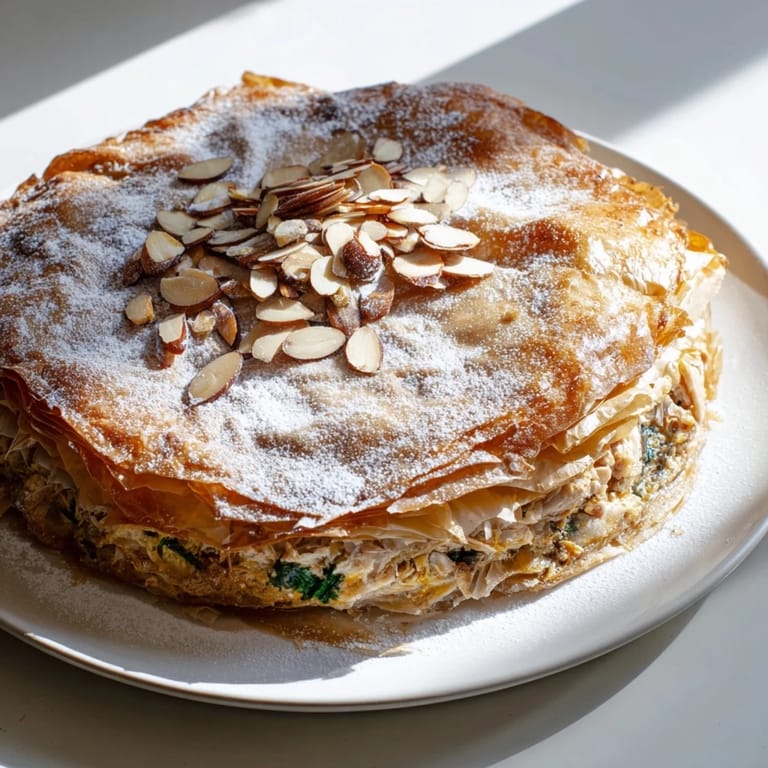
- Bake for 35–40 minutes until the top is deep golden and crackles when you tap it. The phyllo will sound hollow and crisp—this is how you know it's done. Let it rest for 10 minutes before you dust it.
- The final flourish:
- Dust generously with powdered sugar and cinnamon right before serving; this is the moment where sweet and savory shake hands.
 Save
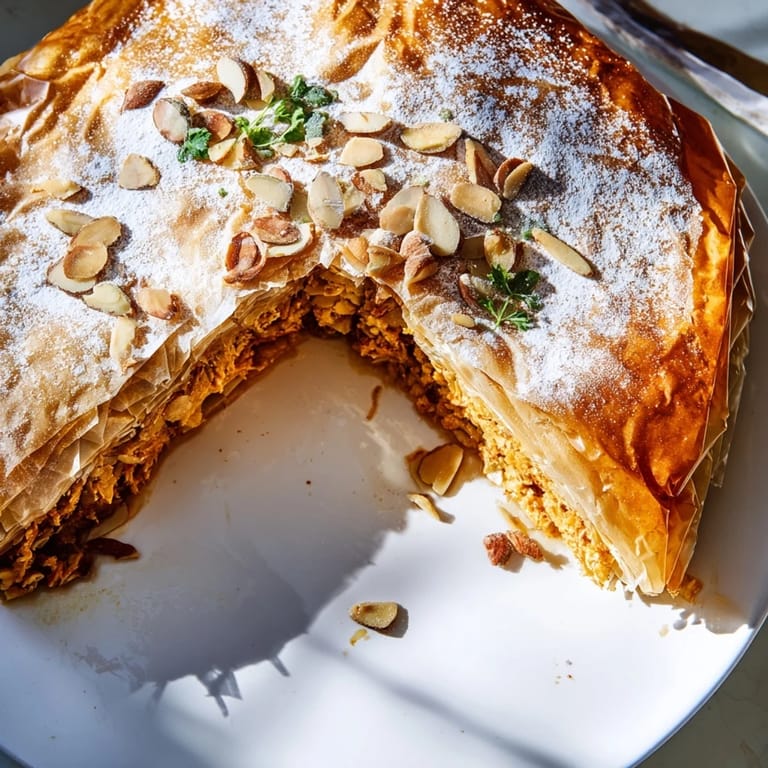
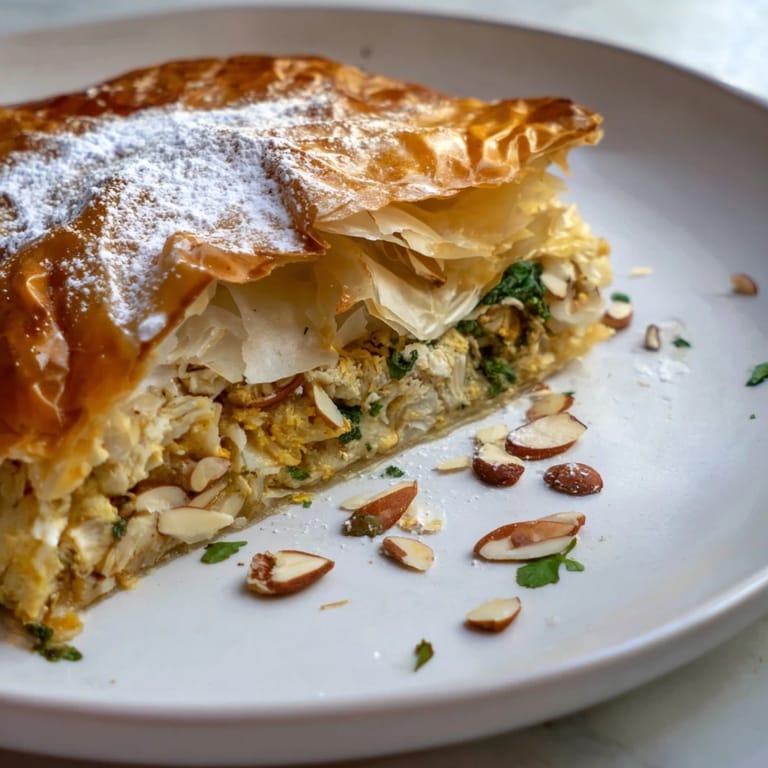
Save The pastilla sits on the table, still steaming slightly, and when someone cuts into it and sees all those layers of golden phyllo cratering against the spiced filling beneath, there's this collective moment of anticipation. It's beautiful to look at, but more than that, it tastes like someone cared enough to do something complicated and got it right.
The Sweet and Savory Conversation
Pastilla is one of those rare dishes where the sweet dusting at the end isn't a mistake or a garnish—it's the entire point. The powdered sugar and cinnamon don't make it dessert; instead, they make you taste the chicken filling differently, pulling out notes that felt hidden before. It's like seasoning in reverse, adding sweetness to make savory sing. This combination would sound odd on paper, but the moment both flavors hit your mouth together, it becomes obvious why this dish has survived centuries.
Customizing Your Filling
While the spiced chicken is the classic version, I've experimented with additions that make it feel personal without breaking the tradition. Chopped dried apricots or dates stirred into the filling add a subtle jammy sweetness that echoes the powdered sugar on top. Pine nuts can replace almonds if that's what you have, and they toast to an even richer color. Some cooks add a pinch of ras el hanout for deeper complexity, though I find the spices listed here are already singing their own song.
Pairing and Serving
The Moroccans know what they're doing when they serve pastilla with a crisp salad and mint tea—the cold, acidic vegetables cut through the richness, and the tea's slight bitterness balances the sweetness on top. I've served it at room temperature after resting, and I've served it warm; both are lovely, though warm feels more forgiving if the phyllo hasn't stayed as crispy as you hoped. A simple tomato and cucumber salad with lemon dressing sits beside it perfectly, and guests always seem to go back for salad between bites, which is your cue that the richness is exactly right.
- Let the pastilla rest for at least 10 minutes after baking so the phyllo settles and the filling firms up enough to slice cleanly.
- Make the chicken filling a day ahead if you want to ease your stress on cooking day—it reheats beautifully and tastes even better.
- Phyllo is forgiving about small tears once it's in the pan; butter finds the gaps and they disappear in the oven.
 Save
Save This pastilla is the kind of dish that reminds you why cooking is worth the effort—not because it's complicated, but because the simple act of layering, filling, and baking transforms humble ingredients into something that tastes like occasion. Make it once, and you'll make it again.
Recipe Q&A
- → What type of meat works best for this dish?
Traditionally pigeon is used, but bone-in chicken thighs are a common and flavorful substitute, providing tender meat for the filling.
- → How should the phyllo be handled during preparation?
Phyllo sheets are brushed generously with melted butter to ensure crispness and layered carefully to create a delicate, flaky crust.
- → Can I include dried fruits in the filling?
Yes, adding chopped dried apricots or dates introduces a pleasant sweetness that complements the spiced filling beautifully.
- → What spices create the distinctive flavor profile?
Ground ginger, cinnamon, turmeric, black pepper, nutmeg, and optional saffron combine to form the warm, aromatic character of the filling.
- → How long should the pastilla rest after baking?
Allow the pie to rest for about 10 minutes; this helps the layers set and makes slicing easier while enhancing flavor melding.