 Save
Save The first time I made butternut squash soup was purely by accident. I'd bought a squash at the farmer's market because it was beautiful—deep orange, heavy in my hands—but had no real plan for it. That evening, while chopping it up and listening to rain tap against the kitchen window, I remembered my grandmother mentioning something about roasting it first. That small decision changed everything. What emerged from the oven was caramelized, almost honeyed, nothing like the watery squash soup I'd tasted before. I've made it countless times since, but that first kitchen experiment—messy, uncertain, and utterly rewarding—is what I always come back to.
I made this soup for my brother last November when he was going through a rough patch, and he showed up at my door just as I was finishing it. The steam rose up and fogged his glasses, and for the first time in weeks, he actually smiled. We sat at the kitchen table with big bowls and good bread, not talking much, just eating. Sometimes the simplest dishes do the most honest work.
Ingredients
- Butternut squash (1 large, about 2.5 lbs): The star of the show—roasting it first brings out natural sweetness that a raw squash never gives you. Peel it before cubing, or do it after roasting if you find it stubborn; either way works.
- Yellow onion (1 medium, chopped): The foundation that keeps this from tasting one-dimensional; it adds depth you won't taste directly but definitely need.
- Garlic (2 cloves, minced): Just enough to whisper in the background, not to announce itself.
- Vegetable broth (4 cups): Use the best broth you can find or make your own; it's the liquid that carries all the flavor.
- Olive oil (2 tbsp): Split between roasting and sautéing for a gentle, rounded taste.
- Sea salt (1 tsp) and black pepper (1/4 tsp): Season as you taste; these amounts are just a starting point.
- Ground nutmeg (1/2 tsp): Warm and slightly sweet, this is the secret that makes people ask what's in it.
- Dried sage (1 tsp) or fresh sage (1 tbsp): Fresh sage is worth seeking out, but dried works beautifully too.
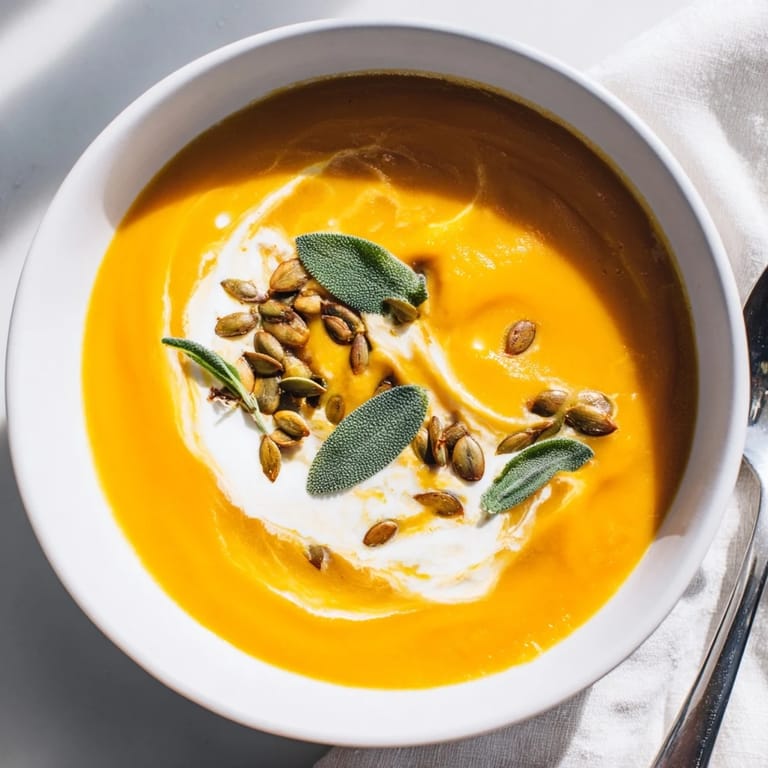
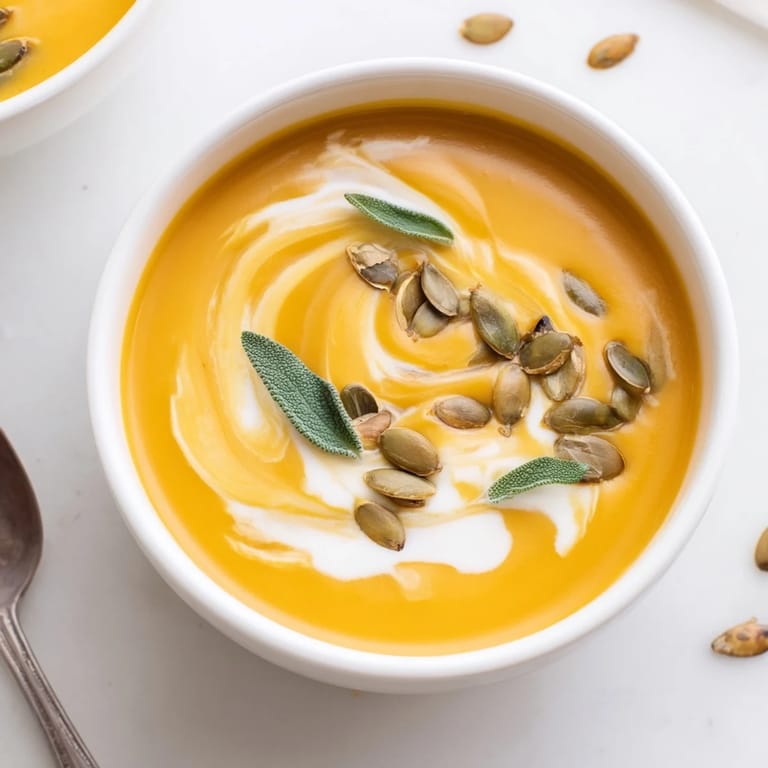
- Heavy cream or coconut milk (1/4 cup, optional): A swirl at the end adds richness and visual appeal, but the soup is stunning without it.
- Roasted pumpkin seeds and fresh sage leaves (for garnish): These final touches turn a bowl of soup into something you actually want to photograph.
Tired of Takeout? 🥡
Get 10 meals you can make faster than delivery arrives. Seriously.
One email. No spam. Unsubscribe anytime.
Instructions
- Heat your oven and prep the squash:
- Preheat to 400°F. Toss your cubed squash with 1 tbsp olive oil, 1/2 tsp salt, and a pinch of pepper until every piece is coated. Spread it out on a parchment-lined baking sheet in a single layer—don't crowd it, or you'll get steamed squash instead of caramelized.
- Roast until golden and tender:
- Pop it in the oven for 30–35 minutes, turning the pan halfway through. You're looking for deep golden edges and squash that's fork-tender; this is where the magic happens. You'll smell something amazing when it's close.
- Build the base:
- While the squash roasts, heat the remaining oil in a large pot over medium heat. Sauté your chopped onion for 4–5 minutes until it's soft and translucent. Add the minced garlic and cook for just 1 more minute; you want it fragrant, not browned.
- Combine and season:
- Add your roasted squash to the pot, then stir in the sage and nutmeg. Pour in all 4 cups of vegetable broth and bring everything to a gentle boil. Once it's bubbling, turn the heat down and let it simmer for 10 minutes to let the flavors get to know each other.
- Blend it smooth:
- Remove from heat and use an immersion blender to puree the soup until it's silky and smooth. If you're using a countertop blender, work in batches and be careful with the heat; a soup-stained ceiling is not the memory you want.
- Taste and adjust:
- Give it a taste. Does it need more salt? A touch more pepper? A whisper more nutmeg? This is your moment to make it exactly right for you.
- Serve with care:
- Ladle into bowls and top with a swirl of cream or coconut milk, a scatter of pumpkin seeds, and a fresh sage leaf if you're feeling fancy. Serve while it's still steaming hot.
 Save
Save I realized one evening that this soup had become the thing I make when I don't know what else to offer—when someone's had a hard day, when the weather turns cold, when I need to feel like I'm taking care of people around me. It's humble enough not to be precious, but it carries so much warmth.
The Roasting Step Changes Everything
People often skip roasting and try to make this soup by simmering raw squash in broth. The results are watery and one-note. Roasting concentrates the squash's natural sugars and adds a subtle caramel note that no amount of extra seasoning can replicate. It takes thirty-five minutes, but those minutes are where the entire soul of this soup lives. Trust the process.
Nutmeg Is Your Secret Weapon
A quarter teaspoon of nutmeg might seem small, but it's what transforms butternut squash soup from tasting like, well, squash, into something that feels special and a little mysterious. The spice is warm and slightly sweet, and it makes people pause mid-spoonful and ask what they're tasting. This is one of those recipes where a little restraint makes the biggest impact.
Storage and Serving Ideas
This soup keeps beautifully in the refrigerator for up to four days and freezes wonderfully for up to three months—just thaw it gently on the stovetop and add a splash of broth if it's thickened too much. It's stunning served in a bread bowl, or alongside a bitter green salad to cut through the richness. On cold mornings, a mug of this soup with crusty bread feels like a small luxury.
- Pair it with a crisp Sauvignon Blanc or a dry cider if you're serving it at dinner.
- Top it differently each time—pumpkin seeds, crispy sage, a drizzle of truffle oil, or toasted breadcrumbs—and it feels like a new dish every time.
- Make a double batch and freeze half; future you will be grateful on a night when you need comfort but have no energy.
 Save
Save This soup has taught me that sometimes the most meaningful food is the simplest, the kind that tastes like someone took their time and cared about how you felt when you tasted it. Make it, share it, and watch it become one of those recipes people always ask you for.
Recipe Q&A
- → How do I roast the butternut squash properly?
Peel and cube the squash, toss with olive oil, salt, and pepper, then roast at 400°F for 30-35 minutes until tender and caramelized.
- → Can I make this dish dairy-free?
Yes, use coconut milk instead of cream to keep it dairy-free without sacrificing creaminess.
- → What herbs complement the flavors best?
Sage adds an earthy, aromatic note, balanced by a hint of nutmeg for warmth.
- → How can I adjust the spice level?
Add a pinch of cayenne pepper during cooking to introduce a mild kick.
- → What are good accompaniments for this dish?
It pairs well with crusty bread or a crisp white wine like Sauvignon Blanc.