 Save
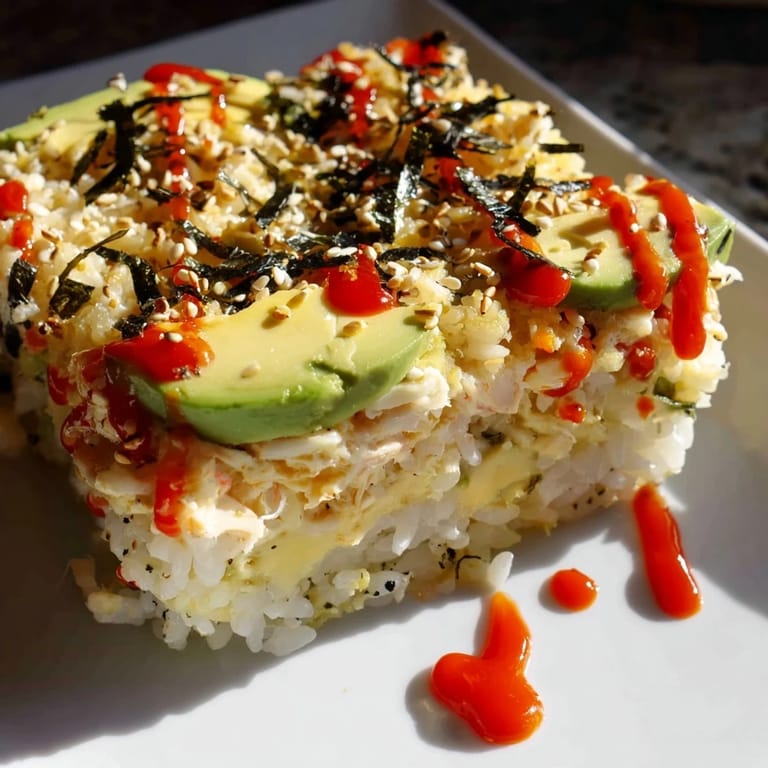
Save The first time I made chicken sushi bake, I was trying to solve a Friday night puzzle: how to feed six people with ingredients I already had and no sushi-rolling patience. I pulled out leftover rotisserie chicken, rice that had been sitting in the pantry, and started layering things in a baking dish like I was building something architectural. Twenty-five minutes later, when I pulled it from the oven with melted cheese bubbling on top and nori strips ready to crown it, my kitchen smelled like every sushi restaurant I'd ever loved—but warmer, more homelike. Everyone gathered around the same dish, peeling back layers, and I realized I'd accidentally created something that felt both fancy and impossibly easy.
My neighbor came over on a rainy Tuesday carrying a bottle of ginger ale, and I had nothing prepared except this casserole. I served it straight from the oven, and she went quiet for a moment—the kind of quiet that means something just worked. She asked if it was complicated, and when I explained it was mostly just layering and baking, she laughed and said she was stealing the recipe. That's when I knew it wasn't just dinner; it was the kind of thing people actually want to make again.
Ingredients
- Sushi rice: Two cups is the foundation, and rinsing it thoroughly removes the starch that would make everything gluey instead of delicate.
- Rice vinegar, sugar, and salt: This trio seasons the rice with the subtle tang that makes you think of the ocean without tasting fishy.
- Cooked chicken breast: Shredded works better than diced because it distributes evenly and absorbs the creamy sauce like a sponge.
- Kewpie mayonnaise: If you can find it, use it—it's richer and less acidic than regular mayo, which changes everything about the flavor.
- Cream cheese: Just two tablespoons, softened, adds a subtle richness that binds the chicken mixture without making it heavy.
- Sriracha and soy sauce: These two work together to build heat and umami depth, so taste as you go if you prefer milder flavors.
- Green onions: Thinly sliced and stirred into the chicken mixture, they add a whisper of sharpness that keeps everything from feeling too creamy.
- Mozzarella cheese: One cup, shredded and scattered generously, melts into golden pockets that make each spoonful interesting.
- Furikake seasoning: This Japanese sprinkle of nori, sesame, and fish flakes is what makes people say, 'What is that flavor?'
- Avocado, nori, and sesame seeds: These go on after baking so they stay fresh and don't lose their character to heat.
Tired of Takeout? 🥡
Get 10 meals you can make faster than delivery arrives. Seriously.
One email. No spam. Unsubscribe anytime.
Instructions
- Start with the rice:
- Rinse your sushi rice under cold water, stirring gently with your fingers until the water runs clear—this step matters more than it sounds because it's the difference between creamy and sticky. Boil it with two and a half cups of water, cover it, and let it simmer for fifteen minutes, then rest covered for another ten; this resting time is where the grains learn to be tender instead of hard.
- Season the rice while it's warm:
- Mix rice vinegar, sugar, and salt in a small bowl until dissolved, then fold it gently into the hot rice using a wooden spoon or rice paddle—fold, don't stir, because you're trying to coat each grain without breaking it. The warmth helps the vinegar get absorbed into the rice, which is where the subtle flavor comes from.
- Build your chicken mixture:
- In a medium bowl, combine your cooked chicken with mayonnaise, softened cream cheese, sriracha, soy sauce, and sliced green onions, stirring until everything is creamy and the chicken is coated evenly. This is where you taste and adjust—if you like heat, add more sriracha; if you want saltiness to stand out, add a pinch more soy sauce.
- Layer like you mean it:
- Spread the seasoned rice evenly across the bottom of your greased nine-by-nine baking dish, then sprinkle a tablespoon of furikake over it to mark the boundary between rice and what comes next. Spread the chicken mixture evenly on top, then scatter the shredded mozzarella and remaining furikake across the whole thing, making sure the cheese reaches toward the edges where it can get golden and crispy.
- Bake until it's golden:
- Pop it into a four-hundred-degree oven for twenty to twenty-five minutes—you're waiting for the cheese to melt and get just slightly golden at the edges, which is when you know it's ready. Every oven is different, so start checking at twenty minutes and pull it when the top looks bubbly and a little caramelized around the edges.
- Finish with the fresh toppings:
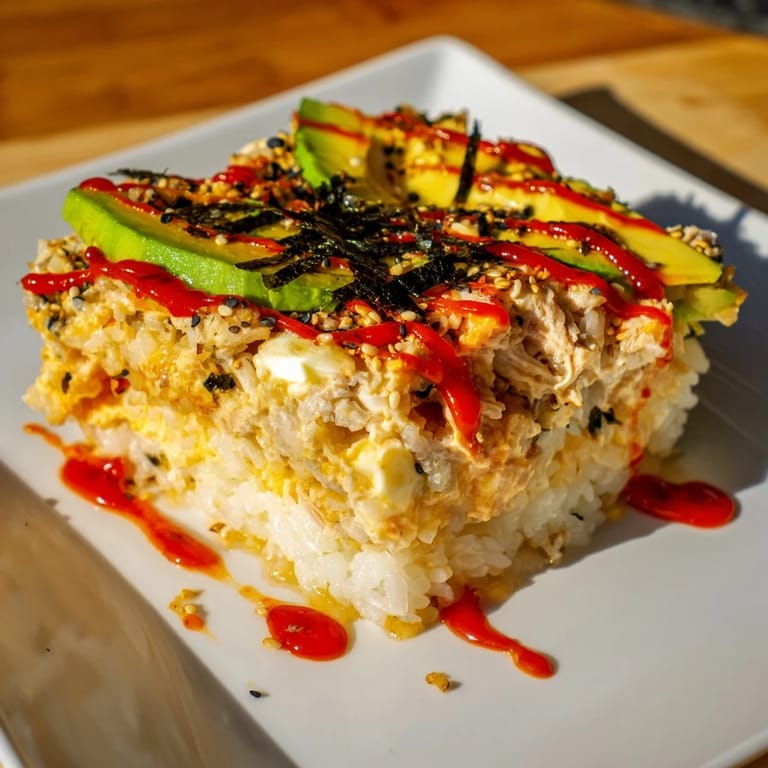
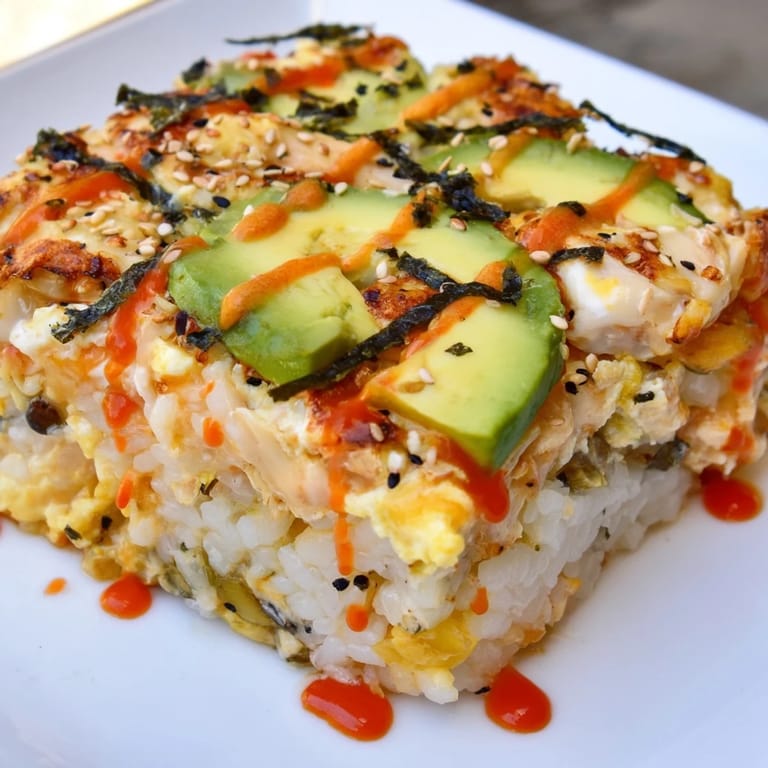
- Let the bake cool for five minutes so it sets slightly, then crown it with sliced avocado, nori strips, toasted sesame seeds, and drizzles of extra sriracha and mayo if you want that extra kick. This final layer is where people taste 'fresh' and 'bright' and remember why they love sushi in the first place.
 Save
Save Someone once told me that fusion food is just ingredients having a conversation, and this dish proved it. The sushi rice speaks Japanese, the chicken and cheese speak American comfort, and somehow they meet in the middle and become something that feels like home.
Why Rotisserie Chicken Changes Everything
The first time I made this with rotisserie chicken instead of plain cooked breast, I noticed the whole casserole tasted warmer and richer, like someone had already done half the seasoning work for me. Rotisserie chicken comes with its own herbs and a slight char that regular boiled chicken doesn't have, so if you're short on time or energy, this substitution doesn't feel like cutting corners—it feels like a shortcut that actually improves things. Your guests will taste the difference, and you get to take credit for a more complex flavor without any extra work.
The Art of Customization
One afternoon, I made this for a small group where one person loved heat and another was sensitive to spicy food, so I served the sriracha mayo on the side and let everyone scoop according to their own courage level. The casserole became less a fixed recipe and more a template where people could add pickled ginger for brightness, extra cucumber for crunch, or just plain rice if they needed gentler flavors. This flexibility is actually built into the dish—everything except the baked base is customizable, which means you can make the same recipe five times and have it feel completely different depending on who's eating.
Making It Your Own
The beauty of this casserole is that it invites tinkering without requiring it; you can follow it exactly and have something delicious, or you can treat it as a foundation and build from there. I've added crispy fried onions on top, swapped the mayo for a lighter Japanese mayo, and once made it with crab instead of chicken just to see what would happen. Each time, it stayed true to itself—approachable, warm, and the kind of dish that makes people want seconds.
- If you can't find furikake, a sprinkle of sesame seeds mixed with crumbled nori works just as well.
- Make sure your avocado is ripe but not brown—slice it just before serving so it stays bright and fresh-looking.
- Leftover bake keeps in the fridge for two days and actually reheats gently in a low oven without drying out.
 Save
Save This recipe works because it doesn't try to be authentic sushi; it's honest about what it is—a warm, creamy, comforting dish that borrows from sushi's spirit and transforms it into something you can share straight from the pan. Make it once and you'll understand why it becomes a regular in people's dinner rotation.
Recipe Q&A
- → What type of rice is best for this dish?
Sushi rice works best due to its sticky texture, which helps hold the layers together during baking.
- → Can I use rotisserie chicken instead of cooked chicken breast?
Yes, rotisserie chicken adds extra flavor and reduces preparation time without compromising taste.
- → How can I make the casserole spicier?
Increase the amount of sriracha in the chicken mixture and drizzle extra on top before serving.
- → What alternatives are there to furikake seasoning?
Toasted sesame seeds mixed with seaweed flakes can be used as a substitute for furikake.
- → Is it necessary to rinse the rice before cooking?
Yes, rinsing removes excess starch and ensures the rice cooks up fluffy yet sticky for layering.