 Save
Save I discovered butternut squash mac and cheese on a crisp October afternoon when my farmers market haul of golden squash was staring me down, and I realized I had all the makings of a proper cheese sauce in my pantry. There's something about autumn that makes you crave something warm and creamy, and that day I wanted to prove that mac and cheese could be more than nostalgia—it could be elegant without losing its soul.
I made this for a group of friends who'd been living on instant ramen, and watching their faces light up when they realized butternut squash was hiding in their mac and cheese—the kind of surprise that makes someone go quiet and actually taste what's on their fork—was worth every minute of prep work.
Ingredients
- 340 g elbow macaroni or small shells: Small shapes catch the sauce better than large tubes, and the slight al dente resistance keeps each bite interesting.
- 500 g butternut squash, peeled and cubed: Roasting brings out the natural sugars; don't skip this step or you'll miss half the flavor.
- 1 tbsp olive oil: Just enough to help the squash caramelize and develop those golden edges that matter.
- 1/2 tsp salt and 1/4 tsp black pepper: Season the squash aggressively before roasting so it has flavor of its own.
- 2 tbsp unsalted butter: Keep it unsalted so you control the salt level in your sauce.
- 2 tbsp all-purpose flour: This is your roux base; cook it long enough to lose the raw flour taste but not so long it browns.
- 480 ml whole milk: Use whole milk, not skim; the fat is what makes the sauce silky.
- 120 g sharp cheddar cheese: Sharp cheddar has more personality than mild and won't disappear into the background.
- 60 g Gruyère or fontina cheese: Gruyère melts like silk and adds a slightly nutty complexity that elevates the whole dish.
- 1/8 tsp nutmeg: A whisper is all you need; nutmeg and squash are old friends, and this dose enhances without announcing itself.
- 1/2 tsp Dijon mustard: It sharpens the cheese flavor and adds a subtle sophistication that nobody will be able to name.
- 30 g panko breadcrumbs and 1 tbsp melted butter (optional topping): The panko gets crispy and golden under the broiler, adding texture that makes the dish feel intentional.
- 2 tbsp grated parmesan for topping: A small amount gives you that browned, savory crust on top.
Tired of Takeout? 🥡
Get 10 meals you can make faster than delivery arrives. Seriously.
One email. No spam. Unsubscribe anytime.
Instructions
- Roast the squash to caramelized perfection:
- Set your oven to 200°C and toss the cubed squash with olive oil, salt, and pepper on a baking sheet. The 20 to 25 minutes in the oven transforms the squash from raw and neutral to sweet and slightly charred at the edges, which is when the real flavor shows up.
- Cook the pasta while the squash is roasting:
- Bring a large pot of salted water to a rolling boil and cook the pasta until it's al dente—tender but still with a slight firmness when you bite into it. Drain and set aside; you want it to hold up when it meets the sauce.
- Blend the roasted squash into silk:
- Once the squash is soft and golden, transfer it to a blender or food processor with half a cup of milk and puree until completely smooth. This becomes your secret ingredient—a naturally creamy base for the sauce.
- Make a proper roux as your sauce foundation:
- Melt the butter in a large saucepan over medium heat, then stir in the flour and let it cook for a minute or two until it turns pale gold and smells slightly toasty. This cooks out the raw flour taste and sets you up for a silky sauce.
- Build the sauce with milk and the squash puree:
- Whisk in the remaining milk gradually, stirring constantly so lumps don't form, and let it thicken over 3 to 4 minutes until it coats the back of a spoon. Pour in your squash puree and stir until everything is smooth and cohesive.
- Melt in the cheeses and seasonings:
- Remove the pan from heat and add the cheddar, Gruyère, nutmeg, and mustard, stirring until every strand of cheese has dissolved and the sauce is glossy. Taste and adjust the salt and pepper to your preference.
- Combine pasta and sauce into golden comfort:
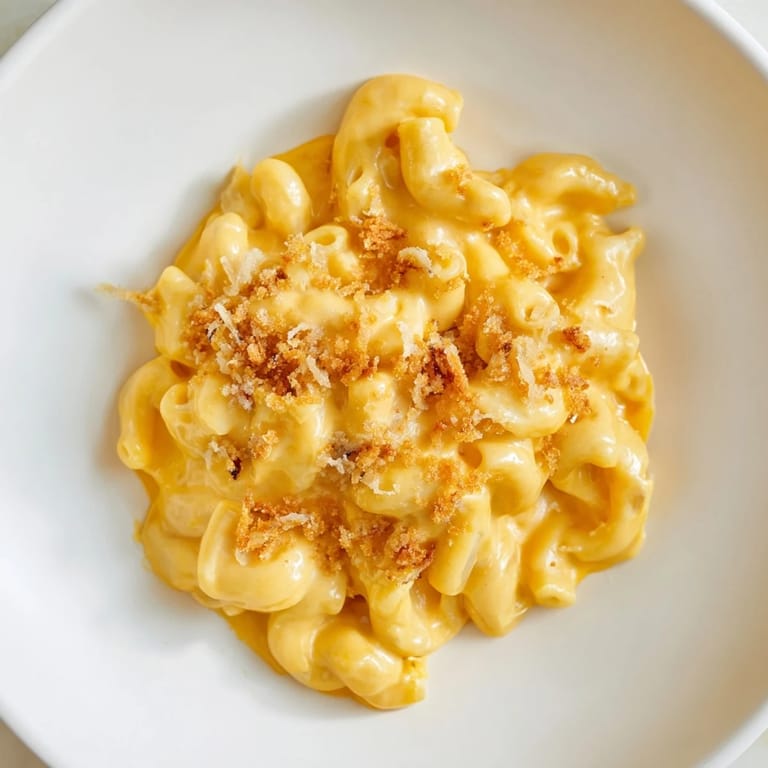
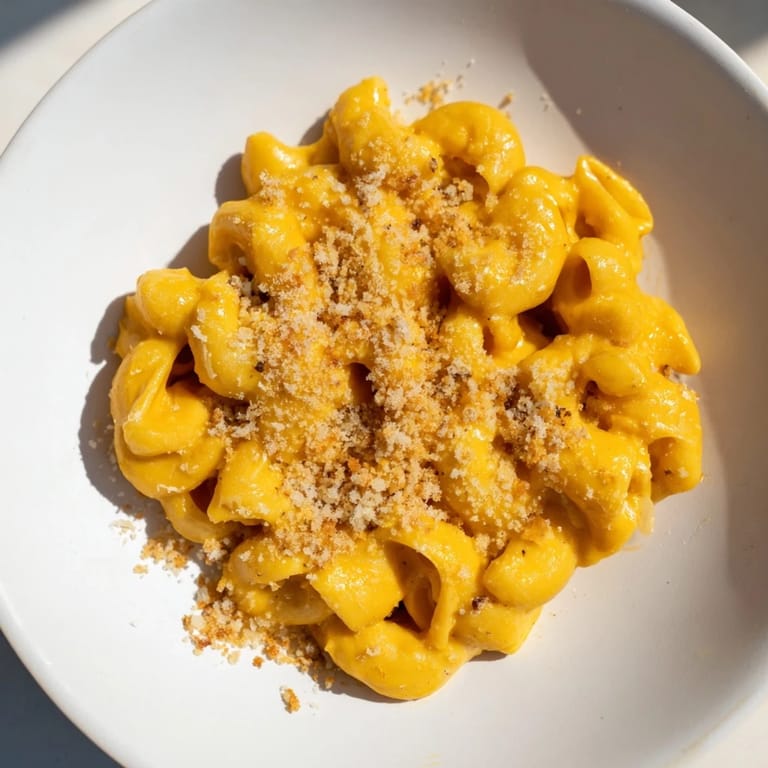
- Add the cooked pasta to the cheese sauce and fold everything together until every piece is coated in that creamy, orange mixture. The heat from the pasta warms the sauce to perfect serving temperature.
- Optional crispy topping for textural contrast:
- If you're going for the panko topping, transfer everything to a lightly greased baking dish and mix the panko crumbs with melted butter and parmesan. Sprinkle it over the top and broil for 2 to 3 minutes until it turns golden brown and crunchy.
- Serve while it's still steaming:
- Plate it up hot, scatter a little extra cheese on top if you're feeling generous, and add fresh herbs if you have them.
 Save
Save There was a moment when my partner took a bite and said nothing for a few seconds, just looked at the bowl—that's when I knew the squash had done what I'd hoped it would do, turning something familiar into something that felt a little bit like a discovery.
The Science of Squash in Sauce
Butternut squash is almost 90 percent water, but when you roast it, that water evaporates and concentrates the natural sugars, creating a puree that's both sweet and creamy without needing heavy cream or extra butter. The beta-carotene gives it that warm, golden color, and the slight caramelization on the edges adds depth that a raw puree could never deliver. I learned this the hard way when I tried adding raw squash to a sauce once and ended up with something that tasted more like pumpkin soup than mac and cheese.
Cheese Pairing Wisdom
Not all cheese melts the same way, and this matters more than you'd think. Sharp cheddar has enough flavor to stand up to the squash without being overwhelmed, while Gruyère brings a subtle nuttiness and melts so smoothly that the sauce stays silky rather than breaking into greasiness. I once tried using only mild cheddar and ended up with something that tasted like nothing in particular; the combination of two cheeses is what gives the sauce its character. The Dijon mustard is barely a whisper, but it sharpens the cheese flavors and keeps the sauce from feeling one-dimensional.
Making It Your Own
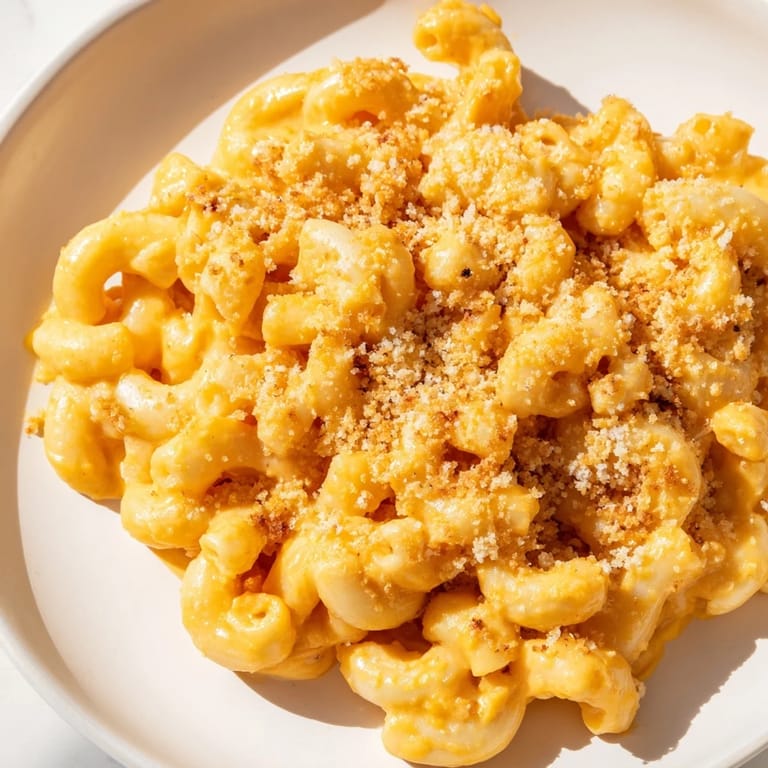
This recipe is a foundation, not a rule. I've stirred in sautéed kale for color and nutrition, added crispy bacon for people who insisted mac and cheese wasn't a vegetarian dish, and once threw in caramelized onions because I had them and couldn't think of a reason not to. Some nights I skip the panko topping and just eat it straight from the pot; other times I make it fancy enough for a dinner table. The squash-and-cheese combination is flexible enough to bend around whatever else you have on hand.
- Swap the Gruyère for fontina or even aged gouda if that's what your market has today.
- Add a handful of spinach or kale after the sauce is done; it wilts right in and nobody objects to hidden vegetables.
- For protein, stir in cooked chicken, crispy bacon, or sautéed mushrooms if you're feeding people with different diets.
 Save
Save This is the kind of dish that turns an ordinary weeknight into something worth remembering, proof that comfort food and a little creativity can be the same thing. Make it once and you'll understand why autumn tastes like butternut squash and cheese.
Recipe Q&A
- → How do I roast the butternut squash properly?
Peel and cube the squash, toss with olive oil, salt, and pepper, then roast at 200°C (400°F) for 20–25 minutes until tender and lightly caramelized.
- → Can I use different pasta types?
Yes, elbow macaroni or small shells work well as they hold the sauce nicely, but feel free to use your preferred pasta shapes.
- → What cheeses work best in this sauce?
A blend of sharp cheddar and Gruyère or fontina gives a rich and creamy flavor, but mozzarella can be used for a milder taste.
- → How can I make the topping crispy?
Mix panko breadcrumbs with melted butter and parmesan, sprinkle over the dish, and broil for 2–3 minutes until golden.
- → Is this dish suitable for vegetarians?
Yes, it contains no meat. To add protein, consider incorporating cooked chicken or bacon (which would make it non-vegetarian).