 Save
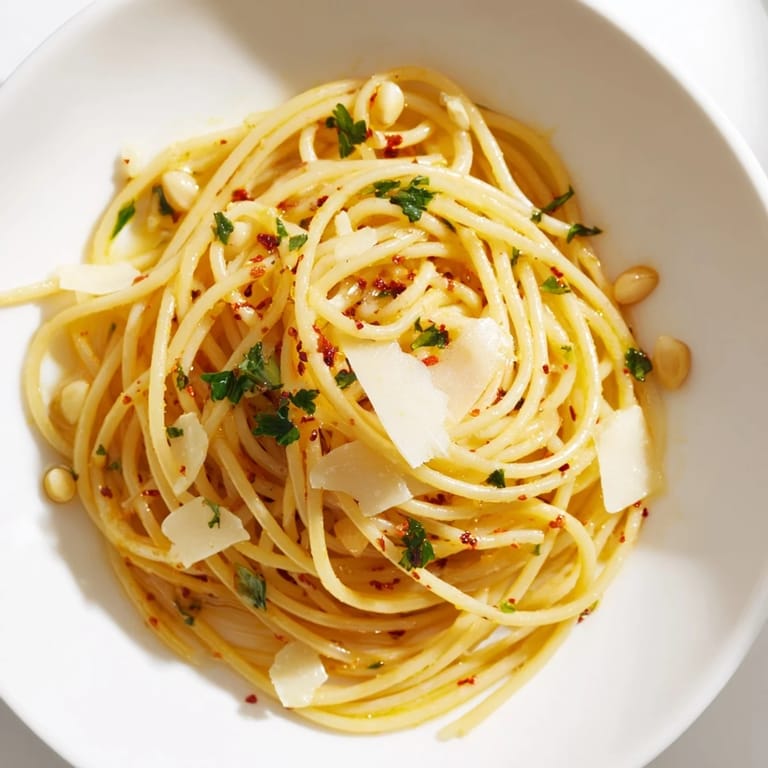
Save There's something almost meditative about watching garlic slivers transform in a pool of golden olive oil—the kitchen fills with this whisper of aroma that makes you pause mid-thought. I discovered aglio e olio on a weeknight when ambition had left the building and the pantry had nothing but pasta, oil, and garlic staring back at me. What emerged was proof that sometimes the simplest ingredients, treated with patience and a little heat, create something far more satisfying than anything complicated ever could.
I made this for a friend who'd just moved into their first apartment with nothing but a hot plate and hope. Watching them taste it and understand that quality cooking wasn't locked behind fancy equipment or endless ingredient lists—that meant something. Now whenever they text from their kitchen, they're usually making this.
Ingredients
- Spaghetti, 200 g (7 oz): Dried spaghetti is your canvas here; the thin strands catch and cling to every drop of that garlic oil, which is exactly the point.
- Extra-virgin olive oil, 4 tbsp: This isn't the moment to reach for the budget bottle—the oil is the sauce, so it deserves to be good oil, the kind that tastes like olives.
- Garlic cloves, 4 large, thinly sliced: Slicing rather than mincing keeps the pieces visible and lets them develop texture; I learned this the hard way after the minced version disappeared into oblivion.
- Red chili flakes, 1 tsp: This gives the dish its personality—adjust downward if heat isn't your language, or lean into it if you want that warm throb of spice.
- Fresh parsley, 2 tbsp chopped: The brightness here is non-negotiable; it cuts through the richness and reminds your palate that something green exists.
- Freshly ground black pepper, to taste: Always grind it fresh—pre-ground has been sitting around contemplating its choices, and you'll taste the difference.
- Sea salt, to taste: Your pasta water is already salted, but you'll need more for finishing; taste as you go.
- Parmesan cheese, 2 tbsp freshly grated (optional): Optional but honest—if you use it, grate it fresh and don't skip the step; pre-grated has anti-caking agents that feel like sadness on your tongue.
Tired of Takeout? 🥡
Get 10 meals you can make faster than delivery arrives. Seriously.
One email. No spam. Unsubscribe anytime.
Instructions
- Set the water to boil:
- Fill a large pot three-quarters full, salt it generously (it should taste like the sea), and get it rolling at a hard boil before the pasta touches the water. Salty water is how pasta gets flavor from the inside out.
- Cook the spaghetti:
- Add the pasta and stir it once right at the beginning so nothing sticks to itself. Set a timer for one minute less than the package says and start tasting around there—you want it tender but with just enough resistance to bite into.
- Start the oil and garlic:
- While the pasta cooks, slice your garlic and pour the olive oil into a large skillet over medium-low heat. The low heat is the entire secret here; you're coaxing flavor out, not rushing toward burnt.
- Golden the garlic slowly:
- Add the sliced garlic to the warming oil and listen to it—there's a gentle sizzle, then the smell hits you, building and becoming more complex every few seconds. Stir often, watching the edges for the palest gold. This takes about 1–2 minutes, and racing it will cost you everything; burned garlic tastes like regret.
- Add the heat:
- Sprinkle in the chili flakes and stir for just 10 seconds, letting the oil carry the spice flavor up into the air you're about to breathe in.
- Combine pasta and oil:
- Reserve your pasta water first—you'll need it. Drain the spaghetti and slide it straight into the skillet with the garlic oil, then toss constantly, adding splashes of that starchy pasta water until everything is coated and loose, not clumpy.
- Finish and serve:
- Taste and season with salt and pepper, scatter the parsley across everything, then transfer to plates immediately. If you're using Parmesan, grate it over the top right now, while the pasta is still hot enough to matter.
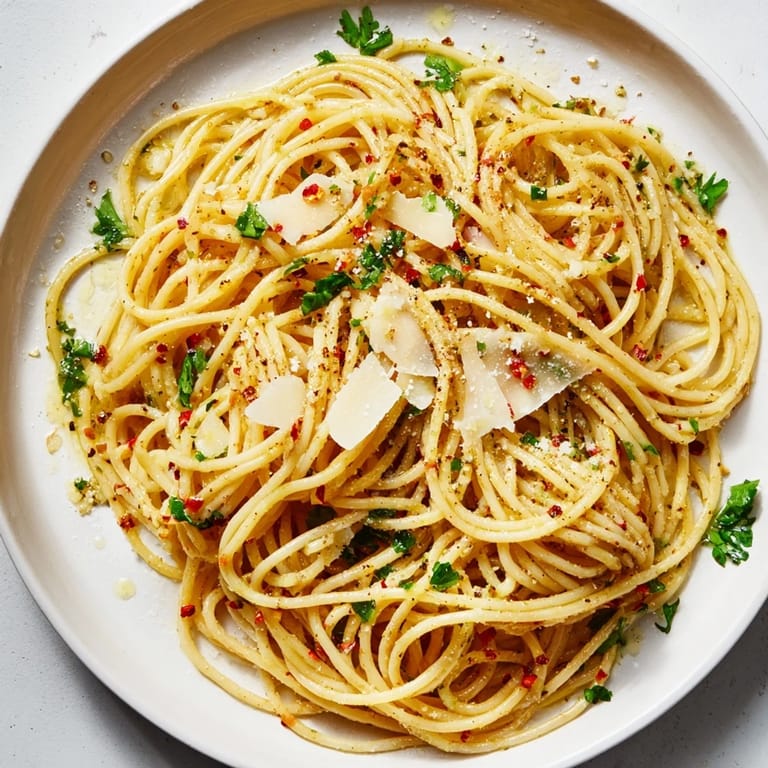 Save
Save The first time someone told me this was 'just' aglio e olio, spoken the way someone might describe air as 'just oxygen,' I realized they'd never really tasted it. There's something about reaching the end of a bowl and feeling completely satisfied with simplicity that shifts how you think about cooking.
The Truth About Garlic
Garlic is not one ingredient—it's a spectrum. Raw, it's sharp and assertive; sautéed gently, it becomes sweet and almost nutty; pushed too far, it tastes like ash and regret. The magic of this dish is that you're not fighting the garlic; you're befriending it, coaxing it into exactly what you need. A single mistake here shows immediately, which is humbling and also why this recipe teaches you more about cooking than a dozen fancier ones.
Variations That Actually Matter
I've tried this with anchovy dissolved into the oil (which sounds dangerous but tastes like umami found religion), with a squeeze of lemon that brightens everything, with a pinch of dried oregano that nobody asked for but somehow belongs. The base is strong enough that it invites tinkering without falling apart. The version that changed my mind was adding red pepper flakes earlier than usual and letting them steep in the oil longer—the spice becomes less aggressive and more integrated, like it was always supposed to be there.
Why This Works as a Last-Minute Dinner
Most nights when you're cooking at the end of a long day, you don't have the bandwidth for technique or timing complexity. This recipe understands that and asks for almost nothing except attention—and attention is something you can actually give. The entire process is under 10 minutes, but it doesn't feel rushed; it feels intentional, which is a rare gift for a weeknight meal.
- Keep a box of good spaghetti visible on your counter as a reminder that a real dinner is always two pot-sizes away.
- Buy garlic that's firm and papery; old garlic tastes hollow and bitter, and you'll notice immediately.
- This dish refuses to hold—make it only when you're ready to eat it, and eat it while it's still warm enough to matter.
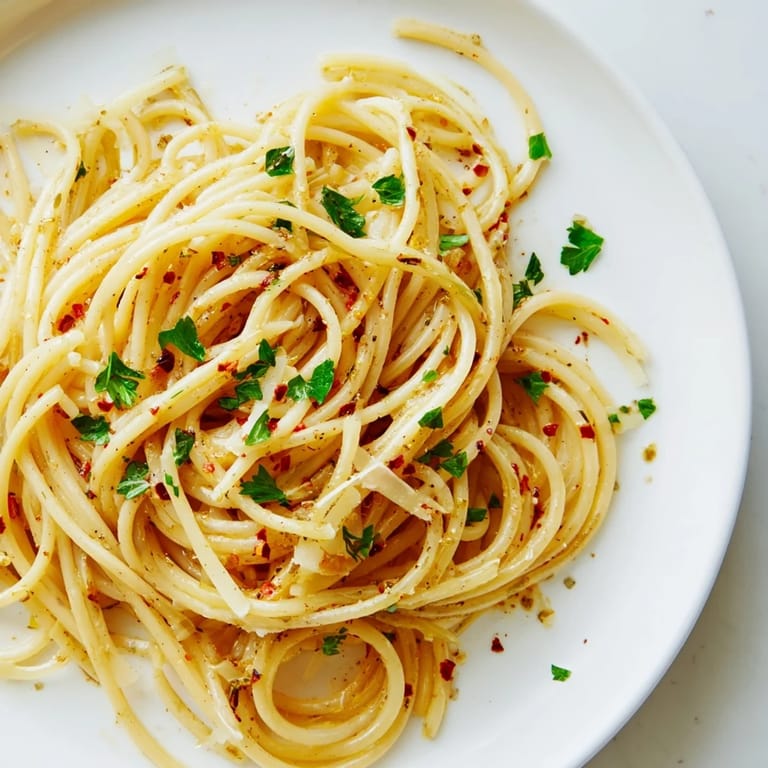 Save
Save This is the dish I reach for when I need to remember why I cook at all. It never disappoints, and somehow it never gets old.
Recipe Q&A
- → How do I prevent the garlic from burning?
Cook the sliced garlic over medium-low heat, stirring often, until fragrant and just golden to avoid bitterness.
- → Can I adjust the spiciness of the dish?
Yes, simply add more or less red chili flakes according to your preferred heat level.
- → Is it possible to make this dairy-free?
Omit the Parmesan or substitute with a vegan alternative to keep the dish dairy-free.
- → What type of pasta is best for this preparation?
Traditional dried spaghetti works well, but gluten-free pasta can also be used if needed.
- → How does the reserved pasta water affect the dish?
Adding pasta water helps loosen the sauce, allowing the garlic oil to coat the pasta evenly and enhances silkiness.