 Save
Save There's something about the smell of lemon zest hitting a hot pan that makes me pause whatever I'm doing. Years ago, a friend showed up for brunch with a container of ricotta from her farmers market, and I had nothing but eggs, flour, and a couple of lemons in my kitchen. What came out of that skillet was pure magic—pillowy, tangy, nothing like the dense pancakes I'd been making my whole life. Now I make these whenever I need to feel like I'm doing something special before noon.
I made these for my partner on his birthday without telling him what was different, and watching his face when he took that first bite—confused, then delighted—was worth every bit of the effort. He kept asking if I'd gone to a bakery, which felt like the highest compliment I could receive at 10 a.m. on a Sunday.
Ingredients
- All-purpose flour (1 cup): Use fresh flour if you can; old flour won't whip up the same way and you'll lose that airy texture that makes these special.
- Ricotta cheese (1 cup): Full-fat ricotta is worth seeking out because it's what creates that custard-like richness that sets these apart from regular pancakes.
- Fresh lemon juice and zest (1/4 cup juice and 2 lemons worth of zest): Zest before you juice the lemons, and use fresh lemons—bottled juice tastes flat by comparison.
- Eggs, separated (2 large): Room temperature eggs whip better, so pull them out of the fridge while you're gathering the other ingredients.
- Milk (3/4 cup): Whole milk creates the best balance, though you can use two percent if that's what you have.
- Unsalted butter (2 tbsp melted): Cool it slightly before mixing so it doesn't cook the eggs when you fold it in.
- Sugar, baking powder, baking soda, salt: These are your structure—measure them precisely because too much baking soda will make the pancakes taste metallic.
- Vanilla extract (1 tsp): A small touch that rounds out the lemon and keeps things from tasting one-note.
Tired of Takeout? 🥡
Get 10 meals you can make faster than delivery arrives. Seriously.
One email. No spam. Unsubscribe anytime.
Instructions
- Mix your dry ingredients:
- Whisk together the flour, sugar, baking powder, baking soda, and salt in a large bowl. Make sure everything is evenly distributed so you don't get pockets of baking soda that taste bitter.
- Combine the wet mixture:
- In a separate bowl, whisk together the ricotta, egg yolks, milk, melted butter, lemon zest, lemon juice, and vanilla until smooth. You want this to look almost like silky sauce before you fold in anything else.
- Fold wet into dry:
- Add the wet mixture to the dry ingredients and fold gently with a spatula until just combined. The batter will be thick and lumpy—this is exactly right. Overmixing will make the pancakes tough and dense.
- Whip and fold the egg whites:
- In a clean, dry bowl, whisk the egg whites until soft peaks form (they should look like soft clouds, not stiff peaks). Gently fold them into the batter in two additions, being careful not to deflate all your hard work—a few white streaks are better than a flat batter.
- Heat your pan:
- Get a non-stick skillet or griddle hot over medium heat and grease it lightly with butter or oil. The pan is ready when a drop of water sizzles but doesn't immediately evaporate.
- Cook each pancake:
- Pour about 1/4 cup of batter per pancake onto the hot skillet and let it sit. You'll know it's time to flip when bubbles form on the surface and the edges look dry and set, usually two to three minutes. Flip and cook for another minute or two until the underside is golden brown.
- Serve while warm:
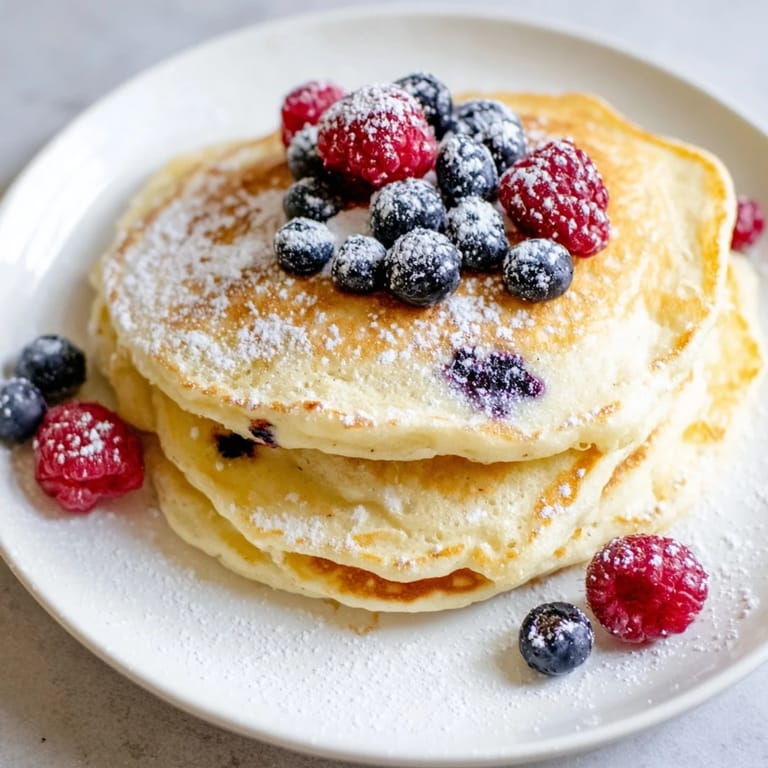
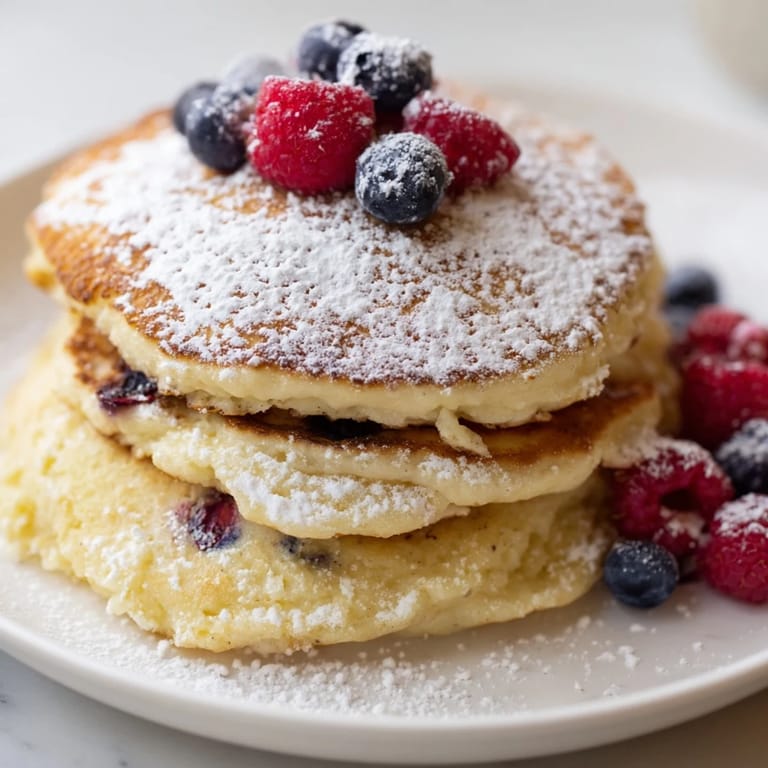
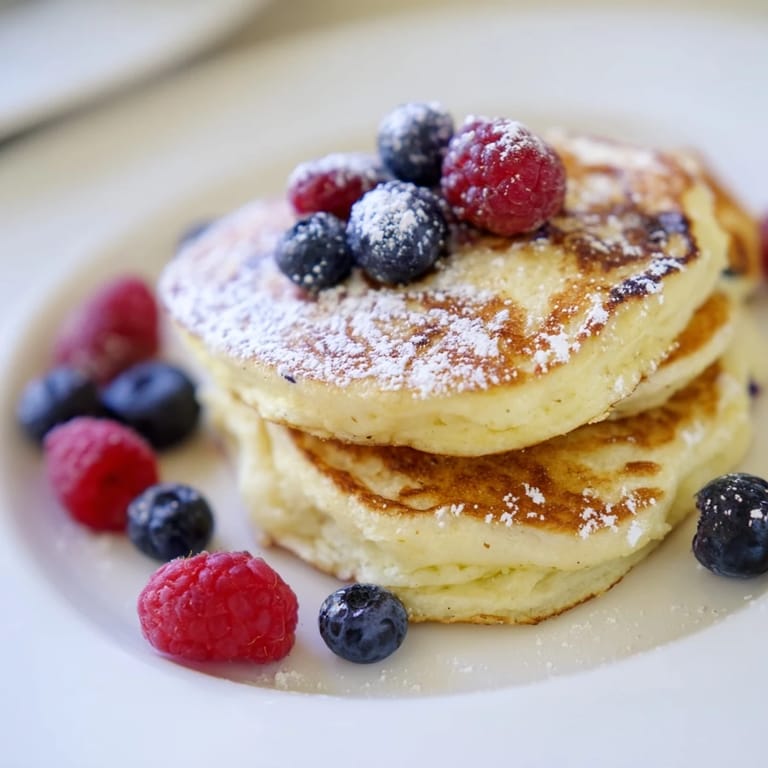
- Stack them on a warm plate and finish with maple syrup, fresh berries, or a light dusting of powdered sugar. Eat them while they're still warm because they're best that way.
 Save
Save The first time I made these for a group, someone asked for the recipe because they'd never had pancakes that were fluffy inside but still had that subtle savory richness from the cheese. That moment reminded me that cooking something with intention and care creates something you can actually taste, no matter how simple the ingredients are.
The Lemon Question
Some mornings I add an extra half teaspoon of lemon extract for that concentrated punch, but honestly, the fresh zest and juice are enough for me most of the time. If you love lemon intensely, go for the extract—just know that a little goes a long way and tastes different than fresh juice, almost candy-like in the best way.
Making Them Your Own
I've stirred fresh blueberries into the batter, scattered them on top before flipping, and even made a quick blueberry compote to serve on the side. Sometimes I'll add a tablespoon of poppy seeds for texture, which sounds odd until you taste it alongside the lemon. The ricotta base is so forgiving that you can play around without worrying you'll ruin the whole batch.
Storing and Reheating
These pancakes keep in the fridge for a couple of days and reheat beautifully in a low oven or toaster—they don't dry out the way regular pancakes do, probably because of the ricotta. If you want to get ahead, you can make the batter the night before and keep it covered, though it's best to fold in the egg whites right before cooking so they stay light.
- Store leftovers in an airtight container and reheat gently at 300 degrees for five minutes.
- The batter can sit for up to an hour before cooking, but the texture gets slightly heavier as it sits.
- Frozen pancakes thaw quickly at room temperature and taste nearly as good as fresh.
 Save
Save There's something deeply satisfying about stacking a plate of pancakes that actually taste like they took thought and care, even when they really didn't take much time at all. These have become my default brunch move, and I've never regretted making them.
Recipe Q&A
- → How does ricotta affect the pancake texture?
Ricotta adds moisture and creaminess, resulting in tender, fluffy pancakes with a rich texture.
- → Why fold whipped egg whites into the batter?
Folding in whipped egg whites lightens the batter, creating a fluffier and airier final pancake.
- → What’s the best way to achieve lemon flavor?
Using both lemon zest and freshly squeezed lemon juice enhances the bright citrus taste without overpowering.
- → Can I substitute other cheeses for ricotta?
Part-skim ricotta can be used for a lighter option, though other soft cheeses may alter texture and flavor.
- → How to prevent pancakes from sticking to the pan?
Greasing the skillet lightly with butter or oil before cooking each batch helps prevent sticking and ensures even browning.