 Save
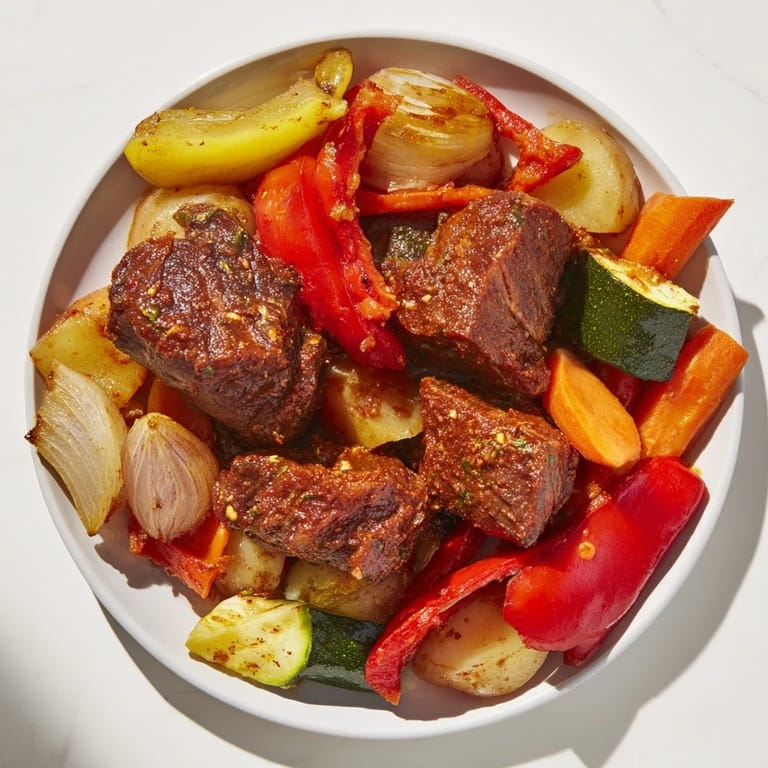
Save The first time I tasted zarb, I wasn't in a kitchen at all—I was sitting on cushions in a courtyard in Amman, watching smoke curl up from a pit in the earth. A Bedouin family had invited me to stay, and their eldest son explained that zarb wasn't just cooking; it was patience wrapped in foil and buried in hot sand. Years later, when I finally tried making it at home in my regular oven, I discovered that the magic wasn't the underground pit—it was the long, slow marriage of spiced meat and vegetables that turns ordinary ingredients into something that tastes like it's been whispered about for centuries.
I made this for friends who were skeptical that anything cooked in my apartment oven could taste authentically Middle Eastern. When I pulled back that foil and the steam rose up carrying cinnamon and cumin, someone quietly said, 'Oh, I smell Amman.' That's when I knew the recipe had done its job—it transported us without needing coals or sand.
Ingredients
- Lamb shoulder or chicken, bone-in and chunked: Bone-in meat gives you flavor that boneless cuts just can't match; it bathes the whole dish in richness.
- Olive oil: Use good quality here—it's not just fat, it's part of the marinade's soul.
- Ground cumin, coriander, cinnamon, smoked paprika: Toast these spices in your head before you add them; they work together like a conversation.
- Garlic and lemon juice: These are your brightness—they cut through the richness and keep the dish from feeling heavy.
- Potatoes, carrots, onions, zucchini, peppers, tomatoes: Choose vegetables that won't collapse into mush; you want them to hold their shape and soak up the braising liquid.
- Long-grain rice (optional): If you're serving it, rinsing the rice first keeps each grain separate and fluffy.
- Chicken or vegetable broth: This is what turns the rice into something that tastes like it's swimming in the same spiced world as the meat.
Tired of Takeout? 🥡
Get 10 meals you can make faster than delivery arrives. Seriously.
One email. No spam. Unsubscribe anytime.
Instructions
- Make the marinade and coat the meat:
- Whisk together your oil, all the spices, garlic, and lemon juice in a large bowl, then add the meat and really massage it—use your hands, get the marinade into every crevice. Cover it and let it sit in the fridge while you go about your day; overnight is ideal, but even an hour makes a real difference.
- Prep your vegetables with care:
- Cut everything into large, generous pieces so they don't disappear during cooking. Toss them lightly with a bit of olive oil, salt, and pepper—you want them seasoned but not drowning.
- Arrange and seal:
- Lay the marinated meat on a wire rack or roasting tray, arrange your vegetables around and beneath it, then cover everything tightly with foil. This seal is important; it traps the steam and lets everything cook in its own humid world.
- Let time do the work:
- Slide it into a 180°C (350°F) oven for two and a half hours. You don't need to check on it or stir it; that's the whole point. The meat will become so tender it surrenders to a spoon.
- Cook the rice while everything braises:
- If you're making rice, combine it with broth, butter, and salt in a saucepan, bring to a boil, then drop the heat to low, cover, and let it steam for 15 to 20 minutes until fluffy and the liquid is absorbed.
- Open and serve with ceremony:
- Carefully peel back the foil—the steam will rush out and your kitchen will smell incredible. Transfer the meat and vegetables to a large platter, pour those precious juices over everything, and if you made rice, serve it underneath or alongside.
 Save
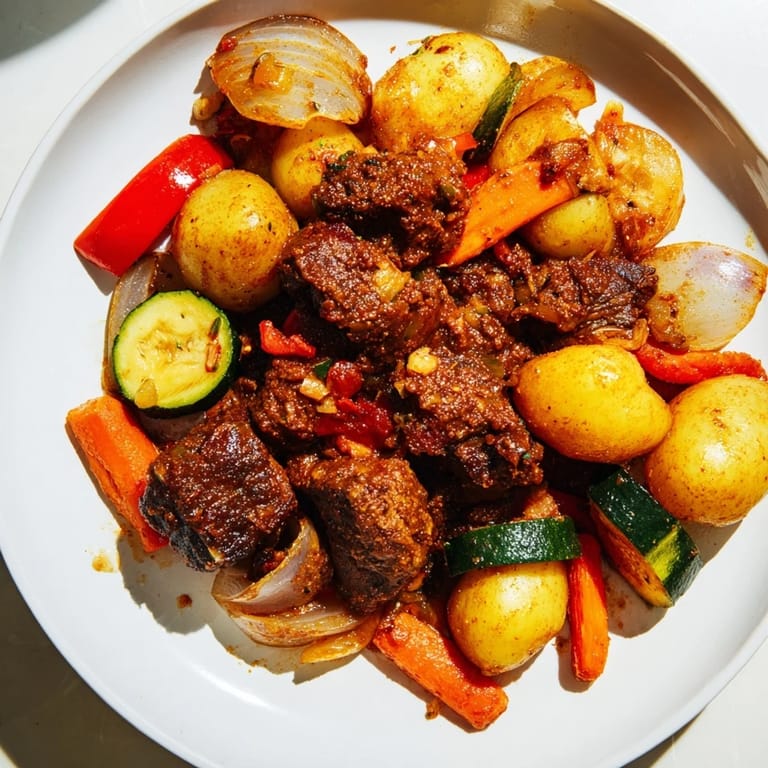
Save The best part of making zarb is watching someone take that first bite after the foil comes off, when they taste the smoky sweetness of cinnamon mixed with tender meat and vegetables that have absorbed all that spiced broth. It's a moment when food stops being sustenance and becomes a small gift.
Why This Dish Matters
Zarb comes from the Bedouin tradition of cooking in underground ovens, where food could cook slowly while families tended to other things. It's practical cooking born from necessity, but it's also deeply intentional—every spice was chosen, every vegetable cut with thought. When you make it, you're not just following steps; you're participating in something that's been done this way for generations.
Variations and Swaps
You can swap the lamb for chicken if you prefer something lighter, or use a mix of both. Some families add eggplant or sweet potatoes, which become silky and almost caramel-like after hours in the oven. I've even seen versions with dried apricots tucked in among the vegetables, adding unexpected pockets of sweetness.
Serving and Pairing Ideas
Zarb is sturdy enough to stand on its own, but it sings when served alongside tangy yogurt, warm flatbread, and a simple salad of tomatoes and cucumbers dressed with lemon. Pour the juices over the rice if you've made it, or spoon it over flatbread for a messier, more honest way to eat.
- A robust red wine or traditional mint tea complements the warm spices beautifully.
- Don't skip the yogurt—the cool tang against the rich, spiced meat is what makes every bite feel balanced.
- Leftover zarb is somehow even better the next day; just reheat it gently, covered, so it doesn't dry out.
 Save
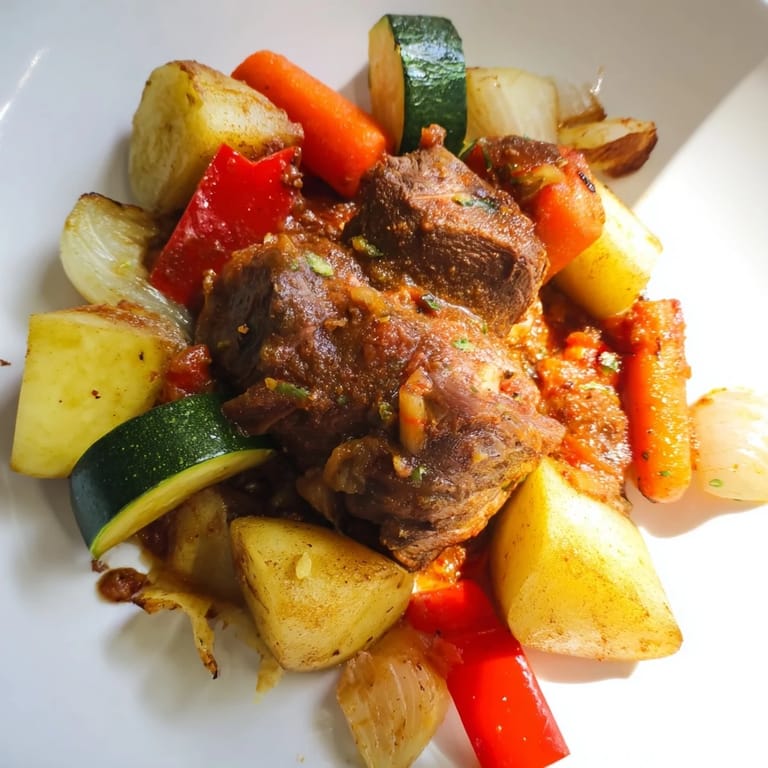
Save Making zarb is an act of faith in slow cooking and in spices that know how to speak to each other. Serve it to people you want to feed well, and watch how a single dish can turn an ordinary evening into something worth remembering.
Recipe Q&A
- → What meats are traditionally used in Jordanian Zarb?
Lamb shoulder or bone-in chicken pieces are commonly chosen for their ability to stay tender during slow cooking.
- → Which spices enhance the flavors of this dish?
Ground cumin, coriander, cinnamon, smoked paprika, black pepper, and garlic create a complex, aromatic profile.
- → How is the cooking process performed for authentic flavor?
The dish is slow-cooked underground or tightly covered in foil or banana leaves, trapping steam and smoke to tenderize the ingredients.
- → Can vegetables be varied in this preparation?
Yes, additions like eggplant or sweet potatoes can be included to add different textures and flavors.
- → What side complements the slow-cooked meats and vegetables?
Steamed long-grain rice simmered in broth often accompanies the dish, balancing the rich meat and vegetable flavors.