 Save
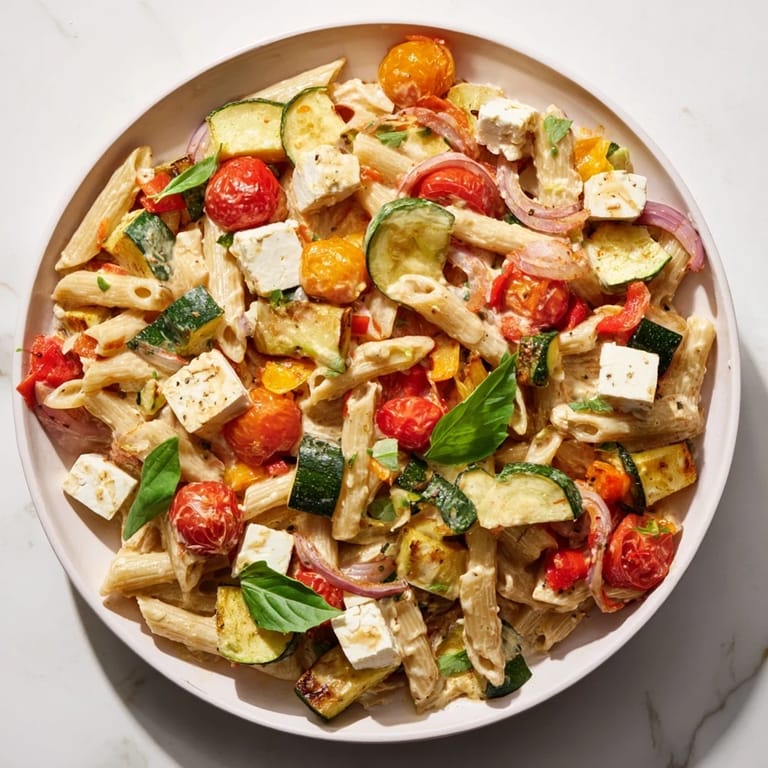
Save I discovered this dish while scrolling through videos at midnight, but what really sold me was watching someone pull a bubbling pan from the oven and just push a fork through molten feta. There's something almost magical about that moment when soft cheese and roasted vegetables suddenly become sauce. The first time I made it, I used regular pasta and felt like I was missing something—too heavy, too one-note. Then I tried whole grains and added more vegetables, and suddenly it felt like a proper meal instead of a guilty pleasure. Now I make it whenever I need something that tastes indulgent but leaves me feeling genuinely good.
My friend Marcus came over skeptical about vegetarian pasta, arms crossed like he was about to prove me wrong. Twenty minutes in, he was hovering by the oven, nose practically pressed to the glass, asking if the feta was supposed to look like that. When I pulled it out and he saw that golden, creamy mess, something shifted—he grabbed a fork before the basil even hit the plate. He's made it twice since and won't stop texting me variations.
Ingredients
- Reduced-fat feta cheese (200 g): The star that melts into everything—use a block, not crumbles, so it stays together and creates that gorgeous creamy sauce.
- Cherry tomatoes (400 g, halved): Halving them matters because they collapse into jammy sweetness instead of staying firm.
- Zucchini and bell pepper: The vegetables that actually taste like something when roasted, not just texture fillers.
- Red onion (sliced): Roasting mellows its bite into something almost sweet and caramel-like.
- Garlic (2 cloves, minced): Added after roasting so it stays bright and fragrant rather than turning bitter.
- Whole-grain pasta (300 g): The upgrade that makes this feel substantial—regular pasta gets lost in the richness.
- Extra-virgin olive oil: Use good oil here because there's nowhere to hide it, and it becomes the foundation of your sauce.
- Oregano and red pepper flakes: Oregano ties everything to Mediterranean roots, while the heat is optional but adds a subtle kick.
- Fresh basil: Torn just before serving, this is the final note that makes people ask for the recipe.
Tired of Takeout? 🥡
Get 10 meals you can make faster than delivery arrives. Seriously.
One email. No spam. Unsubscribe anytime.
Instructions
- Get your oven ready:
- Preheat to 200°C (400°F) while you prep vegetables—this gives everything time to warm up evenly.
- Prep and season the vegetables:
- Combine tomatoes, zucchini, pepper, and onion in your baking dish, drizzle generously with olive oil, then scatter oregano, salt, pepper, and red pepper flakes over everything. Toss it until every piece glistens.
- Nestle the feta:
- Place your feta block right in the center like it's the main event—because it is. Drizzle a little more oil over the top so it gets golden and glossy.
- Roast until golden:
- 25–30 minutes is when you'll see the vegetables start caramelizing at the edges and the feta turning creamy and golden. Don't rush this—the longer you wait, the deeper the flavor gets.
- Cook your pasta:
- While everything roasts, get salted water boiling and cook your pasta just until tender. Before draining, reserve about half a cup of that starchy water—it's your secret weapon for silkiness.
- Combine everything:
- Pull the hot pan from the oven and add your minced garlic directly to the warm vegetables and feta. Let it sit for about 30 seconds so the garlic softens slightly, then gently mash the feta with a fork, stirring until it becomes this creamy, dreamy sauce.
- Unite pasta and sauce:
- Add your drained pasta to the baking dish and toss everything together, adding pasta water a splash at a time until it feels silky and coated, not dry. Taste and adjust seasoning if needed.
- Serve with fresh basil:
- Tear basil over the top and eat it straight from the pan if no one's looking.
 Save
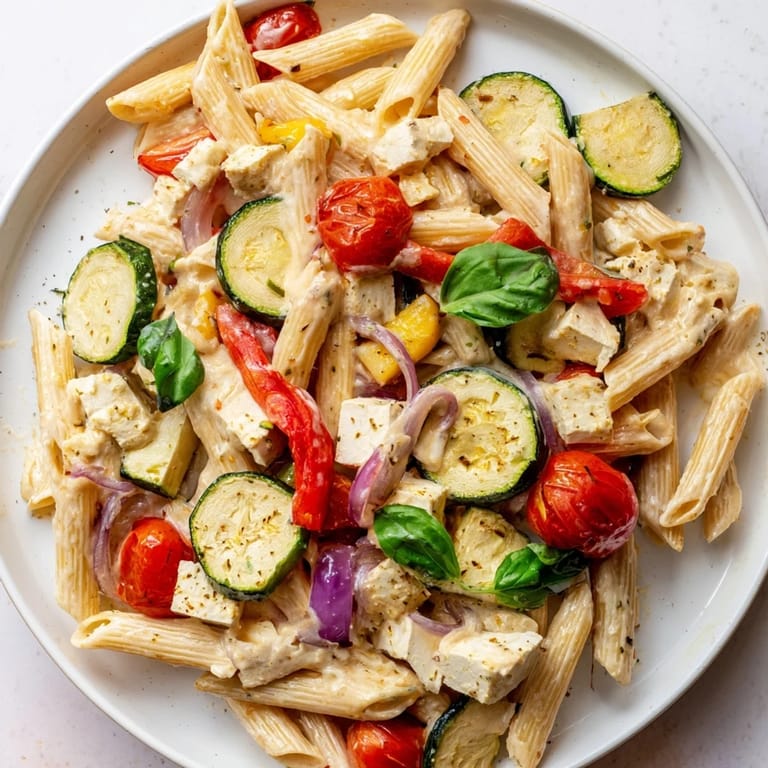
Save There's a moment right after you add the pasta where the kitchen smells like warm garlic and roasted tomatoes and something almost sweet from the caramelized onions, and suddenly you realize why this simple dish became viral. It's not fancy or complicated, but it feels like cooking for someone you actually care about.
Building Flavor Through Roasting
Roasting is where all the magic happens here—vegetables release their natural sugars and develop these deep, caramelized edges that add complexity to every bite. The feta gets golden and creamy instead of staying chalky, and the whole thing stops being just ingredients and becomes something cohesive. This is why sheet pan cooking feels worth the effort.
Customizing Without Losing Your Way
The beauty of this recipe is how flexible it actually is—you can swap in eggplant, asparagus, spinach, or whatever your season has to offer without changing the fundamentals. Some people add chickpeas for protein or stir in sun-dried tomatoes for extra richness, and both work beautifully. The only non-negotiable is keeping that feta block and the whole-grain pasta because they're doing the actual work of holding everything together.
Pairing and Serving
This feels elegant enough for dinner guests but casual enough to eat in your kitchen clothes, which is honestly the sweet spot for any recipe. A crisp white wine like Sauvignon Blanc cuts through the richness perfectly, and crusty bread on the side is never wrong for soaking up extra sauce.
- Serve immediately while everything's still warm and the basil taste like fresh grass instead of tired leaves.
- Leftovers keep for three days and actually taste better the next day as flavors meld together.
- If reheating, do it gently on the stovetop with a splash of water to keep things creamy rather than dried out.
 Save
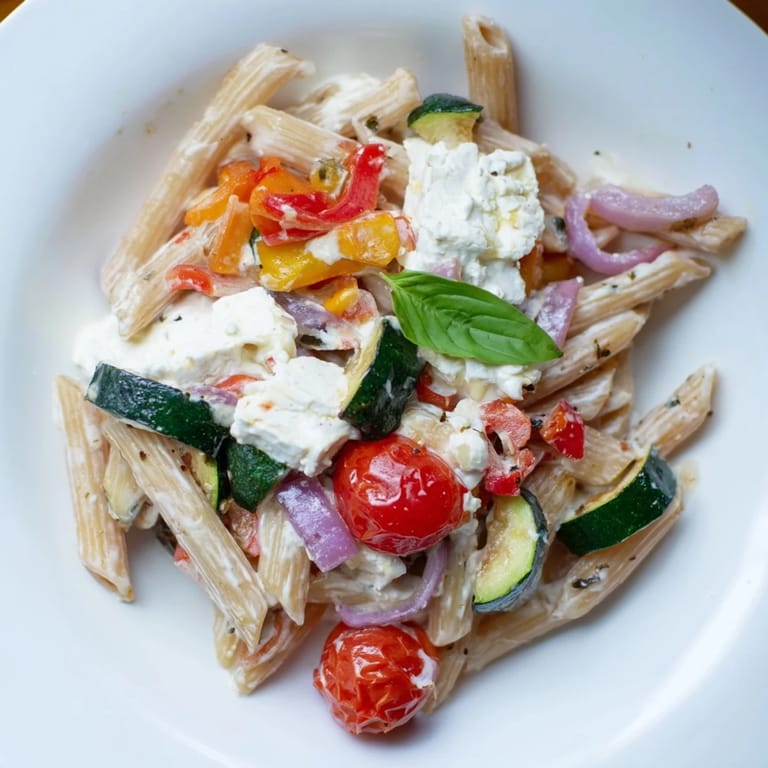
Save This recipe proves that sometimes the simplest approach—roast vegetables, melt cheese, toss with pasta—creates something that tastes like you spent hours in the kitchen. Make it once and you'll keep coming back.
Recipe Q&A
- → Can I substitute the pasta for a gluten-free option?
Yes, you can replace whole-grain penne with certified gluten-free pasta to accommodate gluten sensitivities without compromising taste.
- → How do I prevent the feta from drying out while baking?
Drizzling a little olive oil over the feta before baking helps keep it creamy and golden as it softens alongside the vegetables.
- → What vegetables work well as substitutes in this dish?
Spinach, eggplant, or asparagus can be used instead of or alongside the cherry tomatoes and zucchini for seasonal variety.
- → Is there a way to add protein to this meal?
Adding drained canned chickpeas before baking increases protein content while keeping the dish vegetarian.
- → How should the pasta water be used in the dish?
Reserve about half a cup of pasta water and mix it in at the end to help create a smooth, creamy sauce that coats the pasta evenly.